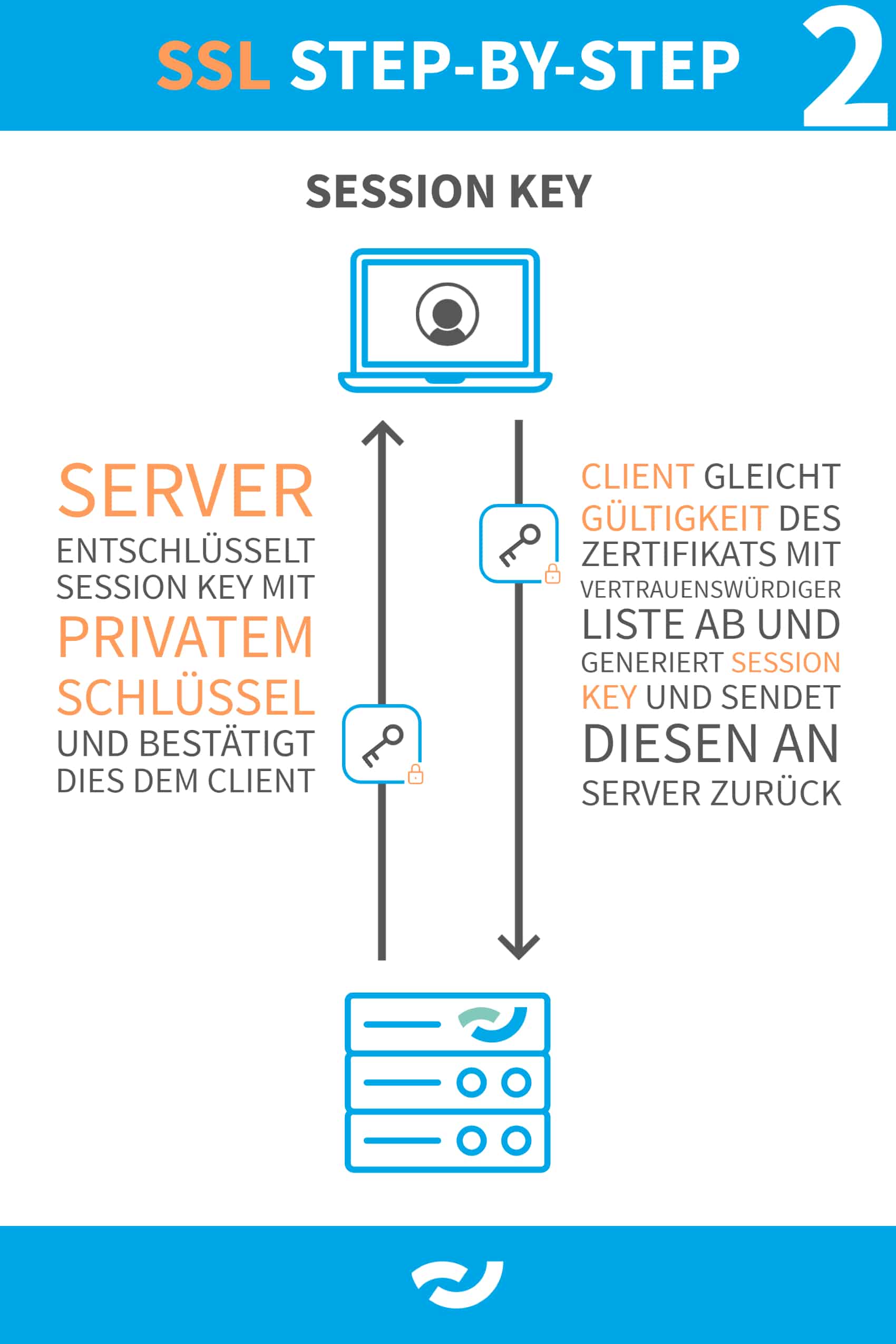
SSL certificates are an important part of IT security. This applies not only to websites, but also to internal IT applications. Why is this the case, and how can your company ensure that its internal applications use SSL certificates?
When it comes to internal IT applications, a missing SSL certificate can put sensitive company data at risk. Even within a network, there are potential attackers or unauthorized users with access to the application's traffic. In addition, data can end up in plain text in log files or other unwanted locations.
To prevent this, you should ensure that all internally used applications have a valid SSL certificate. Make sure to renew or update them regularly so that no security gaps arise.
First, something fundamental!
Nowadays, no communication between different systems should take place unencrypted, regardless of whether it involves accessing a website (SSL), sending or receiving an email (TLS/SSL), or connecting to a database (SSL).
What are SSL certificates?
SSL stands for Secure Sockets Layer and is a protocol for secure data transmission on the Internet.
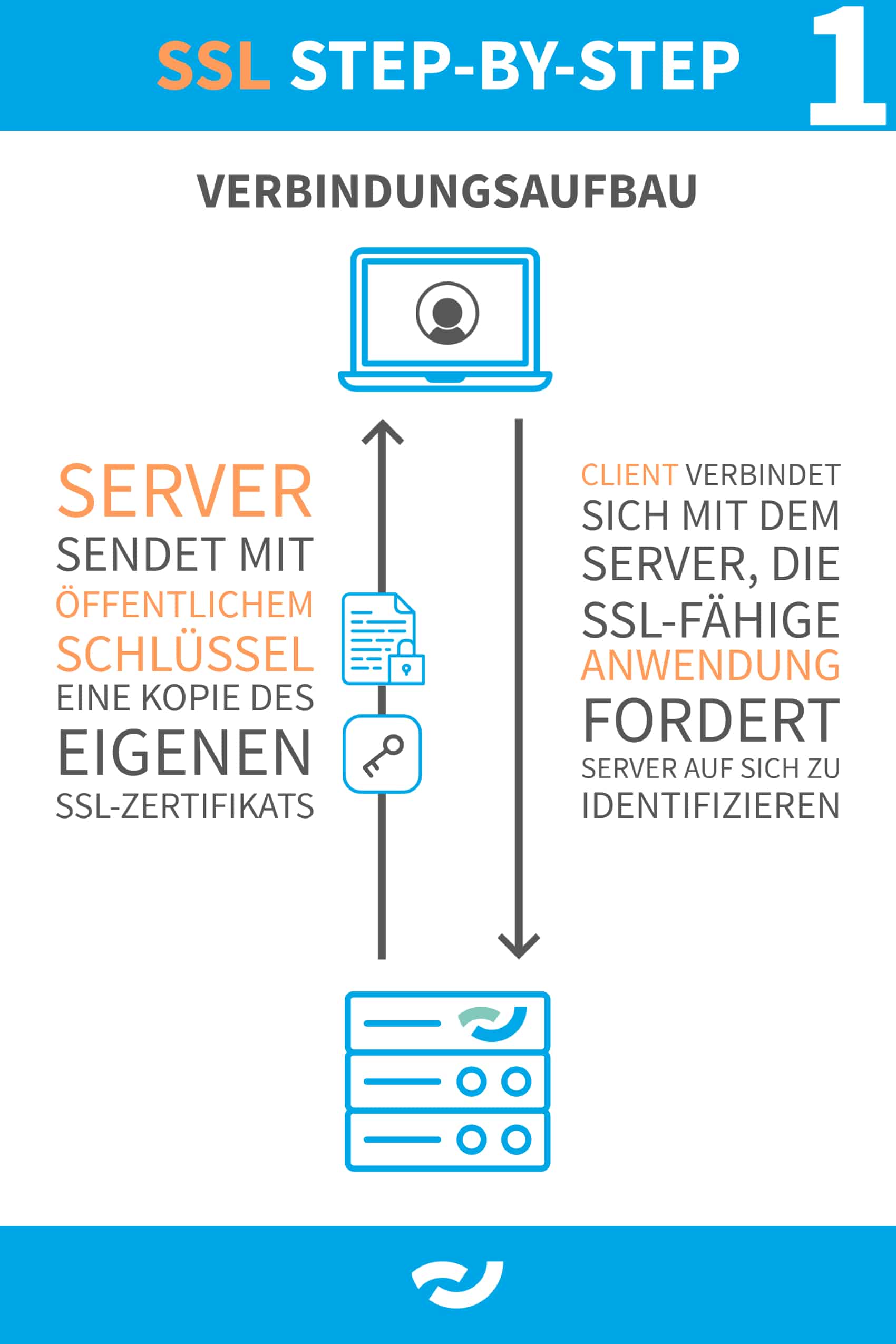
An SSL certificate is an electronic certificate issued by a trustedcertification authority that authenticates the identity of a server. At the heart of the SSL protocol is the server's digital key pair, consisting of a public and private key, and the ID of the certification authority.
This enables, for example, an encrypted connection between the user's web browser and the website's server. This protects confidential information such as login details, financial data, and personal information from unauthorized access during transmission.
There are different types of SSL certificates, which differ in particular in terms of their trustworthiness, but offer comparably high security standards from a purely technical perspective.
The certificates in detail
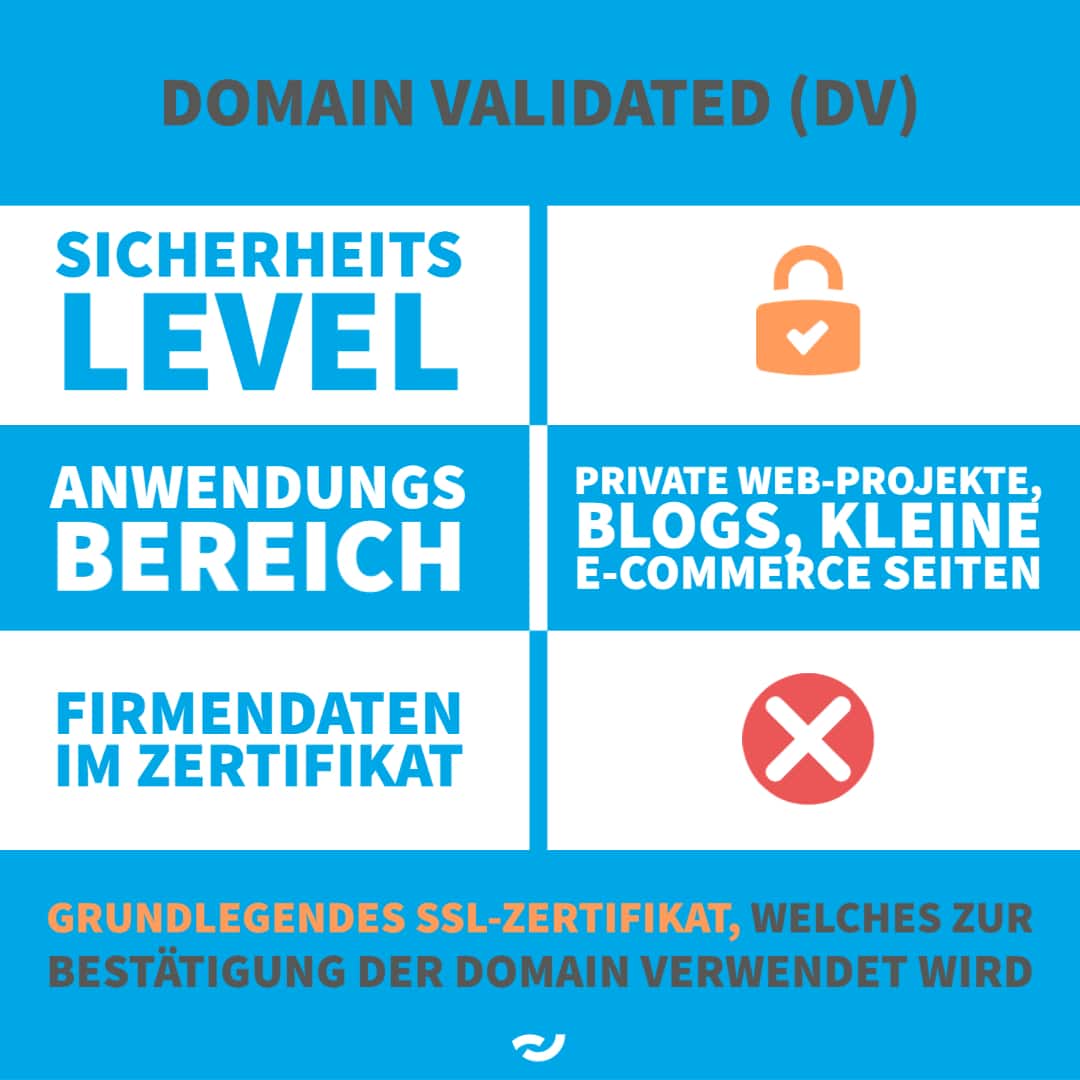
These are the basic SSL certificates used to verify the domain protected by the certificate. These certificates are particularly suitable for simple websites, blogs, and small e-commerce sites.
The pioneer for such certificates is Let’s Encrypt, a certification authority that went into operation at the end of 2015 and offers them free of charge.
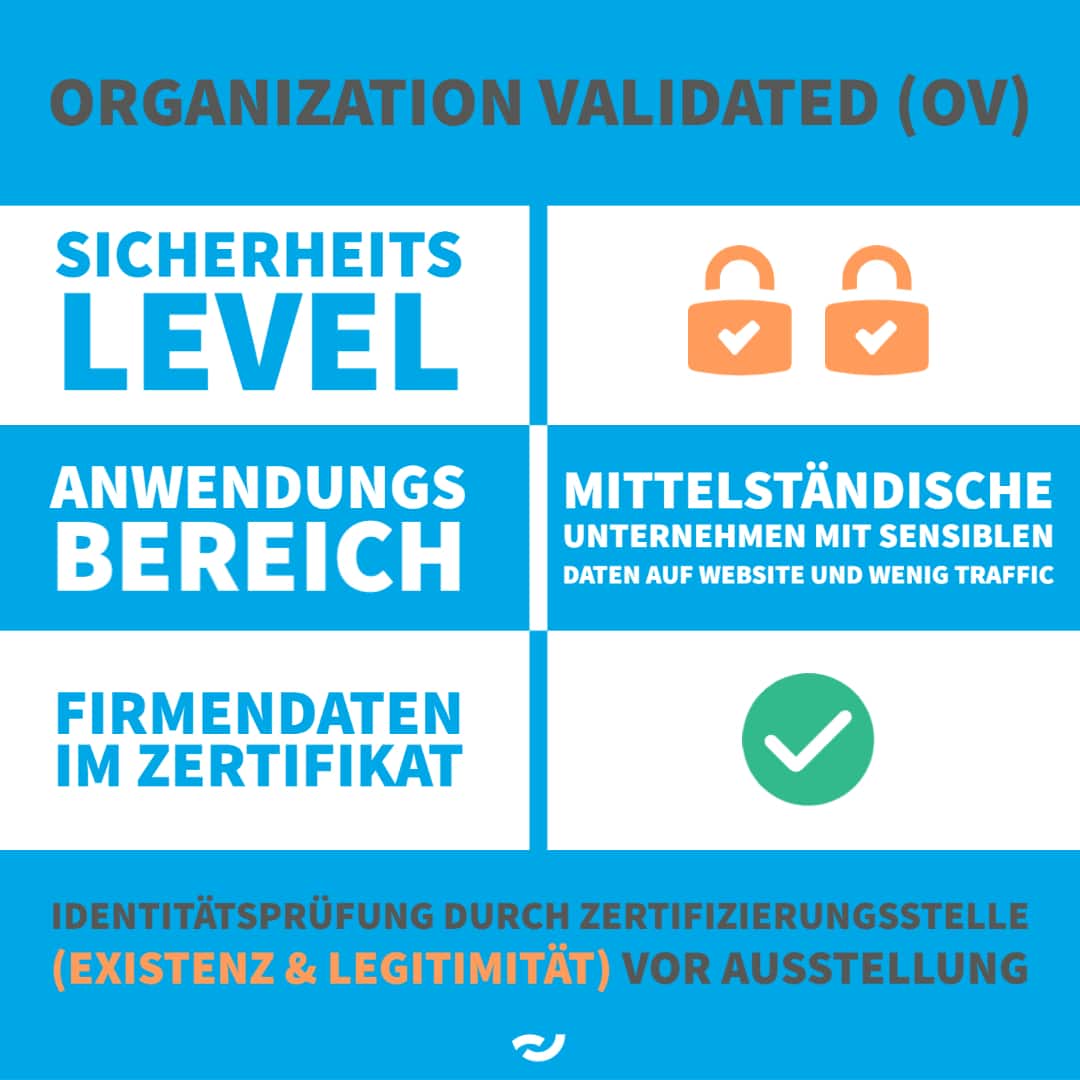
These certificates offer a higher level of verification, as the identity of the company that owns the certificate is verified. The certification authority confirms that the company exists and is legitimate before issuing the certificate. These certificates are suitable for medium-sized companies that process more sensitive information on websites.
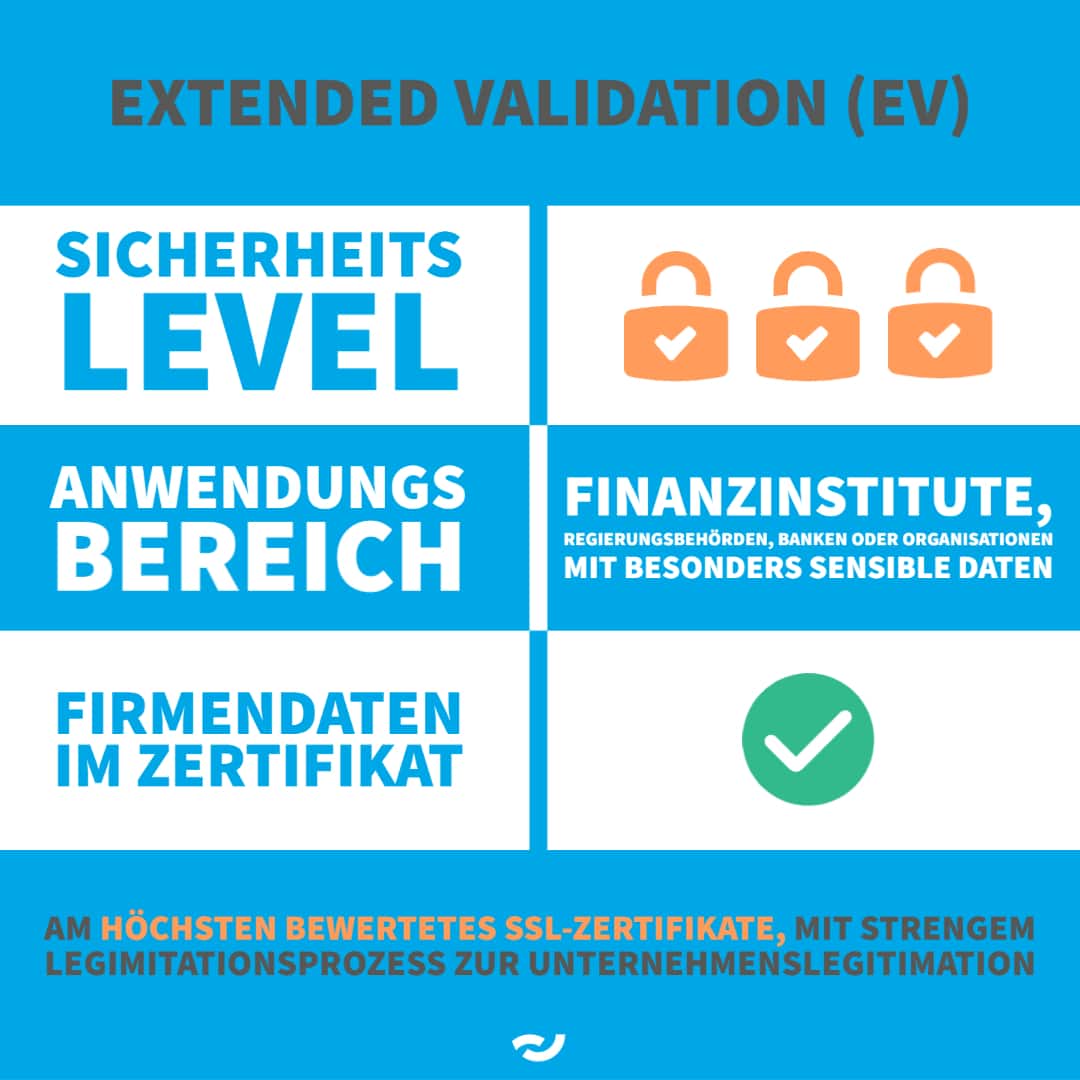
These are the highest-rated SSL certificates used by companies that require higher security standards. When issuing an EV certificate, the company must undergo a rigorous verification process to ensure that it is a legitimate business. These certificates are best suited for banks, financial institutions, government agencies, and other organizations that handle particularly sensitive data.
Until recently, these EV certificates were specially marked in the browser with a green address bar. Since the use of SSL certificates for websites has now become standard, the most common browsers only indicate when a website does not use encryption.
Why are they so important?
The answer is simple: SSL certificates protect the confidentiality and integrity of data exchanged between a web server and a browser. This means that all data transmitted via an SSL-secured connection is encrypted and thus protected from unauthorized access. This is particularly important when it comes to confidential data such as passwords, credit card information, or personal/internal company data. SSL certification also provides trust and credibility, as it confirms that the website or application is actually what it claims to be. In short, an SSL certificate is a must for ensuring the security and trustworthiness of IT applications.
Why are internal applications without SSL certificates also vulnerable to attacks?
Based on what we have learned so far, one might think that SSL certificates are only necessary for web applications. In other words:
A fallacy: Internal applications are also vulnerable to attacks, especially if they do not have an SSL certificate. Without SSL encryption, attackers can intercept and even manipulate data within your own network. This is particularly dangerous for applications that store sensitive information such as passwords, financial and billing data, or important reports. An SSL certificate protects not only public websites but also internal applications from such attacks. It is therefore worthwhile to use secure SSL encryption for internal applications as well.
Who is responsible? Monitoring SSL certificates
As a rule, it is the company's own IT department, in particular the IT security team, that ensures that all certificates are checked regularly. Various tools and services are available for this purpose.
Another option is to have third-party providers perform SSL certificate monitoring. They monitor these certificates and automatically notify you when a certificate expires or becomes invalid. This allows the IT team to act quickly and renew the certificate before any disruptions occur.
Overall, monitoring SSL certificates is crucial for the security of IT systems. IT teams should ensure that all certificates are up to date and monitored regularly to ensure that they are valid and secure.
My data is not automatically encrypted with SSL certificates!
This is a common misunderstanding! Your data is only encrypted during transport from A to B, but may be processed unencrypted (in plain text) at the destination. Full encryption, also known as end-to-end encryption, only exists when only the recipient and sender can decrypt the content. The platform provider must not be able to view the content in plain text at any time—regardless of whether it is a chat app, email, audio/video communication, or cloud storage.
Common technologies for end-to-end encryption include OpenPGP and S/MIME for email communication.
SSL certificates and application management: the indispensable duo!
In addition to implementing SSL certificates, monitoring these certificates is also very important. Active monitoring ensures that the certificates are functioning properly, are valid, and are renewed in a timely manner. Without effective monitoring, there is a risk that certificates will expire or become invalid, which can lead to significant disruptions in the operation of applications and thus in the company.
Such monitoring —especially of SSL certificates—is particularly important for business intelligence applications such as IBM Cognos Analytics and IBM Planning Analytics. These applications process sensitive company data and serve as an important basis for strategic decisions. Application management allows SSL certificates to be continuously monitored, managed, and renewed in a timely manner to ensure that applications always have secure and trustworthy communication.
Professional application management also ensures compliance with compliance and data protection guidelines. Regular checks and audits enable potential vulnerabilities or security gaps to be identified and remedied at an early stage.
Your SSL certificates with us
In this blog article, you have now learned why SSL certificates are not only a must for external IT systems, but also for internal applications. As an IT service provider, we at ISR Information Products AG deal intensively with this topic. External IT service providers can be a great help to companies, especially when it comes to operating and monitoring internal applications. When it comes to managing and monitoring business intelligence applications such as IBM Cognos Analytics and IBM Planning Analytics, we at ISR's Application Management department can ensure that the applications are continuously monitored, maintained, and optimized to minimize downtime and ensure high availability.
Trust in our expertise and let us support you in operating and monitoring your applications. Do you have any further questions about our services or would you like to find out more? Then write to us!
Would you like to learn more about our services?

Tim Kunert
Head of Application Management BI
Application Management
tim.kunert@isr.de
+49(0)151 422 05 490