
The digitalization strategy establishes the foundation for a future-proof digital enterprise. Information regarding the development and implementation of a digitalization strategy and digital agenda is available here.
What to Expect Here – An Overview
1. From Digital Activism to a Deliberate Digitalization Strategy
2. Digitalization Strategy Complete: Proceeding with the Digital Agenda
3. Implementing the Digitalization Strategy: How Process Platforms Foster Collaboration
4. Reminder: Identify and Eliminate All Media Discontinuities
5. Digitalization Strategy Must Include Consideration of the Customer Journey
“During the pandemic, the topic of digitalization has once again significantly gained importance in the economy.” – according to Achim Berg, President of the German digital association Bitkom.
Also, with regard to the digitalization strategyWhat is a digitalization strategy? A digitalization strategy serves to implement long-term goals… More , companies have really stepped up their efforts in recent years. Just a few years ago, very few companies had a well-developed digital strategy. Instead, they invested haphazardly in a wide variety of digitalization measures and tools. Today, the majority of companies in Germany have recognized the importance of digitalization and are approaching it strategically. Only 16 percent of companies still lacked a digitalization strategy in 2021 (see also Figure 1). In 2019, that figure was significantly higher at 26 percent. These findings come from a representative survey conducted by Bitkom. The COVID-19 pandemic can therefore be seen as a catalyst for digitalization.
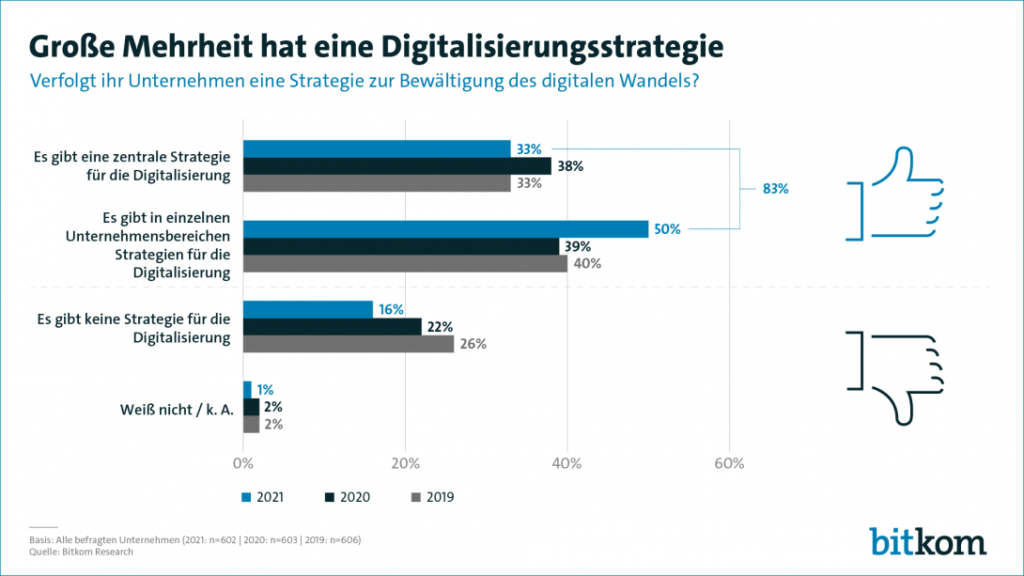
Figure 1: Companies in Germany Approach Digitalization Strategically | bitkom.de
From Uncoordinated Digital Actions to a Well-Conceived Digitalization Strategy
Blind Activism and How to Remedy It
However, the necessary systematic approach is often lacking: mountains of data streams from customer service are collected for years, but remain unstructured simply because they are available. The system landscape grows, but it does not communicate optimally. Customer addresses are maintained in multiple locations – leading to errors and additional work. Consequence: employees are frustrated. And then a specific department starts running its tools exclusively in the cloud. And just like that, digital, blind activism takes hold!
Only the development of a digitalization strategy leads from this digital activism to successful projects and ultimately financial benefit.
Digitalization Strategy: What is the Approach?
A digitalization strategy involves long-term planning of the company's approach to digital topics, viewed within the context of the overall corporate strategy. How should companies now proceed with its creation?
For the development of an appropriate digitalization strategy, it is first crucial to sharpen the common understanding of the term “digital”. This involves answering the following question in a strengths/weaknesses analysis: “How digital are we currently?”
In the next step, concrete fields of action are derived, adapted to the corporate strategy (!). Here, the question arises as to what benefits the use of new technologies brings us in our processes, workflows, and customer interactions. From these various steps (see Figure 1), a digitalization strategy is then derived that initiates the transformation in a meaningful and structured manner.

Figure 2: The Path to a Digitalization Strategy | isr.de
Digitalization Strategy Completed, On to the Digital Agenda
How are Digitalization Strategy and Digital Agenda Related?
To address digitalization, a well-planned and thoroughly considered strategy is essential for your company. Initially, corresponding fields of action are defined through a strengths/weaknesses analysis. Then, with the help of the so-called digital agenda, concrete steps or measures are established.
However, the digital agenda does not refer to a standard measure; rather, it must be implemented individually by each company.
The Digital Agenda: Helpful Tips and Tricks for Implementation
Consistent customer centricity and responsiveness to their needs are more crucial than ever, as the internet continuously creates new and more direct communication channels. Consequently, customers expect greater involvement, for example, in the development of new products. Every initiative you implement must be customer-centric. The central question is: “How do we create a unique service experience?” For insights on how to address customer needs more rapidly, refer to the section “Digitalization Strategy Must Include Customer Journey Analysis”.
Conduct an inventory of the technologies currently utilized within your organization. Engage with all departments to ascertain the current applications, as well as the advantages and disadvantages of the tools presently in use.
Based on this assessment, it is advisable to opt for new, higher-performing technologies that can entirely or partially replace legacy systems. Why? This approach enables you to establish a modern IT landscape within your company that is less susceptible to errors and data leaks. Furthermore, costs can be reduced by discontinuing the use of unnecessary, unused, or inefficient technologies.
Digitalization imposes specific demands on IT infrastructure. In recent years, complex, bespoke IT landscapes have frequently been developed. Implementing new functionalities is typically resource-intensive. Therefore, to respond swiftly to trends, customer demands, and the integration of new technologies, an agile IT landscape and comprehensive knowledge of architectural principles are essential. To learn how to enhance the agility of your IT landscape, refer to the section “Implementing the Digitalization Strategy: How Process Platforms Foster Collaboration”.
Implementing the Digitalization Strategy: How Process Platforms Foster Collaboration
Process Platforms Foster Collaboration
Digital Data Exchange as a Challenge
The challenge for companies in digital communication and data exchange lies in the deployment of a diverse array of solutions and collaboration tools.
Let's consider an example: Figure 3 illustrates that each supplier of the sample company utilizes different formats and communication channels. For instance, orders with one supplier might be placed via a procurement platform, while another supplier communicates via email. The input data and documents traverse various internal departments, where they are extracted and transformed. Subsequently, to collaborate with customers, new requirements must again be considered.
Even this simplified example clearly demonstrates the complexity of collaboration. Due to a lack of interoperability (the ability of different systems to work together as seamlessly as possible), communication is time-consuming and, unfortunately, prone to errors.
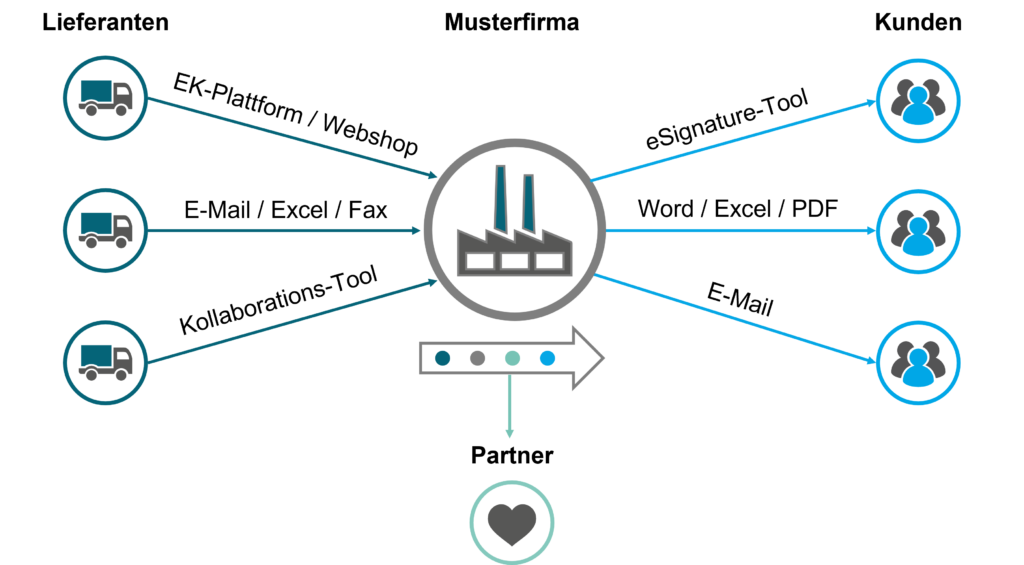
Figure 3: Digital Data Exchange using the Sample Company as an Example | isr.de
Closing Gaps through IT Infrastructure
It is crucial to remember: Identify and eliminate all media discontinuities.
Common scenarios in daily operations: Accounting manually records invoices and makes handwritten notes on them. Other departments print out forms. All of this could be processed digitally.
The frequent incorrect capture and transmission of information in such processes complicates further processing. Therefore, it is paramount to address and eliminate so-called media discontinuities – a change of medium within the transmission chain of information and data.
How to Eliminate Media Discontinuities? A Step-by-Step Guide
The initial project focuses on standardizing document intake. For instance, invoices and delivery notes reach an enterprise through various channels, such as email or postal service (keyword: Input Management). These documents are then digitized via scanning or an OCR solution (intelligent text recognition). Subsequently, a designated storage location should be defined (see Project 3).
Another project involves the automation of interfaces. Manual data entry by employees is resource-intensive and prone to errors. Such entries are often necessitated by a lack of interoperability between applications or the absence of appropriate interfaces. Consequently, internal processes must be analyzed for these discrepancies, and potential interfaces must be implemented or adapted. In some instances, this entails modifying existing solutions and workflows, while in others, new programs or systems must be introduced.
As most business processes are document-based, a significant portion of media discontinuities can be eliminated through the implementation of a Document Management System. This is precisely where the "smart inbound channel" introduced in the first project demonstrates its value. DMS are applications that manage (digital) documents in a database-driven manner. The advantage of this solution is that documents can be processed easily and collaboratively across departments. For example, invoices and delivery notes can be readily retrieved using embedded metadata.
What are the Benefits of These Sub-Projects?
Digitalization Strategy Must Include Customer Journey Consideration
Customer Service is Increasingly Digital
Digitalization has led to a significant increase in customer expectations for customer service. Leverage your customers' digital affinity! Consider which technologies your target audience uses in their daily lives and how you can utilize this for your business. For instance, does it make sense to inform your customers via WhatsApp about various topics (e.g., appointment reminders, contract durations)? Perhaps even a dedicated app could be beneficial? Always keep the customer experience in mind during digitalization and consider what best serves your customers.
The demand for digital customer service extends beyond the purchase itself, encompassing pre-sales and after-sales activities. As purchases and related product services are frequently conducted online, this service experience is largely shaped by the digital frontend. Therefore, this frontend must be sufficiently robust to enable companies to retain existing customers and attract new ones.
The Challenge in Customer Service
Enterprises must continuously monitor current trends and enhance the customer journey. This involves observing emerging technologies adopted by customers, identifying major market entrants, and understanding the new platforms they utilize.
Concurrently, this implies that the customer must always be central to the introduction of innovations. What is the most convenient method for consuming the new product? Is a self-service portal suitable, or are various mutually compatible channels easier to operate? How can the internal process be made transparent for the customer – for example, through real-time tracking?
The Requirement: An Agile IT Landscape
To continuously enhance the customer journey and remain current, the IT landscape must possess the agility to respond to diverse and rapidly evolving customer and market demands. Concurrently, a paradigm shift in implementation is underway: solutions need not be "perfect" but should instead aim to create the most engaging customer experience possible and be deployed swiftly. Customer feedback must be taken seriously and utilized as a catalyst for further improvements to the customer journey.
Potential solutions to enhance the agility of your IT landscape include standardization and the implementation of process platforms (see section "Implementing the Digitalization Strategy: How Process Platforms Foster Collaboration").
From IT as a Bottleneck to a Digital Enabler
The IT Department as a Bottleneck
IT departments often still perceive themselves as administrators of a heterogeneous IT landscape. Modified (and historically evolved) IT environments coupled with outdated interface technologies increasingly draw employees into an unmanageable vortex.
This results in significant administrative overhead. Furthermore, implementing changes becomes challenging. The underlying reason is that a lack of visibility into dependencies leads to substantial effort and unpredictable issues during new project implementations. Consequently, IT transforms into an impediment to innovation.
The IT Department as a Digital Enabler
For IT to become an enabler of new projects, organizations must shift their perspective. Digitalization demands courage; modern technologies, such as cloud services, should be explored. This allows technology, unlike in the past, to drive innovation. However, successful implementation of this approach requires comprehensive mastery of the IT landscape.
The IT department should possess a clear understanding of which specific functionalities are embedded within each process and how the underlying business processes can be rapidly adapted.
Digitalization Strategy – A Task for Experts

Angelina Jordan
Account & Marketing Manager
Business Process Automation
angelina.jordan@isr.de
+49(0)151 422 06 942