Process Mining
Process Mining
An X-ray of your business processes
Imagine if you could view your business processes with X-ray vision, far beyond what the naked eye allows. Imagine if you could uncover the hidden patterns, confusing paths, unexpected branches, and secret connections that make your business processes so complex and yet so fascinating. What if you had the opportunity to analyze, understand, and optimize how your processes actually work? Welcome to the world of process mining!
Table of Contents
- What is process mining? A definition
- What methods are available?
- Process mining vs. data mining
- Challenges in business processes
- Why is process mining important for companies?
- Possible applications for process mining
- Process using the example of a logistics company
- How do we provide concrete support to enterprises?
- Your Point of Contact
What is process mining? A definition
Process mining is an advanced technique for visualizing and analyzing business processes based on the systematic evaluation of event logs. In other words, it is a method that allows you to uncover the innermost secrets of your business processes by using the data that already exists in your digital systems. This means that this technique works best when your processes are already partially or fully supported digitally.
Process mining gives you an objective, data-driven perspective on the actual processes within your company. It enables you to discover the truth behind everyday business processes by revealing the hidden patterns and trends that are concealed in your process data. Think of it as a kind of X-ray that makes the structure, dynamics, and performance of your processes visible.
Process mining not only gives you a better understanding of your business processes, but also enables you to design more robust and efficient processes. It allows you to identify bottlenecks, eliminate inefficient practices, increase productivity, and improve customer satisfaction. In short, process mining gives you the superpower to transform your business processes and take your company to the next level.
What methods are available?
- Discovery: Discovery process mining is the most common form of process mining. It is used to discover the actual processes in a company. Discovery process mining analyzes existing data sets and creates a process model based on this analysis. This model shows how processes actually run, rather than how they should run. This allows companies to gain insights into their processes that they might not otherwise have and to identify opportunities for improvement.
- Conformance: Conformance process mining is used to check whether actual processes correspond to specified or expected processes. (Comparison of target and actual status). The actual process model is compared with an ideal model to identify deviations and irregularities. This method is particularly useful for compliance checks and can help to uncover possible rule violations or inefficient processes.
- Enhancement: Enhancement Process Mining goes one step further and uses the information gained through Discovery and Conformance to improve existing processes. By combining process models with additional information, such as the time required for certain activities or the resources used for these activities, processes can be optimized and performance increased.
discovery
- Automatic creation of actual process models from log data
- Enables comprehensive modeling of actual processes
Conformance
- Identify discrepancies between actual and target processes
- Identification of deviations for e.g. internal auditing, active business process
management, standardization...
enhancement
- Improve existing processes using insights gained from process mining
- Implement process improvements and verify results
Automation
- Optimize project status and to-do lists individually during ongoing operations
Process mining vs. data mining
Process mining and data mining are powerful technologies that help companies gain valuable insights from their data. Both techniques offer powerful tools for data analysis and enable informed decisions to be made and efficiency to be increased.
Process Mining
Process mining focuses on the analysis of business processes. It uses event logs (log data) to first visualize the actual performance of processes. Measures can then be derived from the resulting picture, which ultimately contribute to the improvement of processes.
Process mining is like a surgeon examining an X-ray. The goal is to visualize and analyze the actual flow of business processes. Imagine how a doctor examines an X-ray to see what’s happening inside the body. Process mining works in a similar way. It allows you to look “under the skin” of your business processes to see how they actually run, where bottlenecks exist, where processes fall short of expectations, or where there are opportunities for improvement. In other words, process mining helps you take your company’s pulse, assess the health of your processes, and find the right treatment for your business problems.
data mining
Data mining describes the process of analyzing large amounts of data with the aim of identifying patterns and relationships. Based on statistical models, machine learning, and database techniques, "hidden information" is extracted in order to predict as accurately as possible what might happen next.
Think of data mining as a gold miner searching for precious gold nuggets in a huge mountain of raw data. This gold miner uses different techniques and tools to discover patterns, relationships, or anomalies hidden in the data. Data mining is like a big puzzle where you put pieces together to get the complete picture. It can be used to segment customers, make sales forecasts, detect fraud, or recommend products based on customer preferences.
Although they serve different purposes, process mining and data mining also have some similarities. Both are based on the analysis of data and use advanced algorithms and techniques to extract patterns and insights. Both can help increase efficiency, reduce costs, and support decision-making. Both tools therefore serve the purpose of continuous improvement and innovation.
Challenges in business processes:
Today's business world is a constantly evolving, complex landscape characterized by its dynamism, complexity, and constant change. In this demanding network of processes and procedures, it is essential to maintain an overview and be able to respond to changes adequately and efficiently at all times. However, this is where we encounter typical problems and challenges in business processes that favor the use of process mining.
First of all, there is the sheer volume of data generated in modern companies. This flood of data presents both opportunities and risks. It offers the potential to deliver valuable insights for the company, but can also quickly lead to overload if not handled properly. A key challenge is therefore to structure, analyze, and interpret this data in a meaningful way.
Furthermore, it is often difficult to maintain a clear overview of all ongoing processes. Inefficiencies, bottlenecks, or sources of error can easily be overlooked if they are not systematically recorded and analyzed. This not only leads to suboptimal business processes, but can also result in significant costs.
Another crucial point is the complexity of the processes themselves. Business processes are often highly interconnected and dynamic. Changes in one area can have far-reaching effects on other processes. Without a comprehensive understanding of the process landscape, it is therefore difficult to make informed decisions and manage change effectively.
Furthermore, ensuring compliance with legal requirements and internal guidelines is a constant challenge. Violations can lead to significant penalties and damage to reputation. It is therefore essential to maintain an overview of all relevant regulations at all times and to monitor compliance with them.
On-Demand Webinars
Process mining as a data-driven approach
We have created a series of webinars on the topic of process mining. These webinars provide you with a comprehensive overview of how to manage your company's data using process mining, as well as practical insights into a process mining tool. Watch the webinars now!
Why is process mining important for companies?
All these challenges require efficient, intelligent solutions. And this is exactly where process mining comes into play. Process mining is an innovative technology that makes it possible to make business processes transparent, analyze them, and optimize them. With the help of process mining, you can use the hidden, often unused data in your IT systems to get a clear picture of your business processes. You can identify inefficient processes, uncover bottlenecks, eliminate sources of error, and ultimately optimize your business processes. Process mining enables you to make informed, data-driven decisions and thus continuously improve your business processes.
It is a powerful tool that helps you master the challenges of the modern business world and make your company fit for the future. With process mining, you become the surgeon of your processes, making precise diagnoses and targeted improvements. Increase your productivity, reduce costs, and achieve operational excellence. Discover the power of process mining. It's time to put your data to work for you!
Read more about the advantages of process mining at
.

Possible applications for process mining
Process mining allows you to analyze and optimize a wide range of business processes. In fact, any digitized process in the company that generates corresponding log files is suitable. Here are a few examples:
In which areas of a company can it be applied?
Analyze the efficiency of your customer service and identify areas where improvements are needed.
Identify bottlenecks and inefficiencies in your supply chain to increase productivity.
Monitor your IT infrastructure to identify and resolve potential problems early on.
Optimize your HR processes, from hiring to retirement, to maximize employee satisfaction and productivity.
An additional role in the design of an IT strategy is the digital or digitization strategy. This is groundbreaking for transformation processes in new or digital business areas. The IT strategy complements this and empowers the business through efficient operation.
Process Using the example of a logistics company
A logistics company is having difficulty meeting delivery times. Process mining is used to visualize the entire delivery process. Unnecessary waiting times and delays quickly become apparent. With this insight, targeted measures can be taken and performance improved.
- Data provision:
First, you need access to all relevant data. This includes data on orders, delivery times, and shipping details.
- Tool selection:
Choose a process mining tool that meets your requirements. It should be able to analyze and visualize your data.
Process visualization
This tool allows you to visualize your entire delivery process. This enables you to see exactly where delays are occurring.
- Implementation:
If you're pressed for time, we can also implement your reports and analyses!
- Analysis:
Identify the causes of delays. Are certain delivery routes too long? Or are there bottlenecks in the warehouse?
- Optimization:
Make changes based on your findings. You may need additional resources in the warehouse or a better route.
- Monitoring:
Monitor changes and adjust them as needed. With process mining, you can keep a constant eye on your processes and optimize them.

How do we provide concrete support to enterprises?
With well 30 years processknow how are the areas of business process analysis, process controlling, and –management, as well as the development and implementation of cross-vendor ERP solutions, are integral parts of our comprehensive range of services. This puts us in an ideal position to all aspects of business process management . With the help of our solutions we support you in designing, optimizing, and implementing your processes efficiently and effectively and implement your processes efficiently and effectively. Not all business processes can be easily modeled with rigid procedures. Our approach here is to to integrate your individual processes into your applications.
OUR EXPERTISE - YOUR ADVANTAGE
Process Mining with ISR
- Identification of processes with potential for optimization and automation
- Processing of data for the purpose of applying Process mining
- Selection of suitable software based on definedr criteria
- Support in selecting suitable key performance indicators for the process
- Analysis of the process and derivation of appropriate measures

Technologies
FOR YOUR SUCCESS
Technologies
FOR YOUR SUCCESS
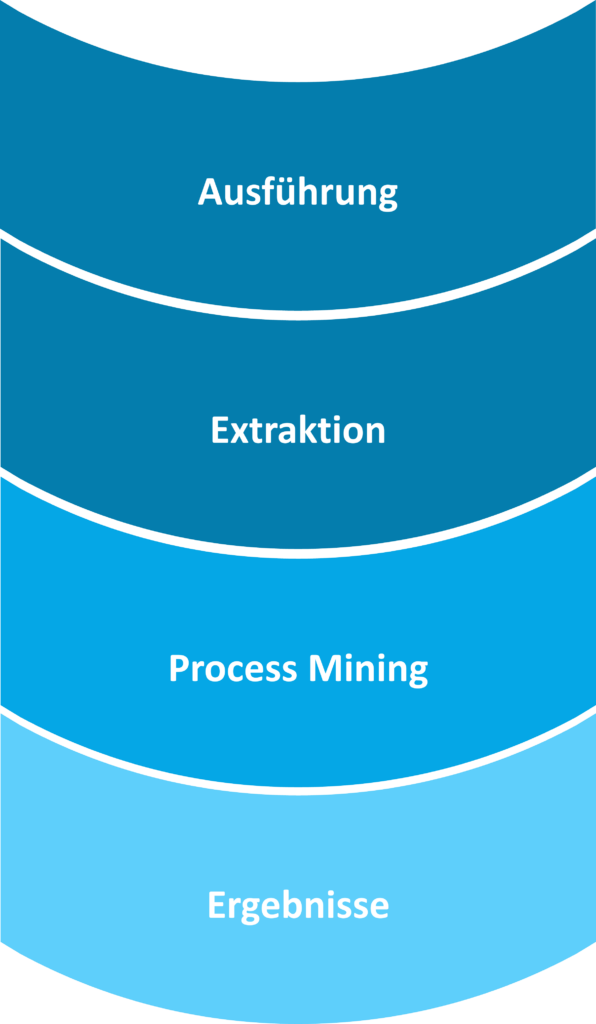
IBM Process Mining is an integral part of business automation. It enables data-driven analysis of your business processes in real time. By visualizing and identifying bottlenecks, you can optimize and automate your processes. With IBM Process Mining, your business–automation–strategy to a whole new level.
We offer the following consulting services
Process Mining




Read more on the ISR blog
Valuable content on the topic of process mining

Efficiency through Simulation: Leveraging Process Mining in Approval Workflows

The Top 6 Process Mining Misconceptions

Process mining advantages: Why you need to act now!

Analyzing Digital Business Processes Using Process Mining
Get in touch with us now
We would be pleased to advise you.

Ilan Koch
Senior Consultant
Document Logistics
ilan.koch@isr.de
+49(0)151 422 05 414