The cloud industry is booming, and managed cloud services are more in demand than ever to manage cloud infrastructures securely and reliably.
Over the past decade, the cloud industry has experienced significant growth due to increased awareness of its benefits and advantages. More and more companies are using the cloud as the backbone of their network infrastructure and are moving away from traditional physical network infrastructure. New cloud-native applications are constantly being developed, as well as tools that optimize existing applications to make them cloud-compatible. Learn more about cloud computing in our blog post on hyperscaling.
As a business, you may be ready to move your applications to the cloud to reap its benefits. However, if your company is not in the technology industry, you may not know exactly how to integrate cloud services and applications into your current business processes. For this reason, you should definitely consider using the services of a managed cloud service provider. Below, you can learn more about how managed cloud services work and what advantages they offer.
How do managed cloud services work?
How can a managed cloud service provider support me?
Managed cloud service providers enable companies to reap the benefits of cloud computing without having to learn everything about it. In most cases, internal IT departments lack the skills that are crucial for effectively monitoring and maintaining a cloud environment. For this reason, it makes sense to hire an external provider for cloud managed services. Companies often sign a service agreement before migrating to get help determining the cloud resources best suited to their needs and to ensure that the configuration is done correctly. This way, you can be sure that cloud security, storage, computing, application stacks, network applications, etc. are managed efficiently, allowing you to focus on your core business processes.
5 advantages of managed cloud services
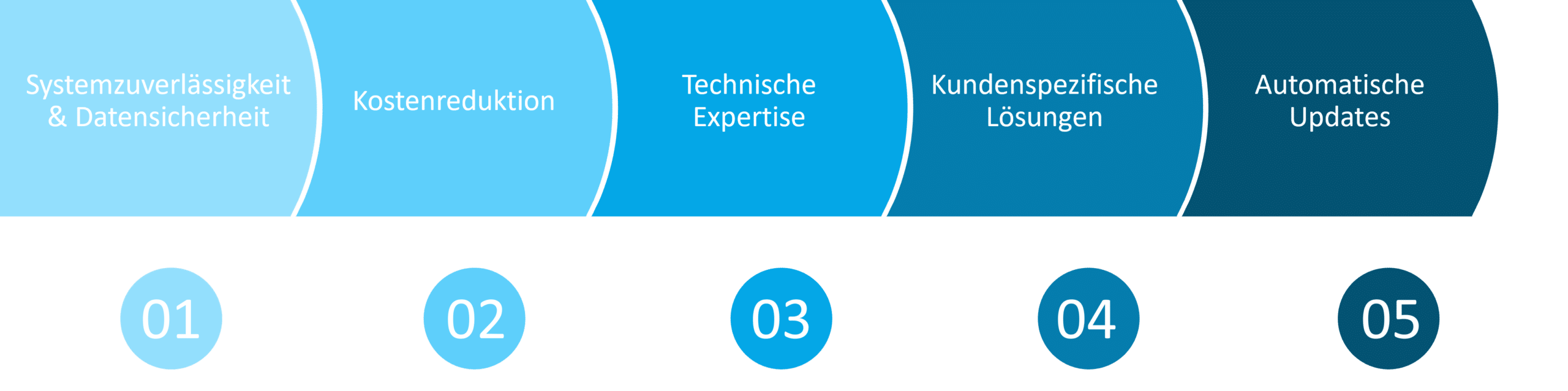
Figure 1: Advantages of managed cloud services | isr.de
1 Improvedsystem reliability and data security
The use of cloud infrastructures guarantees reliable access to all your tools and data. Fail-safes are built in to ensure uptime and continuity of access. In most cases, you can't prevent system failures, but a strong cloud infrastructure can help you control losses. If you store your data exclusively on-site, you won't be able to access it in the event of hardware failures, power outages, or office closures. If you securely upload your data to the cloud, you can access it from any device with an internet connection, regardless of what happens to your work computer or other devices. This means you can continue your business operations without delays or productivity losses. At the same time, employees who work from home can also benefit.
In addition, cloud computing enables data to be encrypted across networks and stored securely in databases. You can control access, implement authentication procedures, and even introduce customized security measures to ensure that your data is protected at all times. To ensure adequate security management and prevent cyberattacks, it is advisable to engage an established cloud provider.
2 Lower costs
Since cloud infrastructure is managed differently than your traditional on-premises servers, cloud computing services are usually more efficient. Although companies' own local servers have a high capacity to support workloads, they are often underutilized. When you move your operations to the cloud, you essentially pay for the maintenance and administration costs that arise at your site. This means there are no costs for unused capacity, expensive equipment, on-site specialist staff, or system upgrades.
3 Technical expertise
Established managed service providers have both the teams and the expertise to set up, deploy, migrate, and support your company's cloud solutions. Thanks to their technical know-how, they can intervene immediately and help, whether as an additional team member or as your full-service provider.
4 Easier creation of customer-specific solutions
Without hardware commitments, you have more flexibility in the tools and applications you use. Do you need your own server for an application? A managed cloud solution can easily be equipped with its own virtual server to handle the load, including the necessary storage, security, and RAM. This allows you to build an infrastructure that meets the needs of your employees.
5 Automatic Updates
Since the servers are located outside the company, the respective providers ensure that both software and security updates are installed regularly. You can rest assured that your systems will continue to run on the latest technology thanks to a fully managed cloud service.
Key considerations when selecting a managed cloud service provider
Relying on a managed cloud services provider to manage your cloud resources requires a great deal of trust. These providers typically have full access to your data, and the functionality of your cloud services may depend entirely on them. For this reason, it is important to choose an experienced provider whose services are transparent and secure.
Any provider you choose must also be familiar with both the cloud services you want to use and your business processes. This means that they must be familiar with industry best practices, know how to integrate all key tools or applications, and be able to adapt or optimize your workflows for cloud resources.
Get infrastructure operation and hosting from the experts
ISR has been offering Managed ServicesWhat are managed services? Managed services can be defined as IT services... More and managed hosting for companies for over 20 years. We successfully support a large number of companies in operating their cloud infrastructures – always taking individual requirements into account. As a managed cloud service provider
- We offer private cloud (e.g., AWS) and hybrid cloud environments.
- We take care of setting up or migrating your (previous) environment.
- We perform maintenance and security updates on your virtual servers, thereby increasing your data security.
- We take care of the setup, configuration, and management of the infrastructure.
- We connect to your business applications with our application hosting
and offer the optimal combination of infrastructure and application operation. You run your business just like your systems.
Do you have any questions?
Feel free to contact us for a free consultation on cloud services and secure the benefits of using cloud infrastructures for yourself. You can find more information about ISR's managed cloud services here.

Jens Brettschneider
Head of Business Unit
Application Management
jens.brettschneider@isr.de
+49(0)151 422 05 425