Unified Data Governance refers to a comprehensive strategy and the associated measures to ensure the quality, protection, access, and use of data within an organization. This is not an easy task, as data must be provided quickly and up-to-date, while also being reliable and protected.
Data is among the most critical resources within an enterprise. To achieve business success, valid data-driven decisions must be made. For the necessary data to be available, two significant hurdles must be overcome. Firstly, data must be provided quickly and up-to-date, and secondly, it must be reliably and securely protected from cyber threats and loss.
What to Expect Here – An Overview
1. What is Data Governance and why is it needed?
Trustworthy data is essential for complying with legal requirements, maintaining customer trust, and providing the right information to the right employees for informed decision-making. However, a significant portion of data sets often exhibit substantial deficiencies or are inadequately protected. The good news is that these challenges are not insurmountable.
The solution is: Unified Data Governance.
What is Data Governance and why is it necessary?
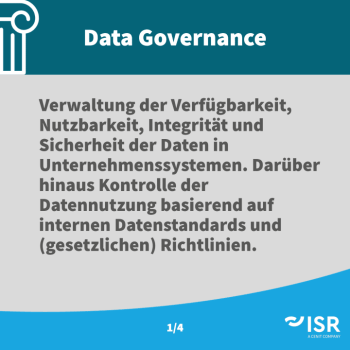
Data Governance refers to the organization of processes and responsibilities aimed at enhancing the quality and security of data utilized within an enterprise. It enables organizations to control who can access which data, and with what methods, authorizations, and permissions.
This allows for the establishment of frameworks to better leverage the potential of data available within the organization. It generates added value for the company, contributing significantly to its longevity and success.
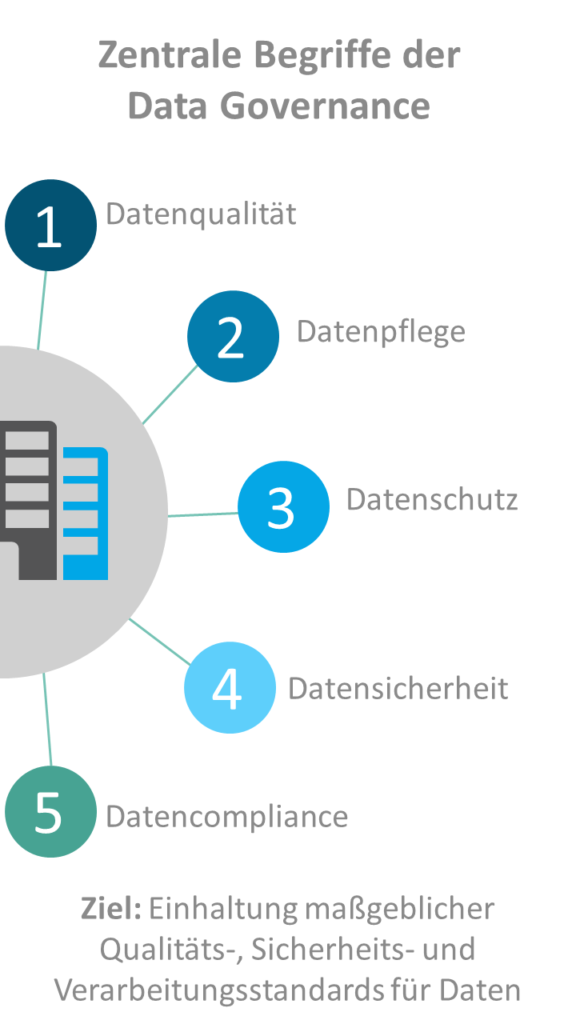
A well-structured Data Governance strategy supports uniform, standardized process and responsibility management, forming the foundation of the entire Data Governance framework.
The rules and guidelines defined in this context pertain to both responsibilities and decision-making rights, as well as corresponding security measures for the data. This means that the organization itself determines who has access to which data under what conditions. Furthermore, the handling of access credentials within the company, as well as the management of inactive or departed employees, should be addressed.
Through Data Governance, significant importance is placed not only on data security but also on data protection within the enterprise. This enables the creation of frameworks to better leverage the potential of available data within the company through Data Science. Consequently, added value is generated for the organization, which can decisively contribute to its longevity and success. Moreover, the goal of protecting data from cyber threats is supported, ensuring the overarching protection objectives of confidentiality, integrity, and availability.
Goals and Benefits of Data Governance
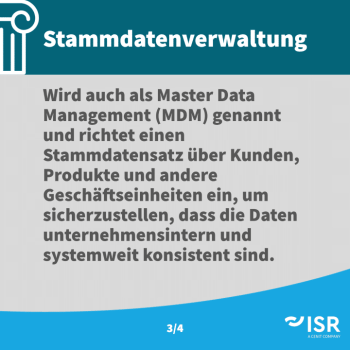
A primary objective of Data Governance is the dissolution of data silos within organizations. These silos form when individual business units operate with separate processing systems, lacking central coordination and a unified enterprise data architecture. Data Governance aims to harmonize the data within these systems through a collaborative process involving stakeholders from various business areas.
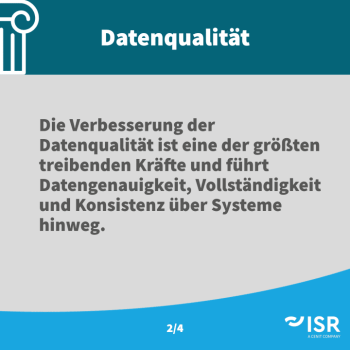
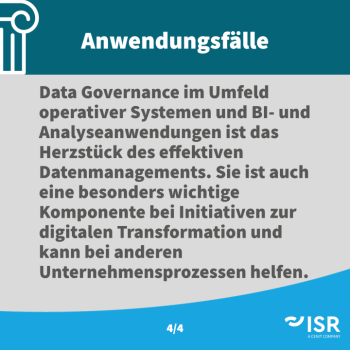
Ensuring that data is used correctly is another objective of Data Governance, as it prevents data errors from entering systems and mitigates the potential misuse of sensitive and personal customer data. This can be achieved by establishing consistent data usage policies and tracking methods, and by consistently enforcing these policies. Data Governance can also help strike a balance between data privacy regulations and data collection methods.
Organizations must be aware of which data they need to protect and how to do so in order to safeguard themselves against threats. But how can data be protected if you do not know what data you possess or where it resides? Who has access to this information, and to whom is it shared?
Data Governance – unified and secure
Information security prioritizes how data should be protected, whereas Data Governance traditionally focuses on how data is used within a business, legal, and compliance context.
When information security and Data Governance are considered as a combined concept, this context refers to Unified Data Governance.
Information security, data privacy, legal, and risk are some of the key stakeholders that play a significant role in this. Many organizations have already embarked on this path and made progress towards greater stakeholder integration. However, many companies still struggle with this, often treating the various stakeholders independently.
Attention in executive suites tends to focus more on information security than on Data Governance. This is primarily due to the significant media attention generated whenever a lack of information security is identified. In contrast, Data Governance is more fragmented in terms of its definition, organization, development, and funding. As a proactive method for risk reduction and enabling the full utilization of information required in today's business environment, Unified Data Governance is increasingly recognized as valuable by many organizations. However, organizations still face challenges in establishing the right prerequisites and controls, and in finding a balance between information risk and value.
Its implementation involves individuals and groups from various disciplines. In addition to data experts, employees from IT, legal, and other specialized departments are also involved.
Each department has distinct objectives and considerations regarding information within the framework of the IGRM (Information Governance Reference Model), which differ from those of other groups. The following outlines the stakeholders, simplified into three groups, along with their primary focus:
- Business Users
require information to operate the business
Focus: Business | Profit Orientation - IT Departments
must implement information management mechanisms
Focus: IT | Efficiency Enhancement - Legal, Risk, and Regulatory Departments
understand the company's obligation to preserve information beyond its immediate business value
Focus: Legal, RIM, Privacy & Security | Risk Management
The IGRM model emphasizes the necessity of viewing all organizational activities as part of an integrated system based on common goals and processes.
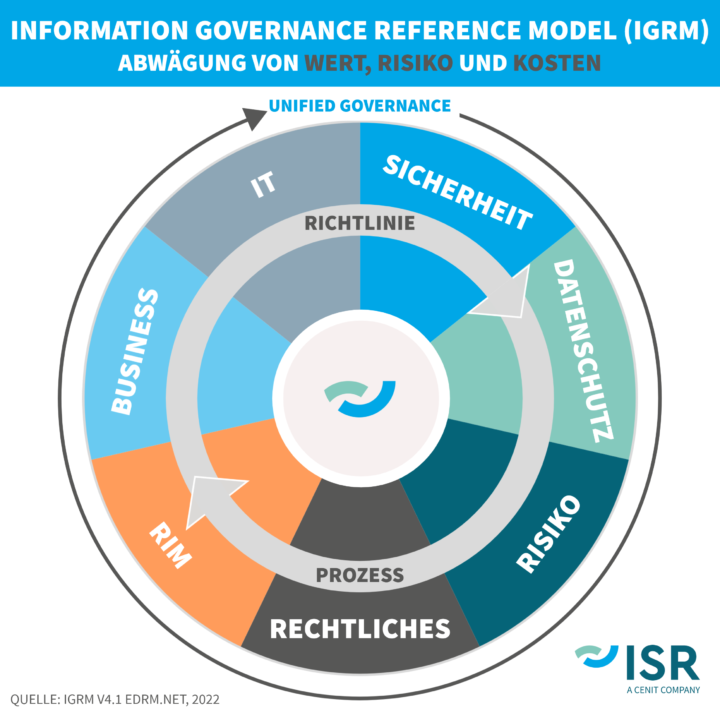
Only through the integration of all activities can organizations ensure effective and efficient management. Furthermore, these various activities must be coordinated to achieve optimal performance, efficiency, and information security.
With ISR, achieve Unified Data Governance and enhanced IT security!
Within the framework of your Unified Data Governance strategy, we assist you in enabling the economic and secure utilization of data.
With our Managed ServicesWhat are Managed Services? Managed Services can be defined as IT services... More, we not only ensure uninterrupted operations, but our Cloud and Security Services also provide a secure backbone for your data.
Would you like to learn more about our services?

Jörg Fester
Head of IT
joerg.fester@isr.de
+49(0)151 422 06 957