
Our Input Management Review questions the importance and relevance of digitizing input channels in companies and provides an outlook on how they can be used effectively.
In an increasingly digitalized world, where companies are confronted with a flood of information every day, effective input management is crucial.
Traditional approaches to input management have served their purpose in the past and have been a fundamental part of process digitization for decades.
However, with the technological advances of recent years, it is time to explore new avenues. This leads us to ask the question: "Is input management still relevant today?"
What is Input Management?
The management and distribution of information or data entered into a complex system is referred to as input management. This can take place in a wide variety of contexts, whether it be data collection and documentation in companies, the collection of data in scientific studies, or the evaluation of medical data in the medical field. In a business environment, input management usually refers to the entry of data and the import of documents from various sources such as emails, paper documents, online forms, or chatbot requests.
The information is then transferred to other processes within the company for further processing or archiving. Input management ensures that the data is captured correctly and transferred to the systems to guarantee efficient processing. Input management also includes the conversion and storage of information in machine-readable formats (e.g., PDF files, text files, tables) and its enrichment with data available within the company. For example, OCR technologies can be used to extract information from paper documents and convert it into digital formats.
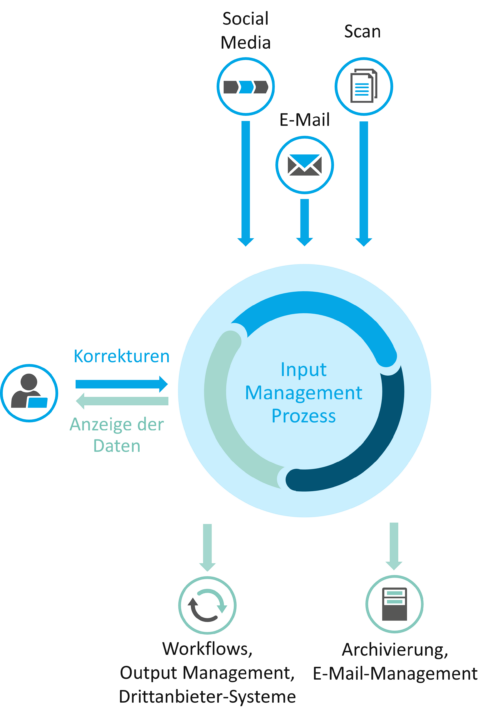
Figure 1:From the input channel, through the input management process, to processing in downstream systems | isr.de
Input Management Review: Pros and Cons
Some may argue that input management is a well-known concept and does not represent a real innovation—nor that innovation is even necessary in this area. After all, companies have always captured, processed, and archived documents. And there are already "ready-made" solutions available on the market. As an up-and-coming company, there is no need to put any more work into this.
That may be true, but the way we process information and the amount we process has changed dramatically in recent years. Digitalization has led to an exponential increase in the amount of data that companies have to deal with. Many new communication channels have been opened up—for example, e-mails, online forms, social media, chatbots, and much more. These generate a wealth of information from which insights and added value can and must be generated. Input management has therefore not changed as a process, but it does need to adapt technologically.
Furthermore, many of the new communication channels mentioned above do not involve a stream of structured paper forms arriving via internal mail. Information flows unfiltered into the company 24/7 via all possible channels. Appropriate strategies and innovations are needed to maintain an overview. Intelligent capture systems can extract data from various sources, classification algorithms can automatically categorize documents and extract metadata, and workflows enable seamless information sharing and processing. Artificial intelligence (AI) and machine learning (ML) strategies are also used here.
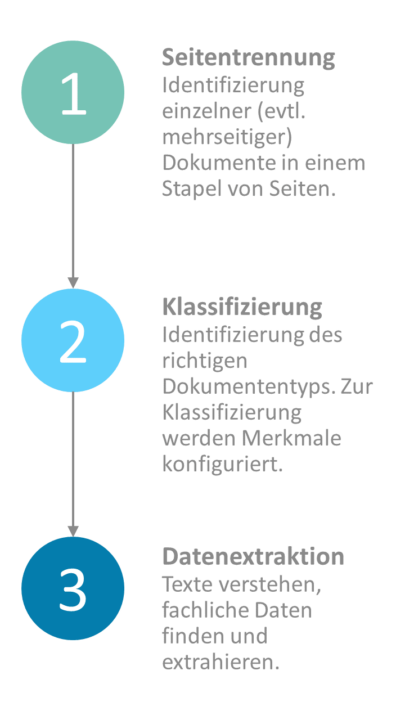
Figure 2: The capabilities of input management solutions | isr.de
Input Management Review: The Role of Artificial Intelligence
The integration of AI into the input management process opens up entirely new possibilities. AI-supported systems can analyze and interpret large amounts of data in real time, recognize patterns, and make automated decisions. By using AI, we can automate time-consuming manual processes, improve accuracy, and gain valuable insights.
By combining multi-channel communication and AI-powered input management, companies can respond efficiently to customer inquiries, avoid bottlenecks, and increase customer satisfaction. Information from different channels can be seamlessly merged in real time to enable faster and more informed decisions. New technological possibilities allow companies to gain deep insights into the world of social media. Is your company currently the topic of conversation (positive or negative)? Do we need to respond? Are customer complaints piling up? Modern input management with the support of AI and ML can provide answers to these questions.
Blog article recommendation
Please also read the article "Digital document analysis thanks to AI-based software" by our partner Buildsimple for more information on this topic.
Blog article recommendation
Please also read the article "Digital document analysis thanks to AI-based software" by our partner Buildsimple for more information on this topic.
Input Management Review: The "new" input management
In light of these developments, we can say with certainty that input management is not dead. It is undergoing a metamorphosis and has become more modern and innovative. It enables companies to manage a greater variety of information, be more flexible, and identify new opportunities.
The combination of multi-channel input management and AI enables us to better understand information, process it effectively, and make faster decisions. Companies can reap the benefits of improved efficiency, cost savings, and better customer loyalty.
Conclusion: Take advantage of the benefits of new input management solutions
It is time to leave traditional input management behind and explore the possibilities of multi-channel input management in conjunction with AI. Tools such as Buildsimple or IBM Datacap are ideal for this purpose.
Companies should focus on integrating different communication channels and using AI-supported systems to manage and use information more efficiently. Input management is therefore more vibrant and relevant than ever before. It offers new opportunities and possibilities to help companies succeed in the digital world.
We can provide you with expert advice and support you in integrating a wide range of technologies into your input management process.
Website recommendation
Find out more about areas of application, advantages, and tools that can take your input management to a whole new level.
Website recommendation
Find out more about areas of application, advantages, and tools that can take your input management to a whole new level.

Cihan Klingsporn
Senior Account & Marketing Manager
Business Process Automation
cihan.klingsporn@isr.de
+49(0)151 422 05 471