
Digital Invoice Processing
Digital Invoice Processing
Digital and Secure!
Are you familiar with this scenario: A payment deadline is approaching, but the invoice is nowhere to be found? Has it even been approved yet? In a digital world, invoice processing must not become a bottleneck for businesses.
By automating processes such as invoice receipt, approval workflows, and archiving, companies save valuable time and resources. This not only provides greater transparency throughout the digital invoice processing workflow but also ensures compliance with discount deadlines, for instance. Furthermore, errors are minimized.
This section will address what invoice receipt software is, which essential functions it should include, and why software for digital invoice processing is already indispensable today, and will be even more so in the future, to streamline your invoice workflow.
What is Invoice Receipt Software?
Definition
With invoice receipt software, the process from invoice receipt to processing becomes effortless. Companies regularly receive invoices that require payment. However, when these invoices arrive via various input channels and subsequently end up in different departments for acknowledgment and approval processes, this can quickly become chaotic and time-consuming. Without appropriate software, this entails significant manual effort and wasted time.
With a digital solution, however, every invoice arrives directly at a central location, and data capture occurs automatically. All crucial information for approval and posting is immediately accessible, eliminating the need for tedious document tracking. This ensures a smooth workflow and contributes to more relaxed and satisfied teams.
Processing Invoices Digitally
Key Software Functions
Invoice Receipt - Capture & Digitize
Regardless of whether invoice information enters the system via OCR from a paper invoice or directly as an e-invoice (in ZUGFeRD or XRechnung format), digitizing and capturing incoming invoices is among the core functions of digital invoice processing software.
Invoice Recognition - Extract & Assign
Following capture, critical invoice information such as invoice number, amount, and vendor data should be automatically extracted and assigned to the corresponding master data. This streamlines further processing and minimizes manual intervention.
Invoice Workflow - Review & Approve
The software should provide a digital workflow for the substantive review and approval of invoices. This facilitates rapid, location-independent invoice authorization and ensures transparency throughout the entire process.
Interfaces -
Seamless Integration
Seamless integration with existing ERP, accounting, merchandise management, and document management systems is essential. This ensures that invoice data is automatically transferred to and processed within the respective systems.
Archiving - Audit-Compliant Visibility
The software should enable audit-proof archiving of invoices in accordance with GoBD regulations. This ensures that invoices are accessible at all times and archived in a legally compliant manner.
Automation -
simple & efficient
Finally, the software should support the process up to the automated posting and payment of invoices. This primarily includes transferring approved invoices to the corresponding system. For instance, certain invoices can be directly verified and automatically posted by the system via straight-through processing, without requiring additional manual approval.
New Era in Digital Invoice Processing
E-Invoicing Mandate 2025
With the introduction of the electronic invoicing mandate (e-invoicing) in Germany, a new era is dawning in accounting and digital invoice processing. Starting in 2025, specific electronic invoice formats will gradually become mandatory, while other formats (e.g., paper) will progressively lose their admissibility.
The focus of invoice processing is shifting towards machine readability. Unstructured (outgoing) invoice formats (e.g., PDF) will only be permissible in a B2B context until the end of 2027. As of January 1, 2025, companies must possess the general capability to digitally receive and process incoming invoices. Permissible formats include ZUGFeRD and XRechnung.
Whitepapers
Background, Facts & Guide
Our whitepaper provides all essential information, from legal foundations and benefits to a practical conversion checklist. Start now and save time and costs!
From A for Automation to Z - Future-Proofing
The Benefits at a Glance
Digital invoice processing with appropriately specialized software offers companies numerous benefits and can lead to a significant increase in overall efficiency and productivity.
- Automation: Intelligent algorithms and OCR technology enable the automatic capture and processing of invoice data, which minimizes errors and enhances efficiency.
- Flexibility and Location-Independent Work: Invoices can be processed and approved from anywhere. Simply use your tablet or smartphone thanks to the responsive design.
- Cost Reduction: The elimination of paper, printing, and physical storage, along with reduced personnel expenditure, significantly lowers operating costs.
- Seamless Integration: Digital invoice processing can be effortlessly integrated into existing accounting systems.
- Support for Various Formats: Modern software can handle all common invoice formats, including structured e-invoicing formats like XRechnung and ZUGFeRD.
- Enhanced Security: Digital archiving ensures GoBD-compliant and audit-proof storage of invoices.
- Centralization and Overview: All invoices and associated information are centrally available, while intelligent searches with filter functions provide a better overview and faster access. Dashboards and reporting functions ensure additional transparency.
- Time Savings: The entire process from capture to archiving is significantly accelerated. Manual entries and sorting are eliminated, thereby saving valuable working time.
- Future-Proofing: With the increasing adoption of electronic invoicing standards, companies utilizing digital invoice processing are well-equipped for future requirements.
- Time Savings: The entire process from capture to archiving is significantly accelerated. Manual entries and sorting are eliminated, thereby saving valuable working time.
- Cost Reduction: The elimination of paper, printing, and physical storage, along with reduced personnel expenditure, significantly lowers operating costs.
- Automation: Intelligent algorithms and OCR technology enable the automatic capture and processing of invoice data, which minimizes errors and enhances efficiency.
- Centralization and Overview: All invoices and associated information are centrally digitally available, enabling a better overview and faster access.
- Enhanced Security: Digital archiving ensures GoBD-compliant and audit-proof storage of invoices.
- Flexibility and Location-Independent Work: Invoices can be processed and approved from anywhere.
- Seamless Integration: Digital invoice processing can be effortlessly integrated into existing accounting systems.
- Support for Various Formats: Modern software can handle all common invoice formats, including structured e-invoicing formats like XRechnung and ZUGFeRD.
- Future-Proofing: With the increasing adoption of electronic invoicing standards, companies utilizing digital invoice processing are well-equipped for future requirements.


For us, digital invoice processing represents an enormous simplification of daily operations. Fewer manual processes, faster approvals, and anytime access to invoice data not only boost efficiency but also enhance team job satisfaction.
Björn Schmidt
Team Lead, Financial Accounting

Without digital invoice processing, companies squander valuable time and resources – automation is the key to efficiency and future-proofing.
Jens Brettschneider
Head of Application Management
Digital Invoice Processing
Our Technologies
Efficiency and Compliance through Digital Automation
Process of Digital Invoice Processing
The process of incoming invoice processing follows a structured and standardized workflow – whether manual or digital:
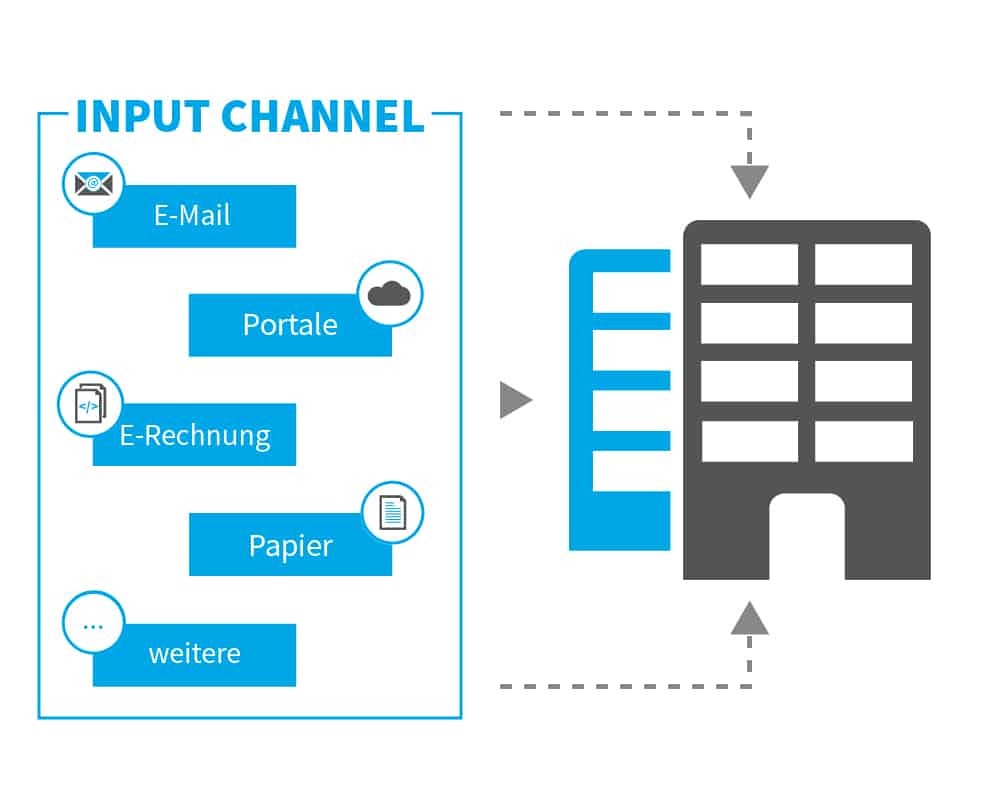
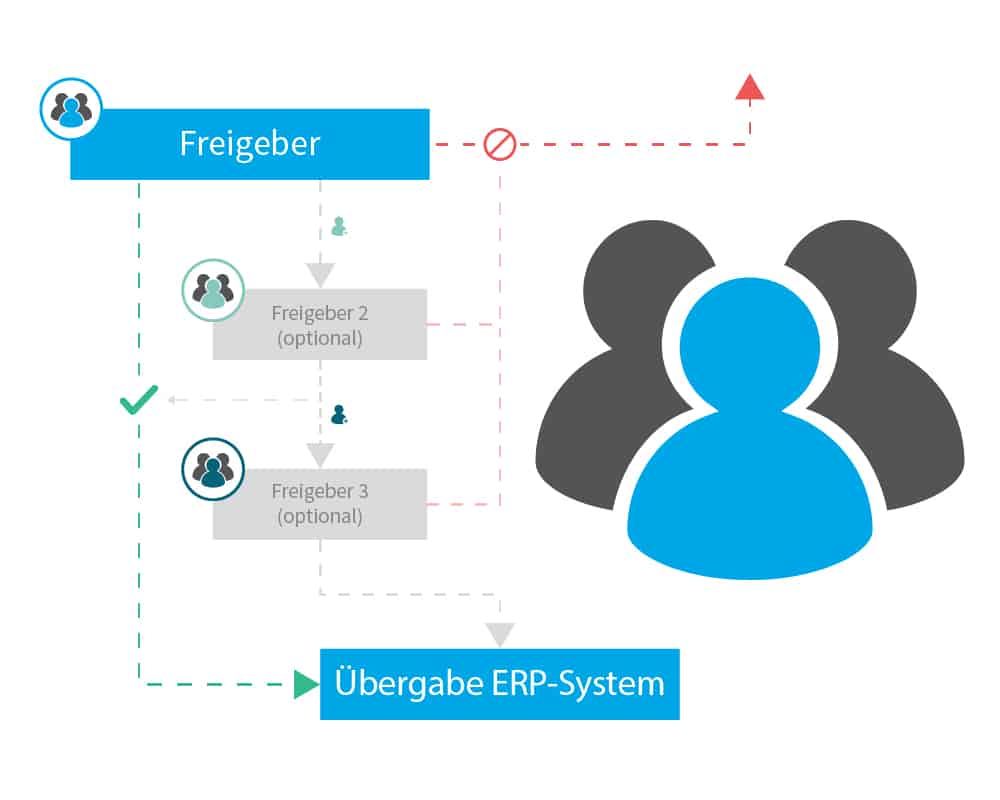
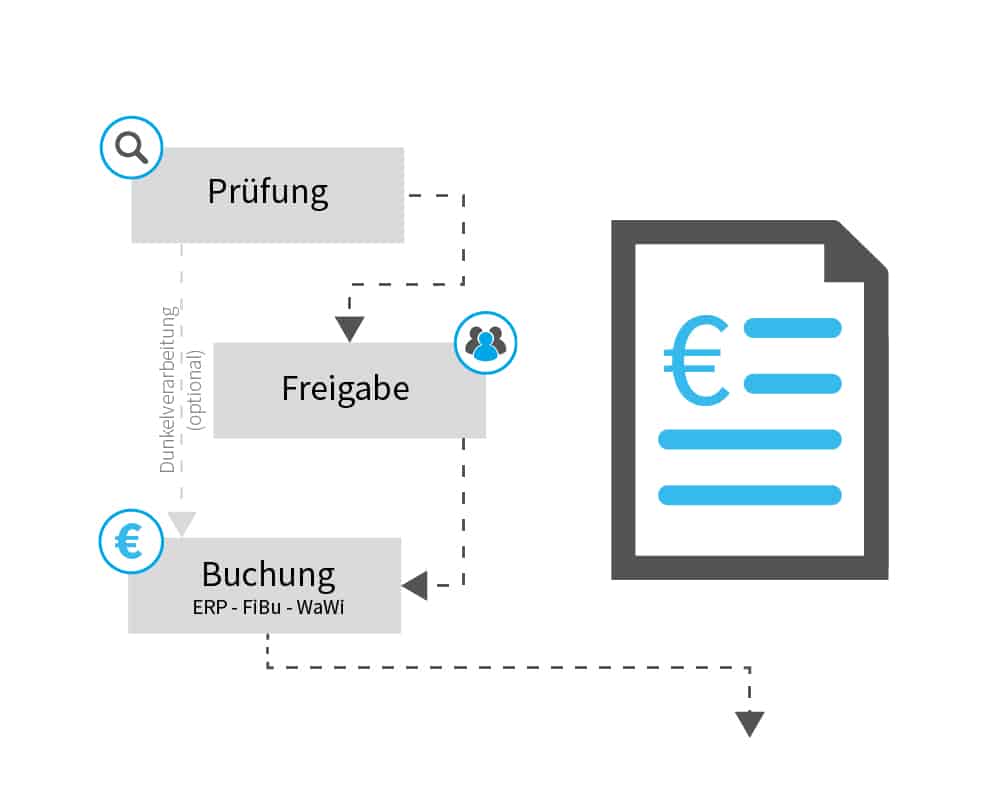
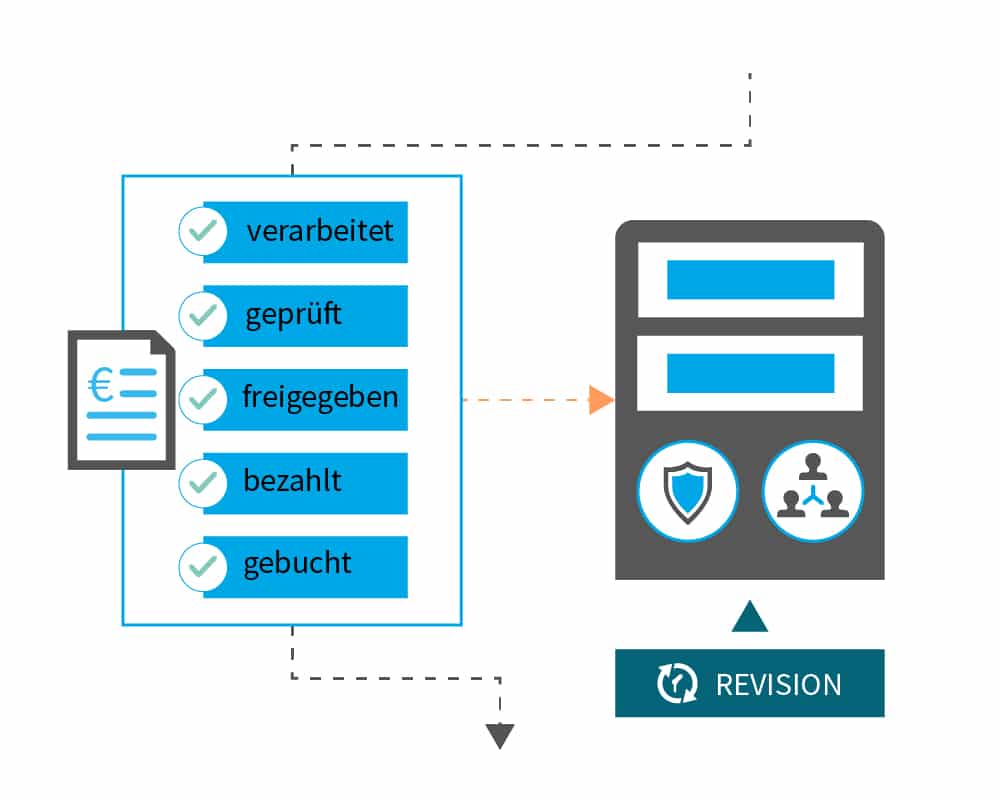
Invoices enter the company through various input channels (e.g., paper, email, etc.). If they are not already in a digital and standardized format (such as XRechnung or ZUGFeRD), the relevant invoice information is automatically extracted using AI.
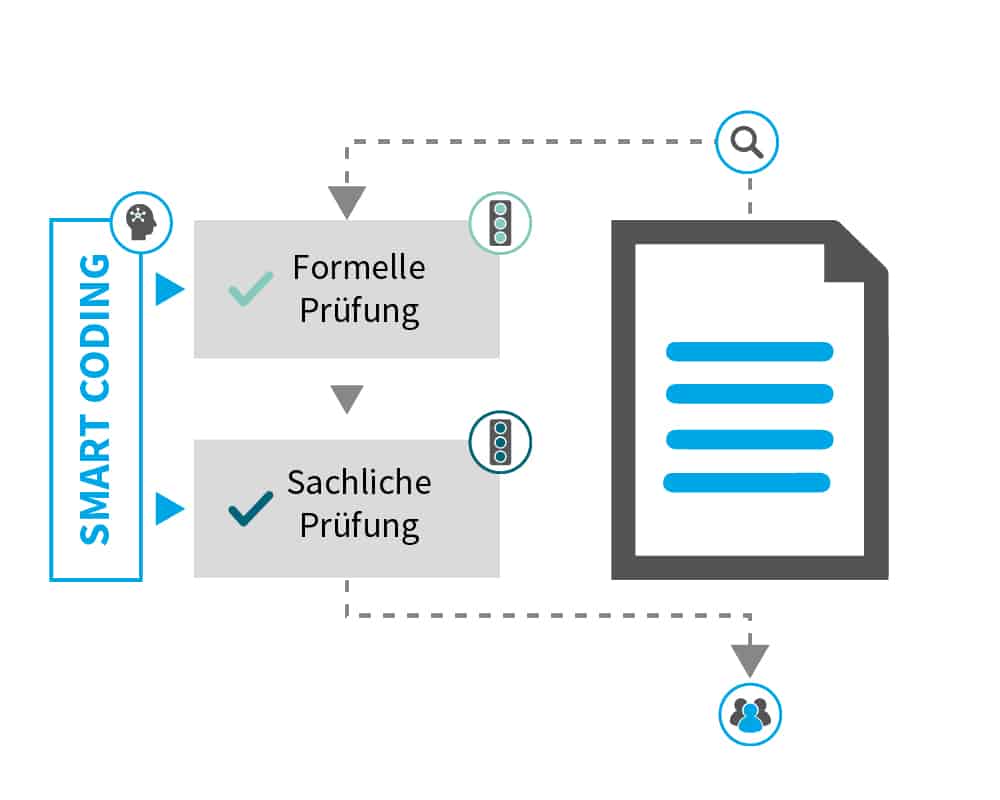
The extracted data is reconciled with the supplier's master data and order data. Plausibility checks ensure the invoice's accuracy.
If the invoice passes all checks, it is forwarded to the responsible employee for approval. Responsibility and timing are determined by predefined rules. Following a final review, the invoice is approved.
The approved invoice is posted, whereby the corresponding accounting entries are created and transferred to the accounting system.
After posting, the invoice is released for payment, and payment can then be automatically made to the supplier. Subsequently, it is digitally archived, ensuring it is retrievable and verifiable at any time.
Through digital invoice processing, companies can not only increase their efficiency but also make their processes future-proof and compliant. In times of skilled labor shortages and increasing demands on corporate governance, it is therefore an indispensable tool. Furthermore, as of January 1, 2025, e-invoicing (at least its processing) will be mandatory in Germany, necessitating further standardization and process adjustments for businesses.
Digital Invoice Processing with ISR
Our References

Implementation of ISR Accounts Payable Flow at a Financial Service Provider

Application Management Services with a Customized Digital Incoming Invoice Solution

Automated, End to end integrated, and Digital
How We Support Companies
Efficient digital invoice processing – everyone wants it, we deliver it! Through our comprehensive consulting and profound software expertise, we help you implement powerful solutions for invoice processing and optimized workflows. This enables nearly complete automation – from accounting entry and verification to invoice approval. It is irrelevant whether your invoices are already available in digital formats such as ZUGFeRD or XRechnung or still in analog formats.
We offer both our innovative software solutions and proven products from our partners to provide you with customized and high-performance systems. We support our clients with both on-premise installations and cloud solutions, which can be flexibly adapted to the respective IT infrastructure. Additionally, we provide customizable dashboards and reporting functionalities that enable a clear overview and detailed analyses of the entire invoicing process.
Our team of experts supports you from analysis and implementation through to continuous optimization to ensure that your invoice-based business processes run smoothly and efficiently.
Operational and Technological Expertise Hand in Hand
At ISR, we combine profound technical knowledge with extensive operational expertise to provide our clients with holistic IT solutions. Our software solutions are specifically tailored to the individual requirements of our clients. However, our approach extends far beyond mere technology:
As a reliable partner, we provide long-term support to our clients by ensuring the stable and future-proof operation of their software solutions. We handle all tasks related to monitoring, maintenance, and adapting the software to new requirements and are always available with short response times for customized solutions.
5 Frequently Asked Questions on the Topic of
Digital Invoice Processing
Digital invoice processing describes a process for the electronic capture, processing, and storage of invoices. Manual workflows are largely automated to streamline invoice handling. This enables more efficient management of incoming invoices, allowing companies to optimize their financial processes, reduce costs, and enhance overall efficiency. Given the accelerating digitalization and the forthcoming e-invoicing mandate, it has become an indispensable tool for many enterprises.
Digital invoice processing offers a multitude of advantages, including enhanced efficiency through automation and accelerated processing times. It results in significant cost savings by reducing printing and postage expenses, alongside personnel and administrative overheads. Furthermore, it improves accuracy, as automated processes minimize errors and ensure data consistency. Digital invoices are also more environmentally sustainable due to decreased paper consumption, and they provide superior transparency and traceability. Additionally, they guarantee heightened security through robust encryption and authentication protocols.
The entire digital invoice processing workflow typically encompasses five key steps: 1. Invoice Receipt & Capture, 2. Invoice Verification, 3. Invoice Processing & Approval, 4. Posting, and 5. Payment & Archiving. With digital invoice processing software, many of these steps can be automated, ensuring a seamless flow between individual process stages and providing an additional benefit:
Your employees operate within a predefined process, adhering to a clear structural plan. This ensures that all steps are executed correctly, transparently for all stakeholders, and with maximum efficiency.
OCR (Optical Character Recognition) for text recognition and AI-based systems for automated data extraction and processing are standard components within many enterprises. Cloud-based solutions further facilitate location-independent access. From 2025, your software must also be capable of directly processing e-invoices (e.g., in ZUGFeRD or XRechnung format) in compliance with the e-invoicing mandate. Moreover, algorithms and artificial intelligence are leveraged at various stages throughout the entire invoice processing workflow. For example, invoice account assignments are automatically generated, and relevant personnel for acknowledgment and approval processes are identified and notified by the system.
The electronic invoicing mandate (e-invoicing) represents a fundamental transformation in accounting practices for your enterprise. As of January 1, 2025, all companies in Germany are required to be capable of receiving e-invoices in a structured electronic format. This necessitates the implementation of suitable software solutions and the adaptation of existing processes. While transitional periods extend until the end of 2026 and 2027, respectively, the long-term outlook mandates that both incoming and outgoing invoice processing must be fully digitized and electronically enabled. The transition offers long-term advantages such as cost savings, efficiency enhancements, and improved data security. Therefore, early preparation is highly recommended to effectively address the associated technical and organizational challenges.
Read More in the ISR Blog
On Digital Invoice Processing
Automated Digital Invoice Verification: Secure and Efficient!
The dream of every accounting department: automated, AI-powered, and intelligent invoice verification that supports their specialists with smart…

Addressing the Skilled Labor Shortage in Financial Accounting through Automation
SKILLED LABOR SHORTAGE IN ACCOUNTING: HOW PROCESS AUTOMATION CAN PROVIDE A SOLUTION What to expect here – an overview…

Implementing E-Invoicing in the Enterprise:
A Guide
Effective 2025, companies in Germany must be capable of receiving e-invoices. A challenge? Yes! But impossible? No! …
Contact us now
We are ready to assist you!
Do you aim to digitize your incoming invoices and elevate your accounting to the next level? Are you looking to capitalize on all the benefits of digital incoming invoice processing and e-invoicing? Discover the advantages for yourself! If you have a specific inquiry or wish to learn more about our software or consulting services, please do not hesitate to contact us.

Jens Brettschneider
Business Unit Manager
Application Management
jens.brettschneider@isr.de
+49(0)151 422 05 425