Reduce IT costs, address the shortage of skilled professionals, and simultaneously ensure quality – with Application Management Services (AMS) and smart shoring strategies, companies successfully navigate the balance between efficiency and innovation.
Rising demands, constrained budgets, and tight labor markets: IT faces significant pressure. While digitalization and innovation are heralded as future imperatives, operating costs simultaneously escalate – frequently unnoticed.
Many organizations only account for overt expenditures, such as hardware, software, or licenses. However, the genuine cost drivers frequently remain concealed: inefficient processes, extended response times during disruptions, or a deficit of specialized personnel.
Under these conditions, how can you make your IT more efficient – without sacrificing quality or control?
Understanding IT Costs: A Holistic View is Essential
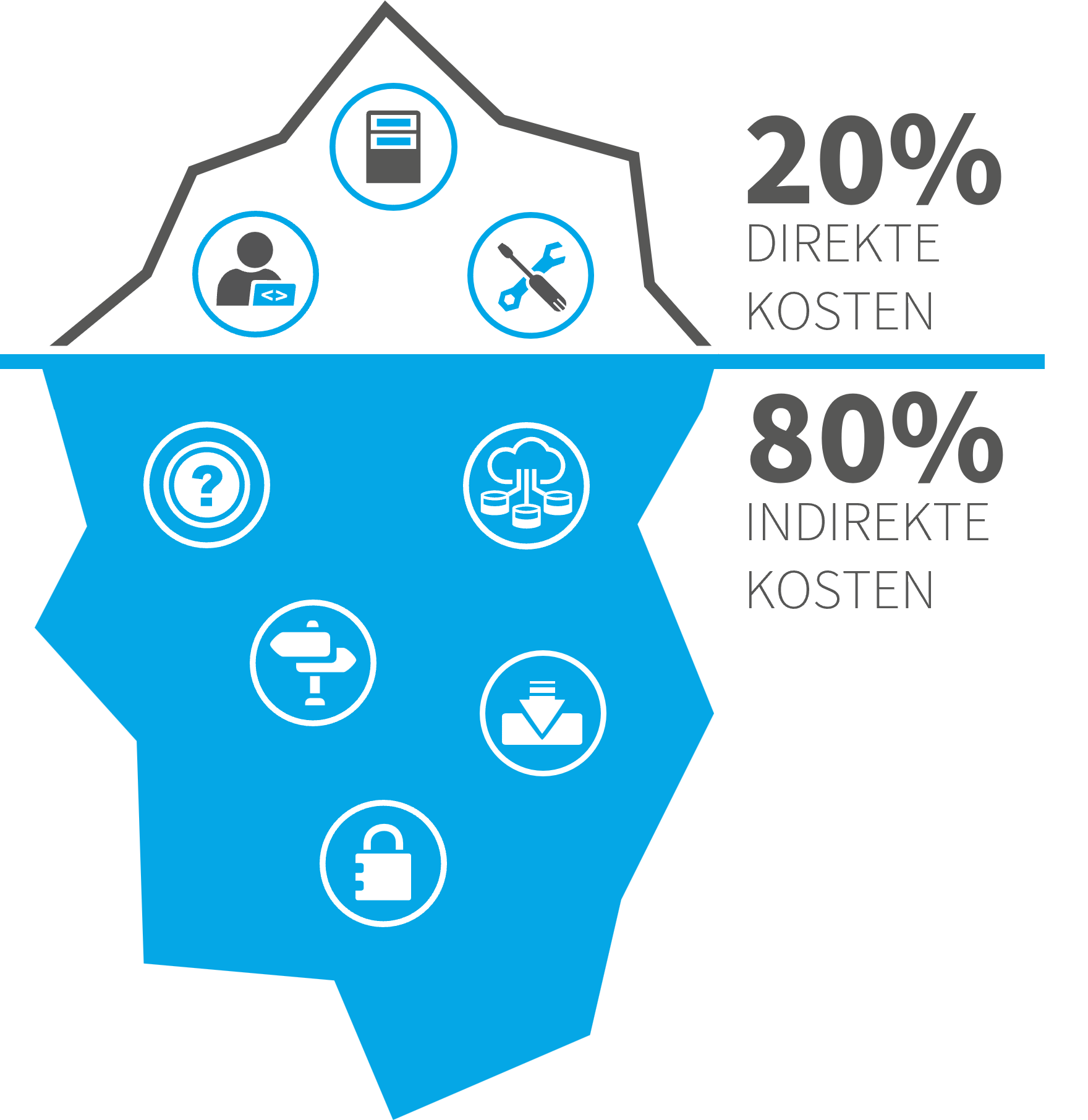
An increasing number of companies are adopting the concept of Total Cost of Ownership (TCO) – encompassing the overall costs incurred throughout the entire lifecycle of IT systems. In addition to direct costs such as licensing and operational expenses, indirect factors play a particularly significant role:
- Downtime and Disruptions
- Productivity losses due to inefficient processes
- High effort for maintenance & upkeep
- Security incidents with high consequential costs
- Time expenditure for onboarding new employees
- Rising recruitment costs amidst a shortage of skilled professionals
The aspect of recruitment costs and the shortage of skilled professionals, in particular, has evolved into a strategic bottleneck in recent years.

The Answer: Application Management Services (AMS)
The term “managed services” is often used as an umbrella term for outsourced IT services. At ISR, we specifically refer to Application Management Services (AMS) —a structured, flexible, and scalable solution for the stable operation of business-critical applications.
AMS services offer you:
- Proactive maintenance and continuous monitoring
- Transparent services based on clear SLAs
- Access to specialized expert knowledge
- Flexible service models – individually customizable
In combination with a suitable shoring model, this not only reduces operating costs but also frees up resources and strengthens innovation capabilities.
Interview: Identifying the Primary IT Cost Drivers and Effective Mitigation Strategies
We spoke with Jens Brettschneider, Head of Application Management, about the current situation in IT.

What do you currently see as the greatest challenges for companies regarding IT costs?
We generally observe three primary cost categories: Firstly, the system maintenance of IT infrastructures, which consumes substantial resources. Secondly, inefficient IT service management processes. And thirdly, technological complexity, which continually generates new requirements. The challenge is further compounded by the frequent interplay of multiple cost categories.
Many companies are urgently seeking IT professionals. From your perspective, is this an additional cost driver?
Absolutely. In practice, we observe that IT teams are operating at full capacity while simultaneously having to manage complex requirements. The search for qualified professionals often takes months. Concurrently, the pressure to integrate new technologies or keep systems up-to-date is increasing. This inevitably leads to bottlenecks – both in terms of time and finances.
What strategies help companies address this?
Today, many companies rely on external support—such as application management services or specialized partners. The advantage: Recurring, time-consuming tasks can be outsourced, while internal teams focus on strategic or transformative tasks. Furthermore, external teams bring expertise and standardization to the table, which further improves quality. A recent PwC study, “ , ” also shows that, as a result, 79% of companies in Managed ServicesWhat Are Managed Services? Managed services can be defined as IT services… More see this as a way to avoid staffing shortages.
Does shoring also play a role in this?
Yes, definitely. Shoring is an effective way to sustainably reduce IT costs. Nearshoring, in particular, offers a good balance between cost advantages and collaborative parity – for instance, through cultural proximity and identical time zones. Offshoring provides even greater savings potential, especially for highly standardized services. It is crucial to select the appropriate model for specific requirements; a hybrid solution is often ideal.
However, outsourcing is also viewed critically. What are the inherent risks?
They exist – as with any business decision. Key factors include clear partner selection, defined processes, a shared understanding of quality, and naturally, legal and data protection-compliant frameworks. When these factors align, outsourcing functions very effectively – and fosters innovation.
Thank you, Jens, for your brief insights. What are our key takeaways?
Shoring Models as Efficiency Levers
By combining AMS with an intelligent shoring approach, operating costs can be flexibly managed. An overview of common models:

Onshore

Onshore

| Model | Advantages | Typical Application Area |
|---|---|---|
| Onshore | High customer proximity, rapid coordination | Strategic tasks, governance |
| Nearshore | Cost-efficient, same time zone, high quality | Operations & Enhancement |
| Offshore | Maximum savings potential, global scalability | Standardized Services |
| Hybrid | Best combination of proximity, efficiency & scalability | Individual Requirements |
According to IDC/COMARCH , 29% of companies in Western Europe already utilize Smart Shoring – a blend of on-, near-, and offshore models.
Conclusion: The Right Mix is Key
Whether facing rising IT costs, staff shortages, or increasing demands for flexibility – AMS combined with an intelligent shoring approach creates precisely the balance that modern IT requires.
With a strong partner by your side, IT outsourcing transforms into a strategic instrument for enhancing efficiency, reducing costs, and fostering innovation.
Application Management Services (AMS), in combination with an intelligent shoring model, enables the reduction of operating costs, standardization of processes, and simultaneous flexible response to new requirements.
ISR supports you in precisely this endeavor:
- with structured IT operational analyses,
- ITIL Service Design workshops for individual strategies,
- tailored service models,
- and 30 years of experience in Application Management, IT Operations, and Outsourcing
Whether for pure support, strategic advancement, or hybrid operating models – ISR offers the appropriate solution (for every challenge).
Would you like to learn more? Further information can also be found here, or feel free to contact us directly, and we will optimize your IT together with you.

Jens Brettschneider
Head of Business Unit
Application Management
jens.brettschneider@isr.de
+49(0)151 422 05 425