
Customer portals are not only a showcase for customers, but increasingly also a communication center. Learn more about the advantages, phases in the digital customer onboarding process, and an IT project at a customer's site.
Table of Contents
1. What is the digital customer onboarding process and why is it important?
2. Differences in customer portal onboarding: B2B vs. B2C
3. B2B customer onboarding – lessons from practice
4. Alignment of internal processes and user experience
5. The role of business process automation and improvement in customer acquisition
6. Navigating the Digital Customer Onboarding Process: A Recap for Success
Imagine welcoming a new friend into your life. The onboarding of customers into a company is similar.
In this blog post, we explain in detail what customer onboarding is and why it is so important. We go through the individual steps, highlight common challenges that companies face, and explain the benefits of well-executed onboarding. We also take a look behind the scenes to show how companies need to work together internally to make this process run smoothly. We also discuss how smart technologies can facilitate onboarding. The post not only covers the onboarding of new customers in the B2C sector, but also highlights the key differences between the onboarding processes for B2B and B2C customers and how these differences influence the customer experience.
What is the digital customer onboarding process and why is it important?
The benefits of successful customer onboarding
1. User engagement:
Effective onboarding increases user engagement by helping users understand the value and features of a product or service. Users are more likely to explore and use the platform once they have mastered its features. In other words, if someone downloads a new app and quickly understands how to use it, they are likely to use it regularly.
2. Higher user retention and lower churn:
A well-designed onboarding experience increases user retention. When users have a positive first experience, they are more likely to stick with the product in the long term. Effective onboarding also reduces churn, as users who quickly understand how the product works and what benefits it offers are less inclined to look for alternatives.
3. Time to value:
A successful onboarding process enables users to quickly recognize the value of the product. This shortens the time it takes for them to benefit from its advantages, which increases their engagement and satisfaction rates.
Think of the colorful introductory slideshows that users often see when signing up for a new app. Such slideshows can be useful, but they should not hinder access to the app's core features. Users want to explore the product as quickly as possible, and slideshows can distract them from doing so. Instead, onboarding should seamlessly introduce users to the main features of the product. For example, a fitness app should focus on immediately showing users how they can start their fitness journey. When users experience the benefits of the product right away, they are more likely to remain engaged and satisfied.
4. Brand promotion:
Satisfied users who have had a positive onboarding experience are more likely to become brand advocates. They share their positive experiences with others, leading to organic growth through referrals. Referral programs can support this.
5. Data collection and feedback:
Onboarding provides an opportunity to collect valuable user data and feedback. Understanding user behavior during the onboarding process can lead to product improvements, and feedback can be used to optimize the overall user experience. Here are some examples of how data and feedback can be collected during the onboarding process:
Data collection:
- Completion rates: Track the percentage of users who successfully complete each step of the onboarding process.
- Time on page: Monitor how long users stay on each page of the onboarding flow.
- Click-through rates: Measure how often users click on interactive elements or links within the onboarding process.
- Error rates: Identify areas where users encounter errors or difficulties.
- User behavior: Observe how users interact with the product, including their mouse movements, clicks, and scrolling behavior.
Collection of feedback:
- Surveys: Conduct surveys at specific points in the onboarding process to gather feedback on user experiences.
- In-app feedback: Implement in-app feedback tools such as pop-ups or feedback buttons so that users can provide immediate feedback.
The phases of effective customer onboarding
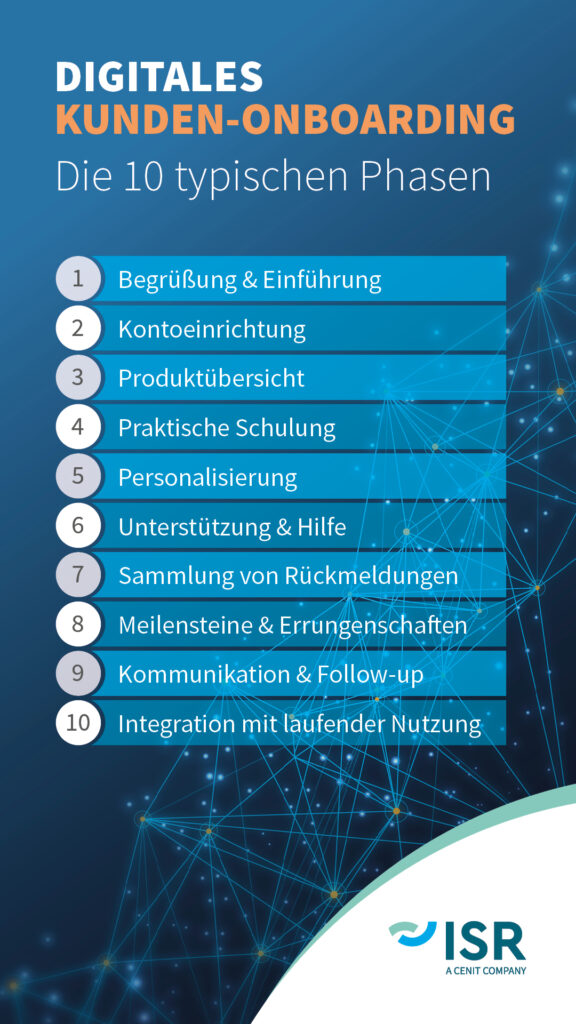
1. Welcome & introduction
- Give the new customer a warm welcome.
- Introduce him to the product, service, or platform.
- Provide a brief overview of what they can expect during the onboarding process.
2. Account setup
- Help the customer set up their account.
- Walk them through the process of entering basic information.
- Ensure a smooth and user-friendly account creation process.
3. Product overview
- Familiarize customers with the most important features and functions of the product.
- Highlight the key benefits and explain how the product can meet their needs.
- Use simple instructions, tutorials, or videos for better understanding.
4. Practical training
- Offer interactive, hands-on training to help customers use the product.
- Provide step-by-step instructions on how to use the most important features.
- Encourage the customer to try out the most important features during the introduction process.
5. Personalization
- Collect relevant information to personalize the user experience (GDPR compliant).
- Tailor the onboarding process to the customer's preferences and goals.
- Show how the product can be customized to individual needs.
6. Support & Help
- Offer accessible channels for customer support.
- Use live chats, help centers, or tutorials for support.
- Address any general questions or concerns that may arise during the training period.
7. Collection of feedback
- Get feedback from the customer about their onboarding experience.
- Use surveys or other feedback tools to determine customer satisfaction.
- Gather insights to continuously improve the onboarding process.
8. Milestones & Achievements
- Celebrate the milestones achieved during the implementation phase.
- Confirm and reward the customer for completing important steps.
- Emphasize the value of the product and the progress made.
9. Communication & follow-up
- Inform the customer about additional resources and support.
- Send further emails or messages to check on progress. Make sure you do this at appropriate intervals.
- Strengthen the ongoing relationship by staying in touch even after the initial onboarding.
10. Integration with ongoing use
- Seamlessly integrate customers into regular use of the product.
- Provide information about advanced features and ongoing updates.
- Ensure a smooth transition from onboarding to the normal customer experience.
The challenges of customer onboarding
Onboarding new users is crucial for a positive user experience, but it can come with various challenges.
This includes the complexity of products or services that can overwhelm less tech-savvy users, such as advanced software. Clear communication is essential, as unclear instructions or a lack of information can confuse users, for example, if an app does not explain the account setup process in an understandable way. Lengthy onboarding processes can be frustrating—especially when users are required to fill out extensive forms before the most important features are accessible. Other challenges include overwhelming users with too much information at once, inadequate training, poor UI design, and a lack of personalization. Lack of follow-up support, technical issues such as crashes, and ineffective performance measurement can also impact user satisfaction.
Imagine trying to sign up for a mobile app, but it keeps crashing and preventing you from registering. Or think of a company that doesn't track how many users complete the onboarding steps, making it difficult to identify areas for improvement.
To overcome these challenges, a proactive approach is required that includes user feedback, continuous improvements, and simplification of onboarding processes.
Differences in customer portal onboarding: B2B vs. B2C
The onboarding processes for B2B and B2C customers differ significantly due to the different nature of these customer relationships.
B2B onboarding is usually more complex and customized, as it is tailored to the specific needs of the company and aims to build long-term partnerships. In contrast, B2C onboarding is usually simpler and more personalized, with a focus on quick benefits and promoting immediate acceptance.
Companies that understand these fundamental differences can better tailor their onboarding strategies to specific customer segments. This is particularly important in the B2B sector, where different industries use specialized digital solutions. Each of these solutions requires a unique onboarding journey that is carefully tailored to the specific requirements of the respective company.
Here are some examples of onboarding B2B customers in various industries:
Mechanical engineering / Engineering
Engineering firms often collaborate to develop products. When companies are involved in mechanical engineering or technical projects, they usually use a product lifecycle management (PLM) system. To use this tool effectively, engineers must be trained to understand how it fits into their workflow. The system is customized to their needs, and existing information is transferred. This improves teamwork and strengthens long-term partnerships.
Companies that purchase spare parts need to build relationships with suppliers in order to procure parts quickly and efficiently. They also need systems to track inventory and automatically reorder when necessary. A procurement and inventory management system can support this process. To implement this system, it is tailored to the company's purchasing processes, existing inventory data is imported, and employees receive training on how to use the system. This software helps the company keep track of its parts and optimize purchasing.
A Supplier Relationship Management (SRM) platform can be very useful when working with suppliers. The company sets up the platform in accordance with its supplier management guidelines, enters supplier data, defines approval processes, and trains the team in how to use the platform. This tool facilitates collaboration with suppliers, ensures transparency, and supports long-term partnerships.
Financial services
In the financial services sector, companies use an enterprise resource planning (ERP) system. This system is customized to the specific financial processes of the company. Financial data is transferred to the system, and the team learns how to use it for transactions and reports.
in Logistics and Sales In logistics and sales, close cooperation with partners is crucial to ensuring that the supply chain and sales processes are efficient. A transport management system (TMS) enables real-time tracking and visibility of shipments. Initially, the TMS is tailored to the company's logistics needs, linked to shipping partners, and the team learns how to optimize transport and distribution.
| B2B | B2C | |
|---|---|---|
| Complexity and scope | The onboarding process is typically more complex and may involve multiple stakeholders within the company. It may require adaptation to the specific needs and scope of the company. | Onboarding is usually less complicated and is aimed at individual consumers. The scope is often larger in terms of the number of customers, but the process is generally less complex. |
| Individualization and personalization | Onboarding often involves tailoring the process to the individual requirements of the respective company. Personalization is crucial in order to take specific business requirements and integration points into account. | Onboarding can focus on general user preferences and experiences, so there is less need for extensive customization. |
| decision-making process | The onboarding process can be based on a longer decision-making cycle involving several decision-makers within the company. The focus is on demonstrating how the product or service creates added value for the entire company. | Onboarding is typically aimed at individual consumers who make faster and more personal decisions. The focus is often on presenting immediate benefits and user-friendly features. |
| Integration and technical requirements | Onboarding may involve integration with existing systems, which requires a more technical and thorough approach to ensure seamless integration into the company's infrastructure. | Onboarding generally focuses less on complex integrations and more on providing a straightforward and user-friendly experience. |
| Duration of the relationship | The relationship between a B2B customer and the company is often long-term and requires a good onboarding process to establish a solid foundation for ongoing collaboration and support. | B2C relationships can vary in duration, with onboarding focused on delivering value quickly to encourage continued use and customer retention. |
| Training and support | Training and ongoing support are crucial components of B2B onboarding, as companies may need in-depth understanding and assistance to maximize the value of the product or service. | In B2C onboarding, the focus is typically on user-friendly interfaces rather than practical training, with an emphasis on providing accessible support resources. |
Navigating B2B onboarding: From comparisons with previous providers to seamless digital transitions
Comparison with previous providers:
B2B customers are often accustomed to the services or products of other providers. Their onboarding experience is therefore constantly compared with their previous experiences in order to assess efficiency, user-friendliness, and added value. To ensure their satisfaction and loyalty, the new onboarding process must meet or exceed these expectations. This requires minimizing friction, clearly communicating new features and benefits, and emphasizing improvements over previous providers. A smooth transition, clear explanations of new features and benefits, and demonstrations of improvements are crucial here.
Suppose a B2B customer switches from traditional project management software to a modern, cloud-based project collaboration tool. In this specific case, the onboarding process should highlight the improved collaboration features, real-time updates, and intuitive user interface to make the transition seamless and encourage the team to use the new tool effectively.
Transition to digital platforms:
In the second scenario, B2B customers may be switching to a digital platform for a product or service for the first time. Their entire onboarding experience is therefore crucial to their impression of the digital transition. A positive onboarding experience builds trust in the new platform, while a difficult or confusing process can lead to reluctance. The success of this initial transition influences the continued use and acceptance of the product or service.
One possible scenario here would be a healthcare provider switching from paper-based records to an electronic health record (EHR) system. The onboarding process should aim to train staff in using the EHR interface, entering patient data, and utilizing features such as automatic appointment reminders. Clear communication about improved patient care and data security encourages staff to embrace digital transformation.
B2B Customer Onboarding – Lessons from Practice
An essential aspect of the onboarding process is adapting to the specific needs and expectations of the target group. This is particularly important in B2B interactions, which often involve multiple stakeholders, complex technologies, and different geographical locations.
One example of this is our recent collaboration with a leading international company. We implemented a customer portal for a business unit that serves customers in various countries. As a technology and consulting company specializing in the development and operation of IT solutions, we at ISR worked with our customer to develop a new portal that meets the need for secure and personalized digital communication in the B2B sector.
Due to changing customer expectations and outdated technology, our client was looking for a modern portal with self-service options. The existing portal was not user-friendly and had security vulnerabilities.
We have developed a user-friendly application that overcomes these challenges and improves the customer experience. The portal offers self-service functions, real-time updates, and easy access to important services.
This collaboration reflects the B2B onboarding scenarios mentioned above, where the company used a customer portal in some regions but not in others. The new portal replaced existing systems or introduced a digital platform in new regions.
The challenges of the project
- Managing onboarding for two different user groups: We have integrated both company administrators, who use the portal to manage customer interactions, and end customers, who access services and support.
- Managing the complexity of a global rollout: It was necessary to navigate through different processes, requirements, and cultural characteristics of the business units in each region.
- Managing the transition from legacy systems: In some regions, existing customer portals had to be replaced, while in others, the concept of a customer portal was entirely new. This presented challenges such as data migration and user training.
- Managing the onboarding process for companies of different sizes: The number of customers in the various regions varied greatly, which influenced the scope of the onboarding process.
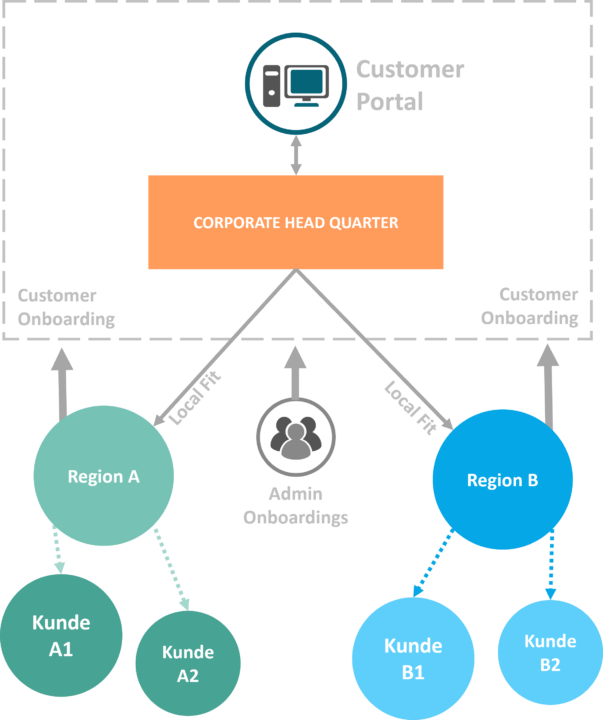
Figure 1:The project in a diagram | isr.de
Strategies for overcoming challenges
Thorough planning and communication: We created clear implementation plans, held kick-off meetings with representatives from different countries, and held weekly meetings with regional managers. Given the multinational nature of the company, we promoted open and transparent communication, making it easy for company representatives to share their insights, concerns, and suggestions. This collaborative approach allowed us to tailor the onboarding process to the specific needs and preferences of each region, ensuring a successful rollout for all customers.
Resource allocation tailored to regional needs: We allocated appropriate resources, particularly personnel, to support the onboarding process in each region according to the number of customers. For example, a region with several thousand customers required a larger team to support administrators with customer onboarding. This ensured that sufficient manpower was available to effectively support the administrators.
Understanding and adapting to local processes: To make onboarding effective in each region, we looked at local processes in advance and identified their specific requirements. This enabled us to tailor the onboarding experience and meet customer expectations.
Categorization of regions for tailored approaches: To improve communication and refine onboarding strategies, we divided the regions into two groups. The first group consisted of regions with no experience with a customer portal and required a thorough introduction. The second group was able to draw on the existing knowledge of users, which enabled a more streamlined onboarding process.
Proactive assessment of data quality: For regions with no previous portal experience, the introduction of a new customer platform represented a major change. The new portal enabled them to present relevant data to their customers. This was an important step toward improving transparency and building customer trust, but it also required concerted action to improve data quality. To ensure a smooth transition, we identified and addressed data quality issues in these regions to promote transparency and strengthen customer trust.
: To gather valuable feedback and refine the process for subsequent waves, we implemented a phased onboarding strategy, introducing customers in smaller batches in each region. During the initial waves, we involved early adopters to gather valuable feedback for the next waves. In the initial phase, we managed onboarding manually, taking into account and adapting to the individual needs of each customer. As we progressed, we introduced a "bulk sign-up" option that allowed administrators to automate the onboarding process for larger waves of customers while maintaining the quality and personalization of the onboarding experience.
Comprehensive training and support: To ensure successful onboarding for both administrators and end customers, we provided comprehensive training materials and support channels. We identified the target groups and tailored the training materials for the different user groups to ensure that everyone involved received the knowledge and support they needed to succeed.
Alignment of internal processes and user experience
"Transparency and shared goals – that's particularly important in 2024. It's not just since this year that purchasing decisions have increasingly shifted to the digital realm. Direct initial contact through sales is becoming less and less important. Accordingly, the interaction between marketing, sales, and product management is becoming increasingly important."
Georgina Bott | Director of Corporate Communications | VCG
In the changing landscape of customer interactions, Georgina Bott's quote highlights a fundamental shift in the importance of transparency and shared goals, especially as purchasing decisions increasingly shift to digital channels. This shift means that traditional direct initial contact through sales is becoming less important and the way companies engage with customers is changing significantly.
The evolution of customer interaction highlights how crucial collaboration between marketing, sales, and product management is. Coordination between these departments ensures that the onboarding experience meets the customer's needs.
In practice, this means that a company's internal processes must match the external experiences it promises. For example, if a user-friendly website is promised, internal processes (including order processing, customer support, and website navigation) must be designed to support and enhance this desired user experience. This consistency contributes significantly to customer satisfaction and promotes loyalty.
Simply put, a company's internal processes should reflect the customer experience. Whether it's order fulfillment or customer support, every internal process should be designed to support the promised smooth and user-friendly experience. This alignment ensures a consistent and positive customer experience at every touchpoint and ultimately optimizes the onboarding journey in the digital age.
The impact of the discrepancy: internal processes vs. desired user experience
Customer portals are not only a company's showcase, but also the center of communication with customers. You can think of them as the place where you see the company and interact with it. But what happens when internal processes and data do not match what the company promises? It's like driving on a road that should be smooth and pleasant, but is actually bumpy.
This discrepancy reveals the actual effectiveness of internal processes during the onboarding of a new customer. To ensure a smooth process, leading companies rely on the alignment of internal processes. This ensures that your experiences match the promises they made throughout the customer journey.
Strategies for harmonizing internal processes with marketing objectives
- Promoting cross-functional collaboration through open communication between marketing, sales, product development, and other departments ensures that everyone is working toward the same goals and understands customer expectations. Integrated systems and shared databases are critical for streamlining communication and data flow, breaking down silos, and maintaining consistent information across the organization.
- Regular cross-departmental meetings, the development of a uniform customer journey map, and ongoing training are important components for promoting coordination. Aligning internal performance indicators with marketing goals creates a uniform measurement system and promotes a shared focus on customer satisfaction.
- Regular performance reviews and the active incorporation of customer feedback into marketing strategies and internal processes contribute to continuous improvement.
- The use of technologies for seamless integration and the establishment of clear communication channels improves consistency between internal processes and marketing objectives. The collective implementation of these strategies ensures that companies provide a consistent and positive customer experience.
The role of business process automation and improvement in customer acquisition
Business process automation (BPA) plays a crucial role in streamlining and optimizing customer acquisition processes. Automation involves using technology to perform repetitive tasks, reducing manual effort and minimizing errors. Examples include automating document verification and form submission.
Business process improvement (BPI) complements automation by continuously evaluating and improving existing processes. By identifying bottlenecks and inefficiencies, BPI ensures a smoother and more efficient customer onboarding process.
Automation in the customer onboarding process
Improvements in the customer onboarding process
Navigating the Digital Customer Onboarding Process: A Recap for Success
In summary, the customer onboarding process is a crucial element in building a positive and lasting relationship between companies and their customers.
The customer onboarding journey is multifaceted and requires a strategic blend of user-centered approaches, technological innovations, and coherent coordination of internal processes. As companies strive to deliver an outstanding customer experience, continuous improvement of onboarding strategies is of utmost importance. By implementing these insights, companies can not only overcome challenges, but also improve the onboarding experience, thereby promoting customer satisfaction and loyalty in the digital age.
This article was created with the generous assistance of our colleague Yasaman Keshavarzi. Thank you very much!

Cihan Klingsporn
Senior Account & Marketing Manager
Business Process Automation
cihan.klingsporn@isr.de
+49(0)151 422 05 471