The big players in hyperscaling continue to gain ground – what does this mean for companies, and where do we see the advantages and disadvantages?
What to Expect Here – An Overview
1. What is meant by the term "hyperscaler"?
3. Disadvantages of hyperscaling
4. Characteristics of different types of cloud
5. Europe under pressure: Gaia X as Europe's answer to hyperscalers
6. The cloud market is booming – and this is just the beginning for hyperscalers
7. Why should I, as a company, engage in hyperscaling?
8. An absolute must-have for cloud migration: a cloud strategy
A good 10 years ago, Google and Louis Vuitton were already sworn enemies. A legal dispute had been raging since 2006 between the French manufacturer of luxury goods (including the famous monogram bag) and the internet giant. The reason: Google ads that also led buyers to counterfeit brands – Louis Vuitton felt that its trademark rights had been infringed. Then, in 2021, came the turning point: parent company LVMH and Google announced a strategic partnership on the trending topic of AI, or artificial intelligence. In other words, the use of artificial intelligence in the online shopping experience.
Do you notice anything? Google, Microsoft, Amazon Web Services (all cloud providers) dominate the market and are quietly and stealthily making their way into companies and industries where they might not be expected at the moment.
What is meant by the term "hyperscaler"?
Hyperscaling describes highly scalable IT resources in the context of cloud computing and big data. Market-dominating public cloud providers such as Amazon Web Services (AWS), Google Cloud, and Microsoft Azure are often used as synonyms. AzureWhat is Azure? Azure is a cloud computing platform from Microsoft. It... More . However, there are other major providers in this segment, such as (and not to be overlooked) the Chinese provider Alibaba, IBM, and Telekom.
These tech giants can provide their customers with enormous capacity thanks to their large, globally distributed data centers. According to the scale-out principle, storage and computing power can be scaled virtually indefinitely. In contrast to scale-up strategies, storage space is not only partially expanded and used until new space is needed. To do this, companies often have to purchase equipment themselves and estimate how much capacity they will need in the future, which often leads to oversizing or undersizing problems.
With scale-out strategies, or horizontal networking, growth potential does not need to be factored in initially, but can be addressed as needed (pay as you grow). This not only expands storage space, but also modular performance components such as CPU, RAM, and network resources. This allows the system to grow fluidly.
The combination of storage capacity and computing power is key to large projects and essential for smooth and powerful data management.
One example of this is Siemens AG. As a partner of AWS Cloud, it uses this technology and is thus able to handle a data load that no human team could possibly oversee. The Siemens system fends off 60,000 cyber threats per second thanks to cloud-based, highly scaled processes.
Advantages of hyperscaling
The use of hyperscaling therefore offers many advantages for companies.
These include:
- Unlimited scaling
- Flexible and decentralized infrastructures
- High reliability and adaptability
- Redundant solutions
- Pay as you grow principle: you only pay for what you actually use
In collaboration with major providers such as AWS or MS Azure:
- Pioneering position in their field – high level of expertise
- New standards emanate from them
- High development speed of their (additional) services
Disadvantages of hyperscaling
As always in life, there is also a downside. The use of hyperscale computing often results in disadvantages in terms of:
- Data security, data sovereignty, and sovereignty
- High demands on IT staff
- Vendor lock-in: Dependence on and commitment to the provider's pricing models
In particular, the issue of data security and digital sovereignty is a recurring topic of discussion, including at the political level.
Characteristics of different types of clouds
When it comes to information storage, opinions are divided between strict, controlled data protection and flexible, productive, all-round cloud solutions. Accordingly, there are various options for embracing cloud solutions.
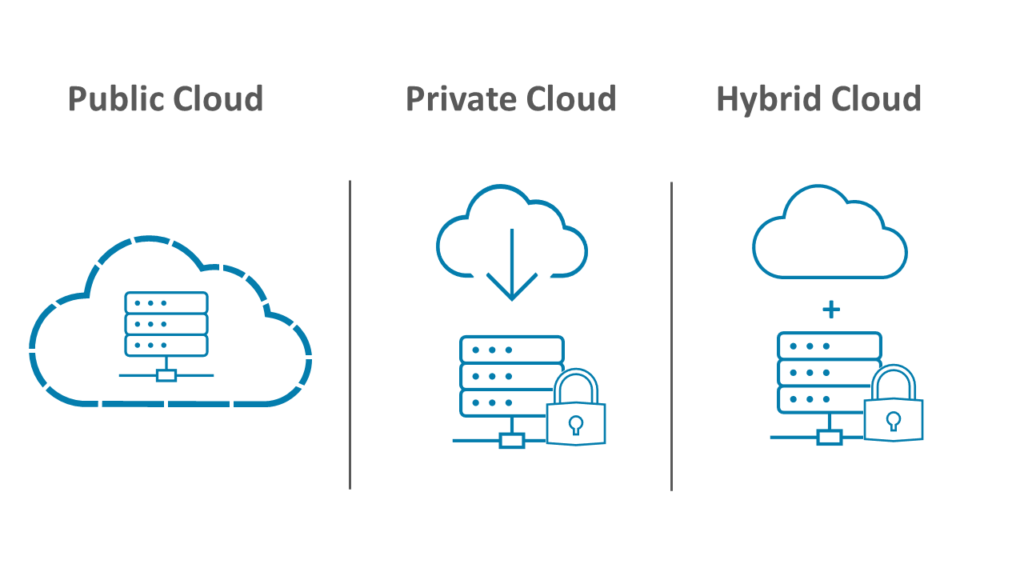
Figure 1: Various Cloud Architecture Options | isr.de
The market leaders AWS, Microsoft, and others use their large server pool as a so-called public cloud simultaneously for all their customers. Although the providers treat their customers separately, each customer can use and expand as much capacity as they wish. This means that all data can be managed in one place and used in an agile manner without data clutter. Since the interface here is a public Internet connection, there is an abstract risk of cyberattacks.
This risk should be minimized in what is known as a private cloud. Here, the servers belong to a single company and, in the best case scenario, may even be located on the company's premises. This avoids public internet access and significantly improves data security. Company-specific technical solutions can be built here according to individual requirements (and financial resources), but these must be planned with future viability in mind from the outset.
Hybrid clouds offer a compromise. They represent a partial solution for various requirements. The idea behind them is to secure sensitive data privately and store work information with a large provider. This additional organizational effort allows the advantages of both public and private clouds to be exploited.
Europe under pressure: Gaia X as Europe's answer to hyperscalers
Last summer, Peter Altmaier (Federal Minister for Economic Affairs and Energy) presented GAIA-X, the European alternative for a comprehensive European data infrastructure. This is "a project by Europe for Europe. " Germany, or rather Europe, wants and needs to catch up in terms of digitalization; it is therefore focusing on an open, fast, and networked ecosystem. Not least, the pandemic has led to topics related to digitalization gaining enormous importance within Europe (and not only for large companies and corporations). The "trend topic" of cloud computing is benefiting the most from this.
The cloud market is booming – and this is just the beginning for hyperscalers
Why should I, as a company, engage in hyperscaling?
- How can my company benefit from this platform economy?
- Where do hyperscalers complement or threaten my (current) business model?
- What new business services can I offer as a company on these platforms?
An absolute must-have for cloud migration: a cloud strategy
There are various ways to migrate your workflow to the cloud. The first question is whether to completely overhaul your company's internal working methods. This could mean a fresh start and a revamp of entrenched, inefficient processes. Alternatively, there is the option of a lift & shift approach. Here, the familiar processes, programs, and data are moved to the cloud as seamlessly as possible and can continue to be used there as usual.
This is accompanied by various service models that enable migration and support ongoing use.
The term Software as a Service (SaaS) is certainly familiar. Regardless of the hardware, only software solutions are offered here. Every interface and every backend is provided by the supplier and always remains up to date without any effort on your part. This greatly reduces the workload on the IT department and allows the company to take advantage of tried-and-tested solutions.
With Buildsimple, ISR provides such software as a service. AI-controlled, documents can be recognized, read, and distributed to the right contact points via the cloud.
Do you have any questions or need assistance in developing a cloud strategy or finding the right cloud provider? Then please feel free to contact us.

Cihan Klingsporn
Senior Account & Marketing Manager
Business Process Automation
cihan.klingsporn@isr.de
+49(0)151 422 05 471