Many companies reduce IT transformation to the renewal of their infrastructure. However, the key to success lies both in transforming the entire organization and in relieving the burden on existing capacities.
Those who view IT transformation merely as the acquisition of new computers and infrastructure are taking a short-sighted approach. IT transformation extends far beyond merely modernizing technical equipment; rather, it involves adapting the entire organizational structure and corporate culture to digital requirements – encompassing business models, processes, and personnel.
What exactly is IT transformation?
IT transformation is therefore also a strategic process in which companies fundamentally modernize and redesign their IT infrastructure, systems, and processes. This means that existing IT systems, applications, and processes are revised, updated, or replaced with new technologies. Successful IT transformation requires careful planning, the involvement of experts, and sufficient resources. IT transformation is an important aspect of the broader digital transformation, which involves fundamental change across the entire company.
| IT transformation | Digital Transformation |
|---|---|
| The positioning and areas of activity of IT departments in companies are changing. In-house IT is evolving from an internal service provider to a strategic driver of innovation and co-creator of business models. | The ever-faster pace of change in the economy and society, driven by digital technologies, which presents companies with new challenges and opportunities. |
| Enables companies to actively drive digital transformation. By implementing new technologies, processes, and capabilities in the IT department, companies can respond more agilely to changing customer needs. | Drives profound change in companies by creating new, innovative business models and fundamentally changing the expectations of customers, partners, and employees. |
| The IT organization is evolving from an internal service provider to a co-creator of business innovations, helping to develop business models from a customer-focused perspective. | Finding new, innovative solutions that offer added value for customers while enabling more efficient processes within the company. This allows companies to respond more agilely to changing market requirements. |
Transformation in transition: IT transformation is part of and forms the basis for digital transformation
IT transformation
Refers to the shift in the positioning and areas of activity of IT departments in companies from internal service providers to strategic drivers of innovation and co-creators of business models.
Enables companies to actively drive digital transformation. By implementing new technologies, processes, and capabilities in the IT department, companies can respond more agilely to changing customer needs.
The IT organization is evolving from an internal service provider to a co-creator of business innovations, helping to develop business models from a customer-focused perspective.
Digital Transformation
The ever-accelerating pace of change in the economy and society—driven in particular by new technologies—presents companies with new challenges, but also opportunities.
By initiating profound changes in companies, the development of new, innovative business models is being driven forward. However, this also fundamentally changes the expectations of customers, partners, and employees in some cases.
The goal is to find new, innovative solutions that offer added value for customers while enabling more efficient processes within the company. This allows companies to respond more agilely to changing market requirements.
Only when companies view IT transformation as part of a holistic strategy can they fully exploit the potential of digitalization and successfully position themselves for the future.
What role does IT transformation play in digital change?
Achieving a successful digital transformation is a real challenge for every company. It is about creating the right structures and developing suitable business models. IT transformation plays a crucial role in this.
IT transformation is about creating the technical conditions for digital transformation. This means replacing isolated IT solutions with uniform, compliant infrastructures and introducing IT process automation and agile working methods into the IT organization.
IT departments must be set up in such a way that they can make a greater contribution to transformation. To do this, they need a flexible structure that enables them to respond quickly to new requirements and develop innovative digital solutions. Instead of just providing technology, IT teams are actively involved in the value chain. They work closely with other departments to develop digital products and services.
What areas of activity are the focus of IT transformation?
One thing is clear: modernizing existing IT landscapes remains a key aspect of IT transformation.
However, if you stop here and don't think any further, you've already lost. IT transformation is a truly comprehensive process that involves much more than just renewing existing IT landscapes. We have compiled the four areas of action for IT transformation for you here. But what exactly is "behind" them? Find out for yourself:
Modernization of established IT landscapes
Automation of IT processes
Agile working methods
Cultural change in IT organizations
Modernization of established IT landscapes: A key area of action that companies must address, as a large number of outdated systems and missing interfaces can hinder the development of company-wide standards and impede further digitization and the development of new business models.
Automation of IT processes: Enables increased efficiency and reduced errors by automating manual routine tasks such as resource and software provisioning, freeing up time and budget resources for more strategically demanding tasks.
Agile working methods: Enables faster adaptation to changing requirements and forms the basis for accelerated delivery of innovative applications and functions through short development steps with rapid sprints.
Transformation of the IT organization: Requires a cultural shift that results in IT departments no longer just providing technologies, but working with other areas of the company to develop innovative solutions, making IT a service-oriented developer of digital innovations, both internally and externally, which entails an expanded requirement profile for IT professionals.
It is important for companies to modernize their entire (IT) organization and adapt it to the requirements of the digital world. This means not only introducing new technologies, but also integrating them into the existing system landscape and operating them. In addition, business processes and working methods must also be reviewed and adapted if necessary.
Automation enables IT departments to free up resources and focus on strategic tasks. The introduction of agile working methods helps them to respond quickly to changes and deliver innovations faster. IT departments should not only provide technology, but also develop solutions in collaboration with other departments. To do this, IT professionals need not only IT knowledge, but also industry knowledge and an understanding of the needs of customers and their own company. (External) digitalization experts can help identify the potential of measures and gradually replace legacy systems to create flexible infrastructures for innovative applications.
Only when companies view IT transformation as part of a broader digitalization strategyWhat is a digitalization strategy? A digitalization strategy serves to implement long-term goals... More can they fully exploit the potential of digitalization and successfully position themselves for the future.
With ISR at your side for successful IT transformation
To manage these comprehensive transformation steps, companies can benefit from the support of external service providers. Their support can relieve the burden on internal IT teams in particular, allowing them to concentrate on their important business-related tasks.
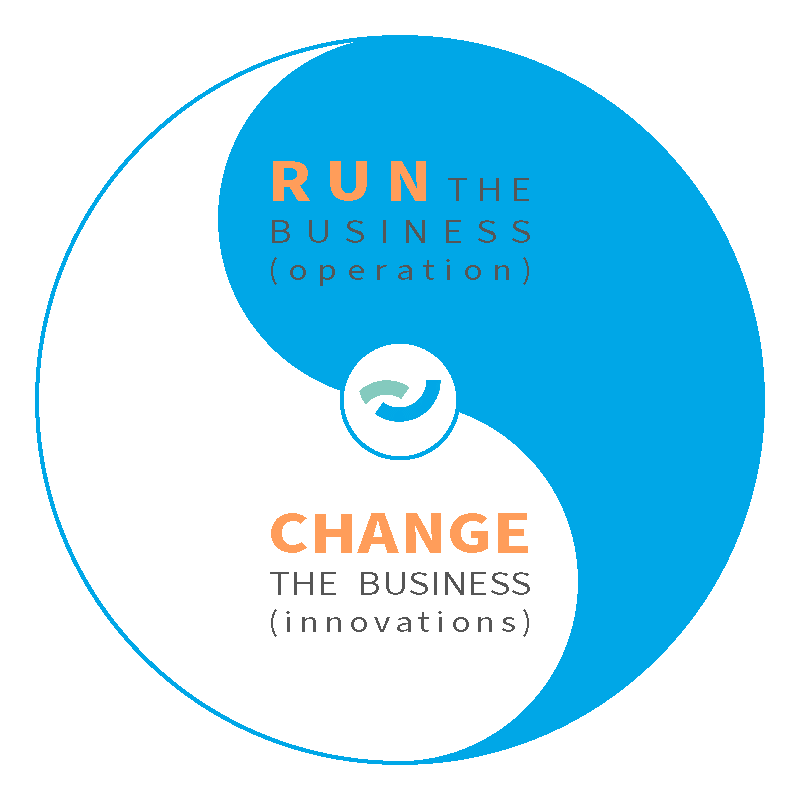
While external service providers cover ongoing business processes ("Run The Business"), internal teams can focus on driving change and leading the company into a digital future ("Change The Business").
External service providers thus offer a flexible and scalable resource that companies can use without great effort, for example, to avoid having to set up or maintain systems themselves. This enables companies to respond quickly to market changes and increase their competitiveness. In addition, service providers can help companies implement new technologies more quickly, especially when there is a lack of specific expertise internally, for example due to a shortage of IT specialists.
No matter where your company currently stands in the digital transformation process, we at ISR provide comprehensive support—either as a whole or selectively at critical points between two stages of transformation. For example, we can help you develop a clear vision and strategy for the transformation. To do this, we first advise you and then implement projects in the areas of analytics and document logistics. Or we can help you implement operational concepts during the implementation phase. This ensures that your IT infrastructure runs smoothly and that you can seamlessly integrate your existing business processes.
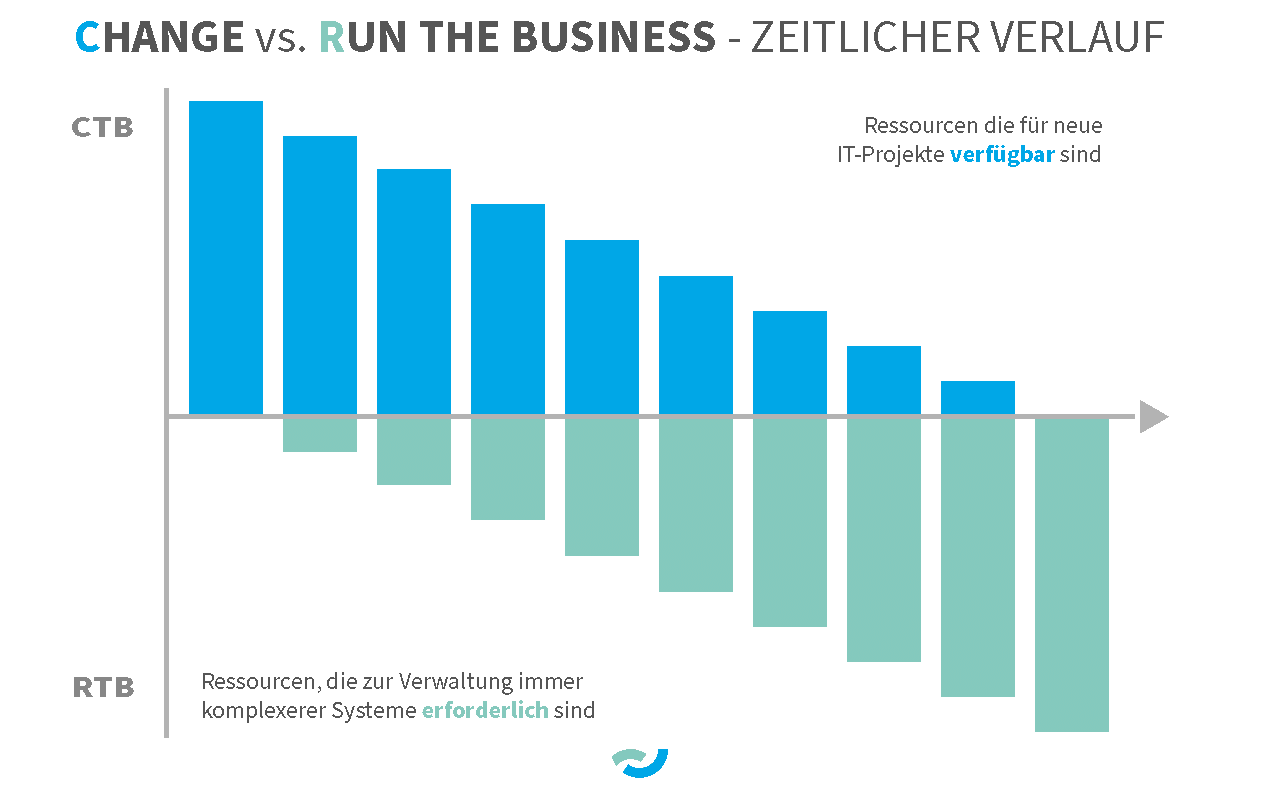
We take over operational management, thereby relieving the burden on the company's internal IT teams. This allows them to focus on strategic tasks. At the same time, we ensure that IT processes run smoothly. This allows the company to concentrate on its core competencies and digital transformation.
We take over operational management, thereby relieving the burden on the company's internal IT teams. This allows them to focus on strategic tasks. At the same time, we ensure that IT processes run smoothly. This allows the company to concentrate on its core competencies and digital transformation.
Use case: Operations management at a major German bank
Understanding the importance of system security goes hand in hand with recognizing the performance and availability of that system. A major German bank and securities firm recognized this and chose us, ISR, as its operations management partner. Our strengths lie in our expertise in operations and support for IBM ECM applications, which were decisive factors in this decision. You can read all the details about this partnership, the challenges, and our implementation here.
Ready for transformation?!
In an increasingly digitized business world, companies are facing new challenges, especially when it comes to IT transformation. No matter what area you work in, be it finance, human resources, or organization, you need to become more digital!
Precisely because IT is increasingly driving digital innovation, it must be relieved of routine tasks. In addition, many companies lack a well-thought-out digitalization strategy. The result, in addition to already overburdened internal IT departments, is digital activism, wasted budgets, and failed projects. Therefore, it is high time for many companies to view IT transformation as part of their corporate strategy.
With our holistic approach, we support you from strategic consulting to concrete measures for data-based decision management and process automation to IT operations. Thanks to the expertise of our ISR IT experts, you can focus on new strategic issues while we take care of the "RUN" of your business, for example. With our comprehensive view of your needs, we design, modernize, implement, and support your software solutions, IT applications, and infrastructures.
If you would like to learn more about our services, please feel free to schedule an appointment with us.

Jens Brettschneider
Head of Business Unit
Application Management
jens.brettschneider@isr.de
+49(0)151 422 05 425