
How will reporting and the position of SAP BW change with S/4HANA?
SAP S/4HANA offers extensive analytics capabilities and is further empowered by its tight integration with the Analytics Cloud. Upon the release of S/4HANA, the question arose as to whether a data warehouse would still be necessary. In this context, premature statements were made predicting the demise of SAP BW. In our article, we aim to provide an assessment and outline how reporting and the role of SAP BW will evolve with S/4HANA.
What is Embedded Analytics?
First, it is crucial to understand what Embedded Analytics entails. Embedded Analytics comprises a set of S/4HANA's analytical capabilities, designed to create virtual analytical data models for real-time access to underlying tables. These virtual data models can then be accessed by business applications within processes, analytical Fiori apps, and other analytics tools (SAC, Tableau, etc.), as well as by a DWH for data extraction. It is 'embedded' because it is built upon the operational system and, through integration into business processes, blurs the distinction between operational and analytical functions.
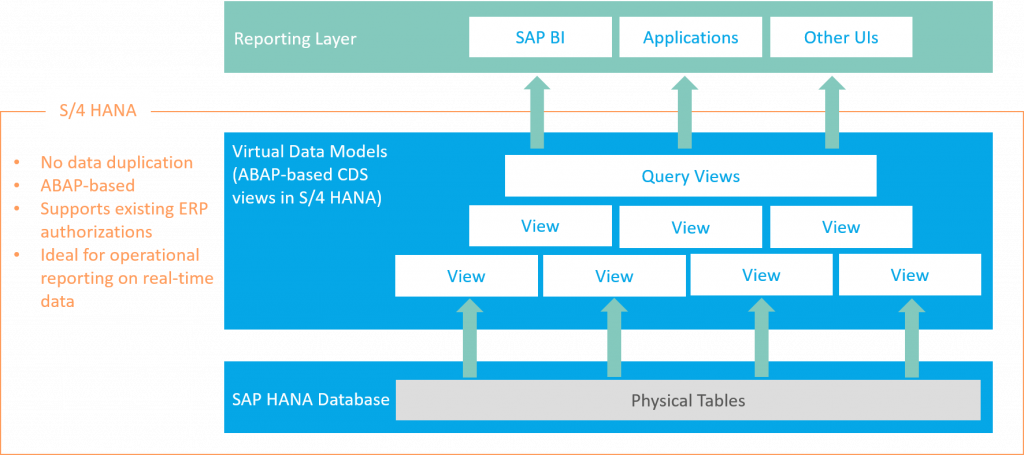
Figure 01: Virtual Data Models – (VDMs) in SAP S/4HANA
Technically, the virtual data model (VDM) is built upon ABAP Core Data Service (CDS) views, which 'consume' the physical tables. Within these views, custom logic can be implemented for the virtual calculation of key figures or the linkage of two other views (e.g., a view for FI header and item data, or similar). This VDM is also utilized for S/4HANA business processes. SAP delivers approximately 9,000 CDS views, of which 90% are not available for analytics.
Previously, it was not recommended to run reports directly on SAP ERP, in order to concentrate system resources on transactional operations. Report execution should not disrupt operational business. With SAP HANA, most restrictions of this nature have been lifted. Reporting based on S/4HANA is generally not an issue.
What is the difference from an Embedded BW?
Embedded Analytics and Embedded BW are frequently confused. Since NetWeaver 7.0, ERP systems have always included an embedded SAP BW – free of charge. Beyond its own reporting use cases, BW is also technically leveraged, for instance, to provide a platform for BPC Optimized. It should be regarded as a functional extension of ERP or S/4. Its use as an Enterprise Data Warehouse for integrating data from distributed systems, for example, is not recommended. Furthermore, it should not account for more than 20% of the total HANA data volume.
Its deployment should be considered with caution. There is no SAP BW/4HANA migration strategy, nor is one planned. The future beyond 2027 (end of maintenance for SAP BW 7.5) remains entirely uncertain.
Is a separate Data Warehouse still required?
Typically, enterprises operate within a heterogeneous system landscape. In addition to S/4HANA, there will be other application systems, such as CRM systems or production control systems. All systems contain analytically relevant information. The value of this information increases when placed in a common context. A data warehouse provides a suitable environment for contextualizing information across systems. While S/4HANA offers very powerful capabilities, these are generally insufficient when it comes to integrating heterogeneous systems and providing a historical view of information. Thus, the necessity for an additional data warehouse arises.
How is the positioning of SAP BW changing with S/4HANA?
The analytical capabilities of S/4HANA should be fully leveraged. This particularly applies to operational reporting. Only those aspects that cannot be effectively mapped through S/4HANA should flow into a separate data warehouse. There is no dogma that reporting must necessarily be based on a DWH. An optimal, ideally virtual, integration of both worlds ensures a redundancy-free analytical foundation.
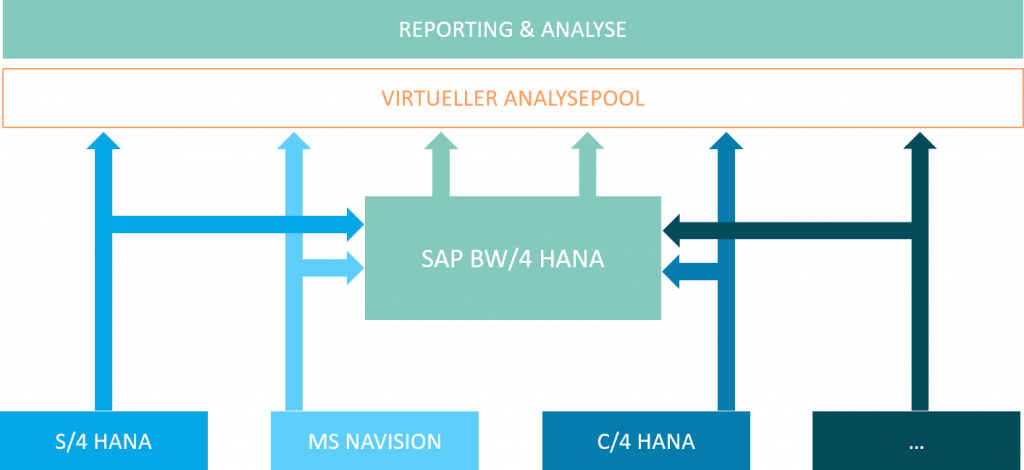
Figure 1: Various Cloud Architecture Options | isr.de
A conceivable scenario, for instance, is that local (i.e., non-integrated) operational real-time reporting takes place in S/4HANA, while enterprise-wide integrated reporting continues to be provided via the DWH (e.g., SAP BW).
This development is not limited to S/4HANA. Increasingly, systems beyond the data warehouse offer analytical capabilities (e.g., Power BI integration with MS Navision). It makes equally little sense to dogmatically integrate these systems into SAP BW merely to run reports via the DWH, if requirements do not necessitate it.
SAP BW, or a data warehouse, will continue to be a crucial central component of a virtual analytical platform, but not the sole one. Decentralized, distributed approaches will become increasingly prevalent. Achieving robust integration and orchestration is vital to prevent isolated solutions. This applies to data streams as well as to accessing the resulting analytical Net-of-Truth, for instance, via central Data Virtualization.

Christopher Kampmann
Head of Business Unit
Data & Analytics
christopher.kampmann@isr.de
+49 (0) 151 422 05 448