
Learn how intelligent document processing can revolutionize your processes and the benefits this evolution offers amidst scarce resources and shrinking IT budgets.
In recent decades, Input Management has undergone a fundamental transformation. What once began with paper documents and manual processes is now a digital, AI-supported solution. In this blog article, we examine the evolution of document processing within Input Management and demonstrate how Artificial Intelligence (AI) is revolutionizing the way companies process data and documents.
The Beginning: Paper and Manual Processing
In the early days of office work, input management primarily consisted of paper documents. Invoices, purchase orders, contracts, and other business records were received in physical form and manually captured, sorted, and processed. This process was not only time-consuming but also prone to errors. Companies relied on manual data entry, which led to delayed response times and an increased error rate.
The concept of the "inbox" played a central role in this era. In the office environment, the inbox referred to a physical container where incoming documents were collected before being processed or forwarded.
In summary, traditional input management was characterized by physical documents and manual processes, which were both time-consuming and error-prone. The inbox thereby symbolized the starting point of this "old" world of office organization.
The Transition to Digitization: Scanning and OCR TechnologyOCR (Optical Character Recognition) technology automates the scanning of printed… More
With the advancement of digitization, companies began to scan paper documents and create digital copies. A crucial milestone was the development of Optical Character Recognition (OCR). This technology enabled the identification of text on scanned documents and its conversion into machine-readable text. However, the actual efficiency gain from OCR was not merely in converting text, but in the ability to automatically process, search, and integrate it into digital workflows. This significantly reduced manual effort and accelerated document processing.
However, OCR was only the initial step. Challenges persisted, such as the high error rate with poorly formatted documents or handwritten notes. Nevertheless, this technology laid the groundwork for modern, digital input management and paved the way for further innovations.
Automation and Workflow as an Entry Point for Digital Transformation
Subsequently, companies expanded their digital systems to further minimize manual work. With the introduction of workflow management systems and automated processes, organizations could streamline the entire document lifecycle, from capture to archiving.
These systems enabled documents not only to be automatically categorized and tagged but also to be efficiently forwarded to the correct departments. A significant advantage was the drastic reduction in processing time and error rates, as human intervention was minimized and processes were automated. This allowed companies not only to respond faster to inquiries but also to optimize their internal operations. For example, based on the mention of an invoice number and bank details, a document can be routed to accounting as an "invoice." If a supplier and part number are present in the document, it can be forwarded as information to the purchasing and production planning departments.
Examples
A central entry point for the digital transformation of enterprises lies in the automation of processes and the implementation of intelligent workflows. Even simple automation measures can reduce manual work steps, minimize sources of error, and streamline workflows. A prime example of this is the automated processing of incoming documents.
For instance, a system can automatically recognize that a document is an invoice based on specific features – such as the mention of an invoice number and bank details. In such a case, the document is forwarded directly to the accounting department without further intervention. This not only saves time and resources but also accelerates the entire accounting process.
Another example is the automatic recognition of supplier or part numbers within a document. This information indicates that the communication is relevant for purchasing or production planning. The system can classify the document accordingly and forward it specifically to the responsible departments. This ensures that critical information reaches the correct destination without delay.
Such automated processes form the foundation for systematic digital transformation, as they help to process information efficiently and improve inter-departmental communication. Even with simple, clearly defined rules, a company can take initial steps towards a digitized mode of operation – with tangible benefits in daily business.
The process began with document separation, where different document types were distinguished from one another by intelligent algorithms. During classification, documents were then sorted according to predefined criteria, enabling rapid and precise assignment. Data extraction followed, automatically capturing relevant information such as names, addresses, or contract data and processing it in a structured format. Finally, verification was performed by a person to ensure that all information was correctly extracted and no errors remained in the documents. How this process is specifically designed will be illustrated further using a practical example.
The Rise of AI in Input Management
With advancing digitization and automation, the complexity of processed data increases. While traditional systems relied on predefined rules and patterns, Artificial Intelligence (AI) ushers in a new era in input management.
AI-based systems, such as Buildsimple , are capable of understanding, analyzing, and automatically categorizing documents – regardless of format or source. Through advanced technologies like Natural Language Processing (NLP) and Machine Learning (ML), these systems can process text, images, and even handwritten notes.
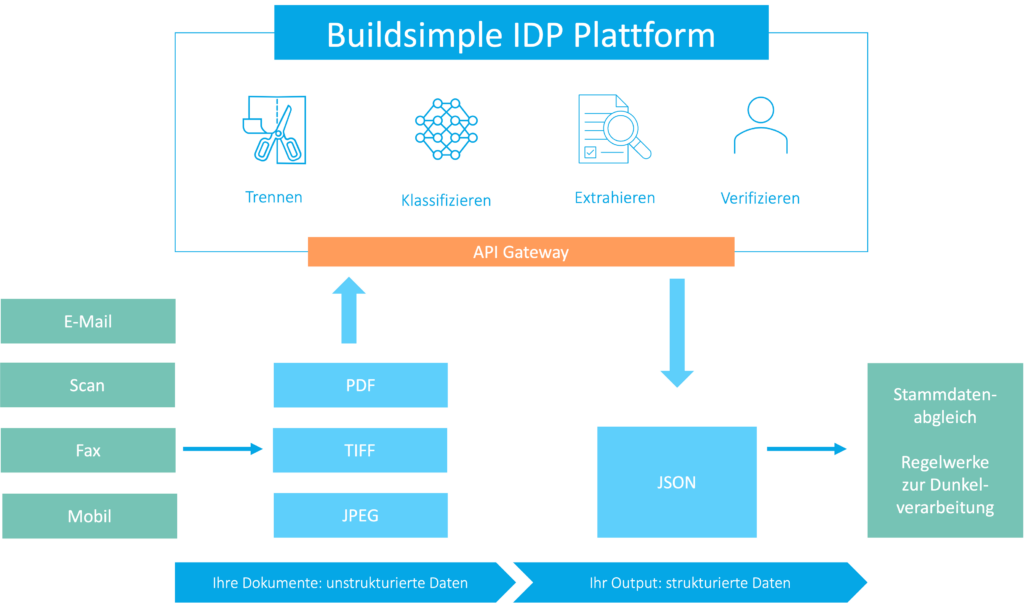
Figure 1: Buildsimple as an IDP Platform | isr.de
A clear example of this is the automatic extraction of data from invoices, contracts, or order forms. While employees previously manually reviewed each document and extracted relevant information, AI systems now perform these tasks automatically and in real-time – faster and more accurately. This saves time and resources, particularly in specialist departments and mailrooms, enabling employees to focus on value-adding activities.
The Significance of Straight-Through Processing
A central aspect in this context is straight-through processing (STP), where processes are fully automated, requiring no manual intervention. For an IT manager, this means a reduction in burden, as less manual interface maintenance and support efforts are necessary. This not only increases efficiency but also enhances customer satisfaction through faster processing times. An example is the entire application process in the insurance industry – from online application to the finalized policy – which is handled without the involvement of a case worker. Straight-through processing primarily handles routine tasks that do not require complex decision-making, thereby relieving the IT infrastructure.
A typical example of straight-through processing is automated invoice processing. Here, incoming invoices are captured, verified, and approved for payment without human intervention. The system automatically extracts relevant information such as invoice number, amount, bank details, and due date, compares it with purchase orders or contracts, and initiates payment once all criteria are met. This type of automation not only saves time but also reduces the error rate that can occur with manual entry or verification.
This automation relieves employees of routine tasks, enabling them to focus on more complex, value-adding activities. Straight-through processing thus contributes not only to increased efficiency but also to improved job satisfaction for employees, who no longer have to deal with repetitive tasks.
AI in Action: Between Efficiency and Responsibility
While critical voices exist concerning the increasing deployment of AI within the corporate sector, particularly regarding the apprehension that automated processes might result in inadequately scrutinized decisions.
An incident in 2024, where Brian Thompson, CEO of UnitedHealthcare, was tragically shot in public (Brian Thompson: What is known about the case of the shot US insurance CEO | ZEIT ONLINE), has ignited a widespread discussion and scrutiny of insurance companies' practices. In the public discourse, questions regarding the role of algorithms and Artificial Intelligence (AI) also arose: How much decision-making authority is vested in automated systems, and how transparent and equitable are their decisions? This incident thus casts a spotlight on the fundamental tension between automation and human oversight within an industry whose decisions can have existential implications for individuals.
In property and casualty insurance, which processes a multitude of claims daily, AI-based systems offer a promising opportunity to enhance efficiency. Claims – particularly those involving smaller amounts, e.g., up to €300–500 – could be processed significantly faster with well-integrated straight-through processing and AI support. For such minor claims, verification processes like policy validation, review of special provisions, or clarification of complete claim information could be executed automatically and precisely. This significantly reduces personnel costs for manual reviews without compromising the quality of decision-making.
Crucially, the integrity of the system must be maintained. The AI technologies deployed must be transparent, auditable, and reliable to secure customer trust in the (insurance) company. Especially with automated processes, it is vital that customers consistently feel their concerns are taken seriously, handled correctly, and fairly. The implementation of AI must never lead to a lack of transparency or communication; instead, it should contribute to enhancing customer service and streamlining processes.
An Outlook: The Future of Input Management
The future of Input Management will be significantly influenced by even more advanced technologies. In addition to AI, Blockchain, Cloud Computing, and Robotic Process Automation (RPA) could play an increasingly pivotal role. These technologies offer immense potential to further automate and optimize input management, enabling enterprises to design their processes with greater efficiency and flexibility.
Crucially, however, the evolution of Input Management has paved the way for a fully digitized and automated future. Companies that proactively integrate these technologies will not only enhance their efficiency but also gain competitive advantages and position themselves as pioneers of digital transformation.
Conclusion: The Ongoing Evolution of Document Processing
The evolution of document processing, from the manual handling of paper-based documents to AI-supported, fully digitized solutions, demonstrates a remarkable advancement in efficiency and accuracy. Technologies such as OCR and AI facilitate automated document processing, which reduces errors and accelerates workflows. Despite these advancements, it remains crucial to uphold ethical standards and human oversight to minimize potential risks. Future innovations like Blockchain and RPA will further revolutionize document processing and provide enterprises with new competitive advantages.

Cihan Klingsporn
Senior Account & Marketing Manager
Business Process Automation
cihan.klingsporn@isr.de
+49(0)151 422 05 471