
A digital maturity assessment for SMEs is a good starting point for getting to grips with the topic of digitalization within the company and your own digital maturity.
What to Expect Here – An Overview
1. What is a digital maturity assessment? A quick refresher
2. Digital maturity measurement for SMEs and the 10 success factors
3. Typical barriers to digitization for SMEs
4. Digital maturity measurement for SMEs – it all comes down to your own capabilities
5. Digital maturity measurement for SMEs under criticism
6. Our recommendations for digital maturity measurement for SMEs
In our blog article "Digital maturity: What is actually being measured?", we addressed the question of what is actually measured in maturity assessments. In other words, which company clusters or assessment dimensions are part of common models and what different types of models exist. Read more here.
Today, we want to ask the question of what really matters when small and medium-sized enterprises (SMEs) in particular deal with their own digital maturity and how to measure it. Which aspects really play a role in terms of digital maturity? How well-founded should a chosen maturity model be for my company? And aren't commercial maturity measurements, which are usually offered and carried out by consultancies or IT service providers, just marketing tools that help the providers rather than the users?
What is digital maturity measurement? A quick refresher
A digital maturity assessment basically aims to methodically measure how advanced a company is in terms of its digital transformation. In other words, how well and how quickly new technologies are being adapted by the company itself, particularly with a view to digitizing its own processes and customer relationships. But what is really crucial in this context? We have gained some experience in this area. More on that in a moment.
Digital maturity measurement for SMEs and the 10 success factors
1. Clearly define the goal and purpose of a maturity assessment in advance.
For example, is it about internal processes or is the focus on customer relations?
2. Choose a structured framework based on recognized models.
For example, CMMI (Capability Maturity Model Integration) or DMM offer proven procedures and measurement criteria.
3. Ask the right experts.
Depending on the scope of the investigation, both internally and externally, select the right technical experts and consultants.
4. Define meaningful evaluation and measurement criteria.
Clear criteria for evaluation should be defined for each dimension of the study, e.g., from purely manual to fully automated. If I can't measure it, I can't evaluate it, and I can't improve it!
5. Choose an evaluation methodology that suits the company.
Whether self-assessment, external evaluation, or a combination of both—it should be appropriate for the company.
6. Collect the right data.
Because the database determines the result. Depending on the scope of the investigation, the data to be used can come directly from the systems, from so-called process logs, interviews, or documentation, for example.
7. Benchmarking should be possible.
How does my company compare to others?
8. The correct interpretation of the results.
It's really not that easy: interpreting the collected data and results, identifying strengths and weaknesses, and optimizing potential in the individual study dimensions.
9. Derive a digitalization roadmap and action plan.
Which measures and projects will increase my digital maturity in the long term? New technologies, new tools, new processes, new (trained) employees?
10. Continuously measure and improve.
Digitalization never stops. Monitor progress and review and realign the chosen measures from time to time.
It all sounds very reasonable and understandable: simply choose a structured approach that suits your company, define your own goals and requirements, collect and evaluate data, and ultimately you will have the right digitization roadmap or even digital strategy for the next 5 years.
Learn more about our Digital Maturity Check, which we use to measure your level of digital maturity.
Typical barriers to digitization for SMEs
But why do so many SMEs still struggle to get their own digitalization off the ground and increase their own digital maturity, despite recognizing its importance?
Perhaps it would be helpful to take another look at the barriers to digitization that still exist for SMEs. All too often, companies cite similar barriers or obstacles that clearly prevent them from further digitizing their own operations. For example, small and medium-sized enterprises are often unclear about the advantages and disadvantages of (further) digitization and are frequently unaware of current trends. The development into an innovative company is often abandoned in favor of tradition due to the owner's dominance in decision-making, budgets for the implementation of digitization activities are not provided, or there is a lack of in-house digital expertise.
Most studies on digitalization in small and medium-sized enterprises discuss such obstacles. The following figure (see Figure 1) provides an overview of the obstacles to digitalization cited by SMEs (obstacles listed according to their percentage of mentions in selected studies).
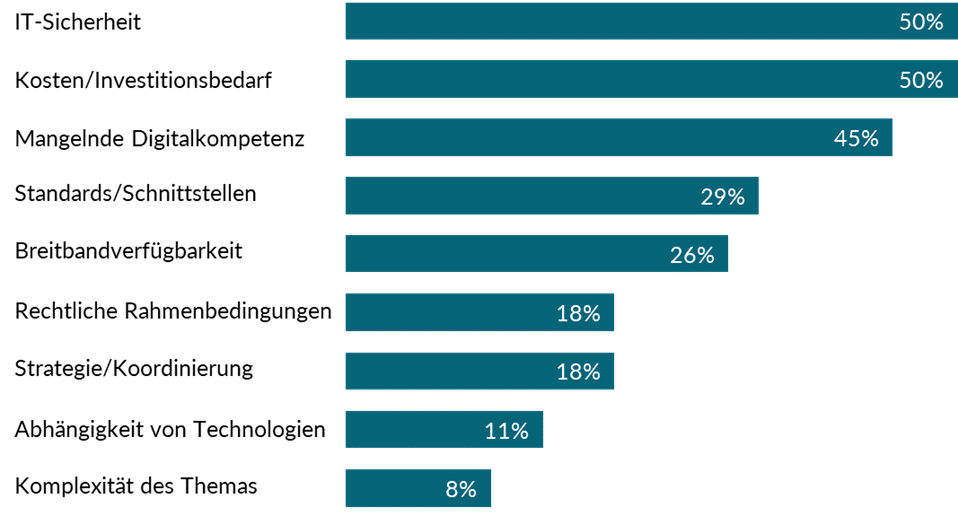
Figure 1:Typical barriers to digitization for SMEs | See Demary, Engels, Röhl & Rusche 2016, p. 36
Digital maturity measurement for SMEs – it all comes down to your own capabilities
What good does it do me to know that a maturity model classifies my company as a "digital beginner" or determines a maturity level of "3" for my company? Isn't it much more important to gain insight into what capabilities I should possess or develop as a company in order to improve my maturity level within a specific dimension of the study or even as a whole?
From our point of view, it is therefore essential, especially for SMEs, to focus on their own capabilities and to question them in the context of the digitalization taking place around them. In our opinion, a maturity assessment that addresses the individual capabilities of a company really helps an SME. It provides the company with clarity about the measures to be taken by first sorting and providing orientation (see Figure 2). It not only shows how, for example, a specific process can be raised to the next maturity level, but also focuses in particular on the necessary capabilities that will help the company become more digital as such.
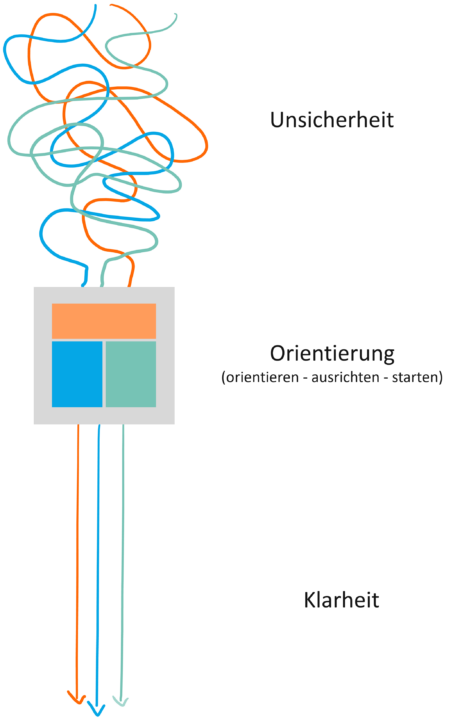
Figure 2:Orientation and clarity through maturity assessment | isr.de
On the one hand, these skills can be the familiar digital competencies, such as technological expertise, innovative ability, or agile working methods. On the other hand, however, we are also talking about skills that a company needs in order to generate output in line with (digital) customer requirements. These skills often manifest themselves throughout a company's business processes.
"We have therefore increasingly come to realize that when measuring digital maturity, it is not primarily maturity that matters, but capabilities."
Birger van der Spek
(Managing Consultant | ISR AG)
Digital maturity measurement for SMEs under criticism
Maturity models are inherently rather static. However, technologies, the environment, and business models are constantly changing. But if you look at what is necessary to remain competitive, there is no getting around your own capabilities. 😉
Our recommendations for digital maturity assessment for SMEs
So, if you decide to carry out a sustainable maturity assessment, it should not just involve a simple survey of certain tools and classifying the company on a maturity scale of 1-5. In our view, it is advisable to ensure that the analysis tailored to the company also focuses on (digital) capabilities in particular. We believe that this is the only way to make digitalization sustainable. The structured approach of many maturity models described at the beginning is a good approach, but in our view, it too often neglects the special capabilities of SMEs. SMEs should steer clear of provider-oriented marketing tools!
ISR therefore offers in-depth consulting services to accompany a quick DMC, in which we focus closely on your specific situation within the company and the skills of your team.
Does that sound interesting? Then please feel free to contact us.

Birger van der Spek
Managing Consultant
Business Process Automation
birger.vanderspek@isr.de
+49(0)151 422 05 453