
Business processes are the core of every enterprise. What does process automation entail, and what are its key components?
What to Expect Here – An Overview
1. Process Automation in Hierarchical Sequence: BPM > BPA > RPA
2. Business Process Management: What happens in my company, and what can be improved?
3. Advantages and Disadvantages of BPM
4. Business Process Automation: How can I customize specific workflows?
5. Advantages and Disadvantages of BPA
6. What is the Difference Between BPM and BPA?
7. Robotic Process Automation: Who Can Take Over Time-Consuming Tasks More Quickly?
8. Advantages and Disadvantages of RPA
9. Process Automation Affects All Levels of the Enterprise
10. Process Optimization is Often Discussed, But Rarely Implemented
Therefore, today we ask: What does BPA (Business Process Automation) entail, where is RPA (Robotic Process Automation) applied, and what role does BPM (Business Process Management) play? Process automation is key to an efficient enterprise. Therefore, it is crucial to understand and differentiate these methods and technologies.
Process Automation in Hierarchical Order: BPM > BPA > RPA
The overarching goal of all these approaches is increased efficiency. Specifically, this means making internal operational processes smarter, faster, and error-free, potentially through automation. This saves companies and employees valuable time that is urgently needed for more abstract tasks.
With this vision in mind, BPM focuses on the enterprise as a whole. The entire value chain is examined and optimized with every process. BPA operates at a lower level, examining individual processes to make them more efficient through digital optimization in conjunction with adjacent and interconnected processes. RPA operates even more specifically, addressing incremental components of a work step.
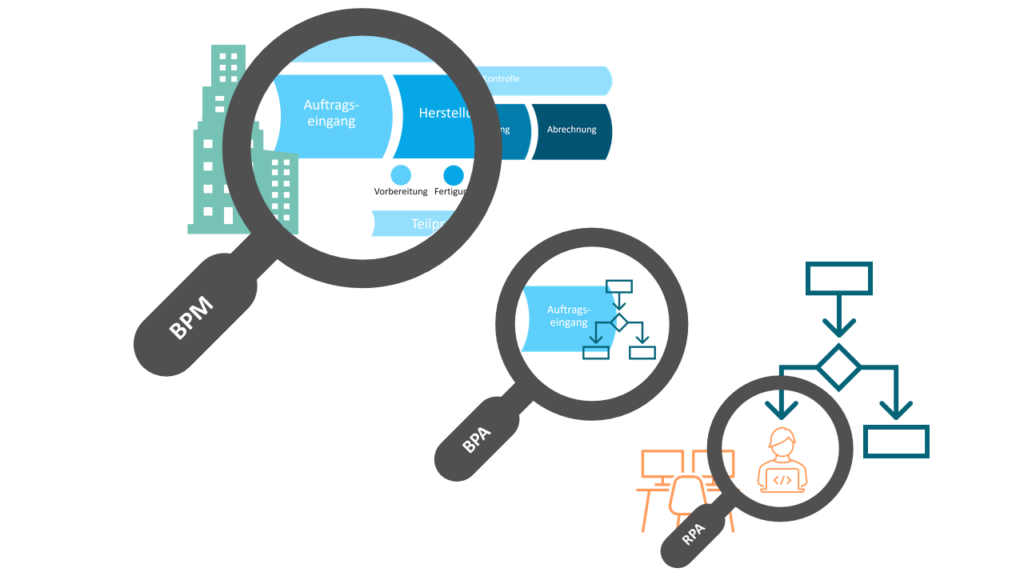
Figure 1: The Hierarchy of Process Automation | isr.de
Business Process Management:
What is happening in my company and what can be improved?
Hammer & Champy defined business processes in 1994 as “a collection of activities that takes one or more kinds of input and creates an output that is of value to the customer.” Something goes in, and something comes out. The 'magic' in between is called a business process, which often presents many facets and points of friction.
BPM is a methodology for analyzing and optimizing enterprise processes. It adopts a holistic approach: every phase of each process must be examined. The aim is sustainable and lasting improvements, which must therefore be precisely tailored to the company. Thus, BPM represents a strategic approach and a long-term orientation for the entire enterprise, requiring a profound understanding of all activities.
The broad scope of BPM can be subdivided into several parts along its workflow:
• Where can time be saved?
• Which workflows are redundant?
• Which areas, for instance, could be newly integrated or linked?
• How does the process function within the overall corporate landscape?
Following a comprehensive analysis phase, new process models are designed in the subsequent step. What new options emerge for addressing problematic areas within a process? During modeling, not only are integration points within the company considered, but all possible scenarios are also compiled and evaluated. Furthermore, corporate prerequisites and necessary investments are factored in. For decision support, specialized BPM software (e.g., Camunda) is available. This software ensures clarity in planning and implementation, highlighting critical decision parameters. Pre-defined objectives can be configured here.
Advantages and Disadvantages of BPM
BPM primarily aims for time savings. The paramount objective of BPM is to achieve greater efficiency through simplification and automation . By scrutinizing processes and implementing continuous self-monitoring, errors are identified and prevented in the future. This agile operational environment facilitates the rapid and effective implementation of new inputs. The enterprise can quickly adapt to new external circumstances and maintain its competitiveness.
Software and automation still encounter their limitations where human interaction is required. Some processes are not substitutable and require the intelligence and responsiveness of a human.
Furthermore, the initial investment in BPM may not appear inexpensive. In most cases, consulting with experts in this field is advisable; they can prepare the project and provide experience-based recommendations. Additionally, specialized software for process modeling is required for implementation, which must be procured and deployed. However, the aforementioned benefits quickly outweigh the investments.
Business Process Management (BPM) does not inherently presuppose automation; it can also encompass analog adjustments designed to enhance process structure efficiency. Within the realm of automation, Business Process Automation (BPA) is frequently referenced.
Business Process Automation:
How can specific workflows be optimized?
BPA entails the restructuring and automation of operational processes.
The primary objective is to prevent ad-hoc management, thereby minimizing human intervention. Ad-hoc management, in this context, refers to the unstructured execution of tasks as they emerge (or when their deadlines become critically imminent).
Automation focuses on replacing frequently recurring, analogous activities with standardized workflows. This includes, for instance, the generation, submission, and acknowledgment of approval requests, expense reports, or order processes.
Figure 2 illustrates the positioning of business processes within an enterprise.
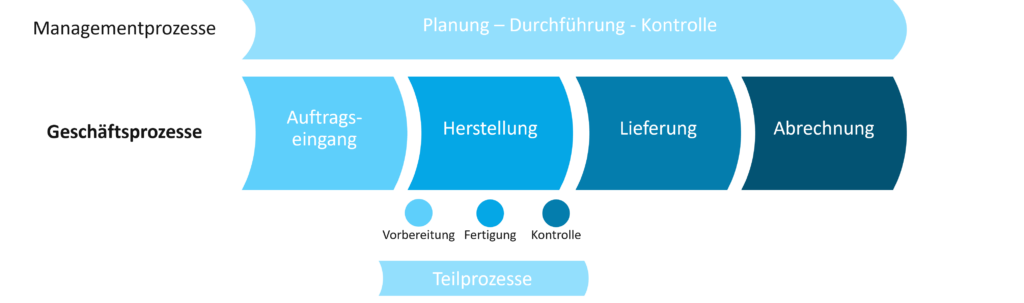
Figure 2: What are Business Processes? | isr.de
Advantages and Disadvantages of BPA
Furthermore, communication is optimized through standardized information exchange, which prevents misunderstandings and errors or facilitates their rapid identification. Error prevention also translates into eliminating redundant work and stopping the dissemination of inaccurate information. The overarching objective and decisive benefit, beyond increased employee convenience, is the efficient conservation of time and resources. BPA represents a significant advancement in the corporate pursuit of efficiency, with continuous software development and adaptation ensuring sustained competitiveness.
However, innovation invariably introduces new challenges. As is common with digitalization initiatives, an initial comprehensive assessment of all business processes and associated information is imperative. This forms the bedrock for developing customized and highly efficient workflows.
Crucially, intuitive graphical user interfaces (GUIs) and a well-planned transition to novel technologies are vital for fostering employee adoption and proficiency. Supportive measures in this regard include comprehensive staff training and an effective error reporting system.
How do BPM and BPA Differentiate?
The distinction between these two methodologies primarily resides in their scope.
BPM represents a holistic, comprehensive approach to analyzing all enterprise processes end-to-end. Its focus encompasses the entire organization, rather than isolated departments. The objective is to foster the synergistic interplay of all processes to achieve greater efficiency, transparency, and flexibility. As a management discipline, BPM continuously pursues improvements to attain long-term strategic goals.
In BPA, the emphasis is placed on specific, individual processes. While a workflow is considered within its environmental context, there is no inherent mandate to improve all enterprise processes. Consequently, BPA can function autonomously, decoupled from BPM. However, if BPM is already established, a collaborative approach is naturally adopted. BPM defines the overarching strategy and parameters, enabling BPA to operate and optimize with self-governance.
At the incremental level, individual employee tasks are examined, which is where Robotic Process Automation (RPA) technologies are deployed.
Robotic Process Automation: Who can expedite time-consuming tasks?
RPA entails training software to emulate human employee actions, mimicking user interface operations at high speed. When adequately trained, the bot's performance also demonstrates an exceptionally low error rate.
Illustrative processes include account opening/closing or the handling of claims. Additional potential tasks encompass master data maintenance, the reception, verification, and payment of invoices, along with their preparation and dispatch. RPA bots can also be deployed to review and adjust tariffs, a necessity not only in the insurance sector but particularly within the energy industry (e.g., electricity tariffs, adjustment of advance payments). Likewise, bots can be utilized in administrative functions to scrutinize and process forms and applications.
Figure 3 depicts the RPA-driven review of an incoming document. Initially, the system ascertains whether a form has been fully completed. If not, it is returned to the sender. This significantly conserves employee time, as they only receive complete task packages that can be directly processed. Consequently, processing times are reduced, leading to enhanced customer satisfaction.

Figure 3: Exemplary Workflow of an RPA Solution | isr.de
Advantages and Disadvantages of RPA
However, robots encounter limitations when intelligent discernment of required actions is necessary. Consequently, comprehensive training for all potential eventualities is crucial. It must be precisely predefined how to respond to each specific input. Should this clarity be absent, human intervention becomes indispensable.
Process Automation Impacts All Enterprise Levels
A comprehensive overview of BPM, BPA, and RPA topics is available here for free download.
Process optimization is frequently discussed but seldom implemented.
We do not believe it stems from a lack of motivation or resistance to digitalization. Rather, the significant challenge appears to be the development of a promising strategy for process optimization, coupled with a structured and goal-oriented approach. Furthermore, the fear of rationalization often dominates discussions among employees. However, the objective is not to eliminate staff – on the contrary: arduous tasks are automated, thereby freeing up more time for complex and fulfilling core responsibilities.
Do you require assistance with process automation?

Cihan Klingsporn
Senior Account & Marketing Manager
Business Process Automation
cihan.klingsporn@isr.de
+49(0)151 422 05 471