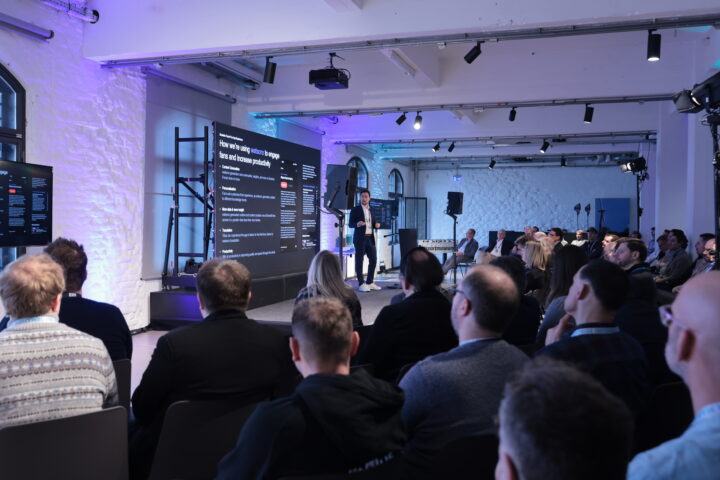
On February 24, 2026, the EIM Day in Cologne highlighted the specific areas where companies need to focus their efforts in enterprise information management today. Insights gleaned from the keynote speeches, case studies, and panel discussions at our event are likely to be relevant not only to IT managers but also to business departments.
Sustainable information management isn't driven by the latest technology alone, but rather by the intelligent integration of data, documents, and processes.
In addition to the insights from EIM Day, which we’ve summarized in writing for you here, you can also get a visual and audio impression of our event. To do so, please take a look at this video about EIM Day 2026at the end of this news article.

Takeaways from EIM Day
1. Self-service only works with centrally curated data and clear platform logic
Business units are actively promoting self-service and demonstrating valuable initiative in data usage. Experience shows that this commitment is particularly effective when supported by a clearly defined platform architecture and coordinated governance structures.
In this context, Vonovia has recognized how important it is to migrate existing data landscapes into a unified, centrally managed environment in order to make self-service sustainable, scalable, and efficient.
Self-service opens up a wide range of opportunities for departments to work independently with data and drive innovation. At the same time, it is clear that as the variety of tools and new areas of application grow, so does the need for clear guidance. SEW emphasizes that a transparent platform strategy and consistent guidelines help departments make targeted use of existing opportunities and navigate the increasing complexity with confidence.
Against this backdrop, it is advisable to establish a clear platform strategy, clearly define key roles such as platform owner, data steward, and business units, and embed handover and operational processes (e.g., SLAs, milestones, knowledge building) at an early stage. This will lay the groundwork for self-service to reach its full potential—efficiently, scalably, and in alignment with a shared data and platform logic.
2. “AI-ready” means that data is not only available but can also be used in a controlled manner
IBM’s keynote speech summed it up perfectly: “If I have a database that’s junk, then I can’t properly use AI with my company’s data, ” said Matthias Biniok. This corrected the misconception that models alone deliver value; in fact, AI readiness requires unique identifiers, consistent metadata, model-appropriate data structures, and a suitable infrastructure.
Mercedes-Benz illustrated this problem in practical terms: “Data is available, but it’s unusable. We simply don’t have the context the AI needs to function.” It became clear that the hurdle is rarely the model itself, but rather the process of integrating, annotating, and governing the data.
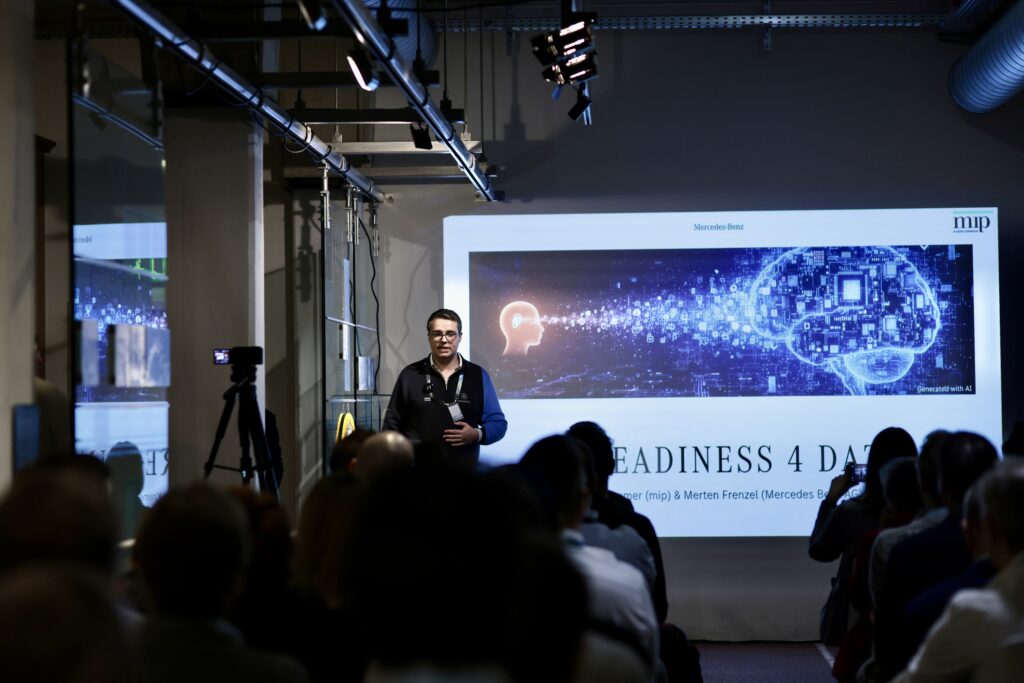
Companies should therefore establish a data inventory and a central data catalog, document keys and relationships, and define binding guidelines for model and infrastructure selection (on-premises vs. cloud; vector store vs. data lake; criteria for trust, cost, and performance)—only then can AI use cases become reliable and scalable.
3. Thanks to AI, documents are no longer an obstacle to automation
Several case studies have shown that documents are often the “analog core” of entire processes—and in some cases, they can also be a bottleneck.
NürnbergMesse summed it up succinctly: “Every type of document has its own requirements. (…) Sometimes a general business registration is not enough. The nature of the business must align with the product range of the trade fair. It is precisely this technical relevance that makes the review so complex.” This means that classification and simple extraction are not sufficient when the technical context, completeness, and formal requirements are lacking.
DFKP described the scale and heterogeneity: “We process several thousand documents every week, and we have roughly 200 different document classes. (…) The classes themselves are often very heterogeneous as well,” thereby highlighting the limitations of pure field extraction.
ISR client Deka Immobiliendescribed the pragmatic approach: first workshops, then a metadata model, a prototype, and iterative refinement—the result: within a few weeks, an iteratively refined prototype and additional features that could be quickly put into use.
Therefore, it is advisable to start with a document typology, prioritize processes based on volume, variability, and business impact, establish a metadata layer, and define business validation rules—only then should technical extraction follow.
4. Extraction alone is not enough. Agentic-IDP enables end-to-end processes
Several presentations showed that the key lies not in isolated extraction tools, but in seamless orchestration: “What is needed is end-to-end orchestration: classification, extraction, and feedback mechanisms; a demo solution is not enough, ” summarized Maximilian Dassler of the DFKP.
A practical example from NürnbergMesse demonstrated the operational model: classification and extraction are followed by a post-processing interface (“Human Hub”)—and only if the AI responds with sufficient confidence and certainty does the process continue in the background without manual review. The presentation highlighted how important monitoring, error categories, and defined human-in-the-loop interfaces are to ensuring that automation remains cost-effective.
Before finalizing your technology selection and modeling, you should model process workflows—including error paths—define end-to-end KPIs (throughput time, typical error types, rework effort), and integrate feedback loops into your operations. Agentic-IPD can help with this.
5. AI must remain controllable and be measurable against concrete metrics
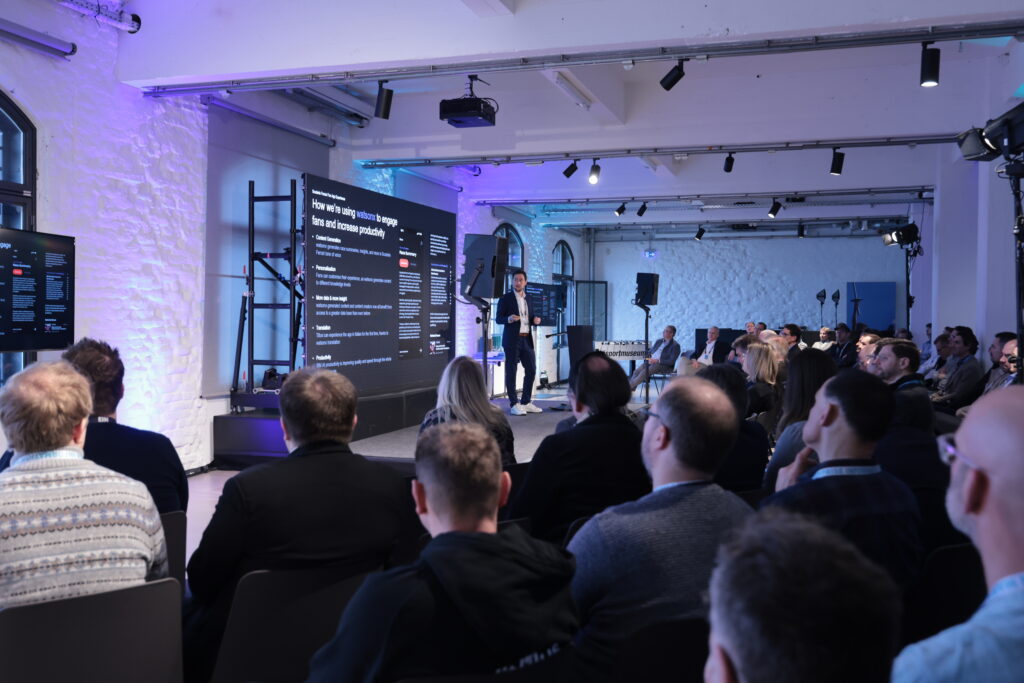
IBM called for clear cost-benefit analyses. Citing a Deloitte study ,keynote speaker Matthias Biniok stated: “Only 10% of current AI projects are generating a real ROI. That’s not much!” This was accompanied by the expectation that AI projects should be evaluated against clear metrics even before they begin.
Practical figures support this claim: DFKP reports on its project with Buildsimple concrete outcomes:
- from a median of 30–35 minutes to 2 minutes,
- 70% less time,
- 60% fewer errors,
- Three times the throughput with the same staff
These findings show that AI has an economic impact—but only where before-and-after metrics have been defined.
Therefore, it is essential to define baselines before each pilot, establish the measurement methodology and reporting procedures, and link production rollouts to strict acceptance criteria.
6. Governance, security, and the human factor are prerequisites for operations
Compliance, deletion logic, model documentation, and security issues such as prompt injection are not peripheral matters, but prerequisites for stable operation. HUK-Coburg put it this way:“GDPR-compliant deletion is mandatory. (..) The deletion system we establish must be verifiable. It must be secure. And transparent. Retention periods, where applicable, must be taken into account. That is the challenge. So, ultimately, it comes down to building a standardized system that is scalable and, of course, complies with the law.”
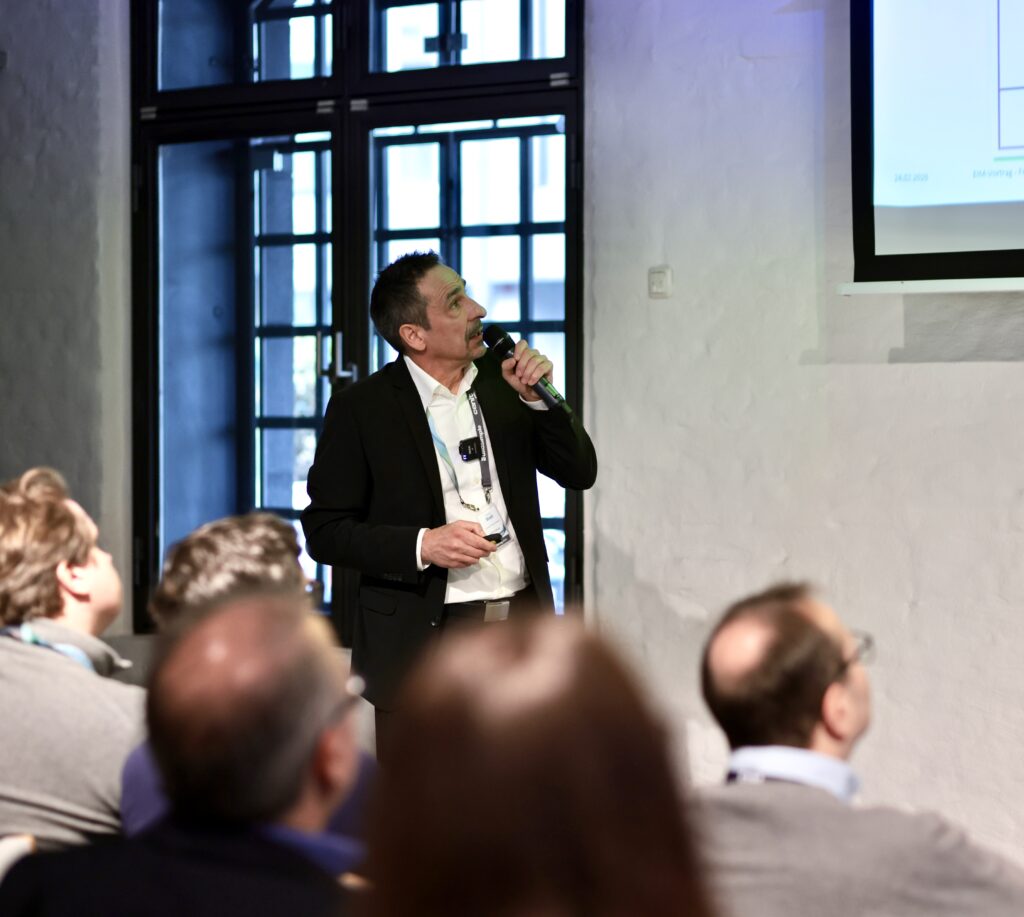
IBM warned of pitfalls in operationalization: “Prompt injection in the context of AI security is an exciting topic—suddenly I’m facing data leakage. (..) You need visibility into use cases, regulatory compliance, and risk management.” This made it clear that governance lifecycles, testing, security checks, and AI literacy must be established in parallel with the technology.
Therefore, establish a governance roadmap (data rights, deletion processes, model documentation, lifecycle testing), conduct security checks (including prompt injection scenarios), and support technical measures with training, communication, and the involvement of relevant stakeholders.
7. Document logistics does not scale with a constant stream of ad-hoc solutions
Several presentations on document logistics made it clear that sustainable modernization does not result from building a new specialized solution for every department. A more sustainable approach is to develop reusable building blocks, standards, and integration patterns based on specific use cases that can be applied to other scenarios.
At Berliner Wasserbetriebe, the initial projects have resulted in exactly this kind of modular system. “With the migration of the permitting management system to the EclisoECM environment, it became clear to us that we had to do something to avoid tackling every department and every file type through a very time-consuming project process involving concept development and requirements gathering, because that simply takes far too long. We need to standardize; we need to move away from department-specific approaches and make strategic decisions on how to get our projects off the ground much faster.” This is precisely where a central theme of the EIM Day emerges: It is not the individual solution that scales, but the ability to turn it into a reusable model.
DATEV also described this transformation very clearly. For years, enterprise content management there had been heavily influenced by heterogeneous system landscapes, in-house developments, and the correspondingly high operational costs. The restructuring therefore deliberately focused on a platform-based approach, standard software, and a more consultative role for IT. Michael Szigeti put it particularly succinctly in his presentation, noting that theyhad been able to “scale back a significant amount of custom code and in-house developments , thereby establishing product standards that today help us make effective use of standard solutions.”
In this context, modernization does not mean rebuilding everything from scratch, but rather consolidating what already exists in such a way that a robust standard is established.
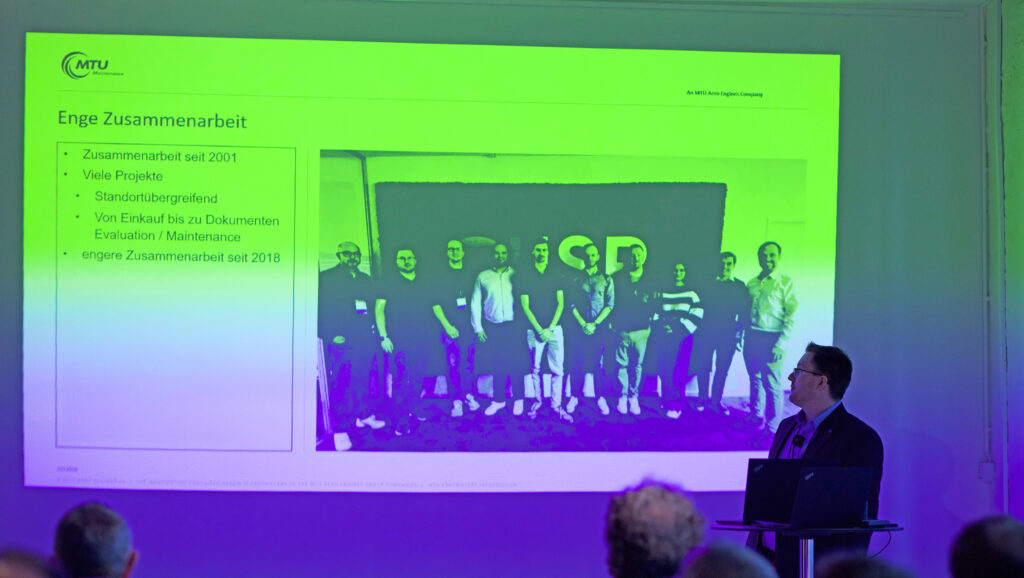
MTU applied the same logic at the workflow level. Rather than completely overhauling a complex, audit-compliant process that had evolved over time, the team first modernized it by implementing a modern front end and modular forms. A key factor was the ability to quickly map requirements in collaboration with the business unit, ensuring that the solution was not only technically sound but also accepted by the users.
Lufthansa Technik, for its part, made it clear that scaling must also be approached from a technical, modular perspective: rule-based extraction remains useful where it works quickly and reliably, while LLM-based methods fill the gaps where traditional rules reach their limits.
And Versafileexpanded this perspective to include the strategic level by focusing the presentation on content and metadata strategy using the docuflow product.
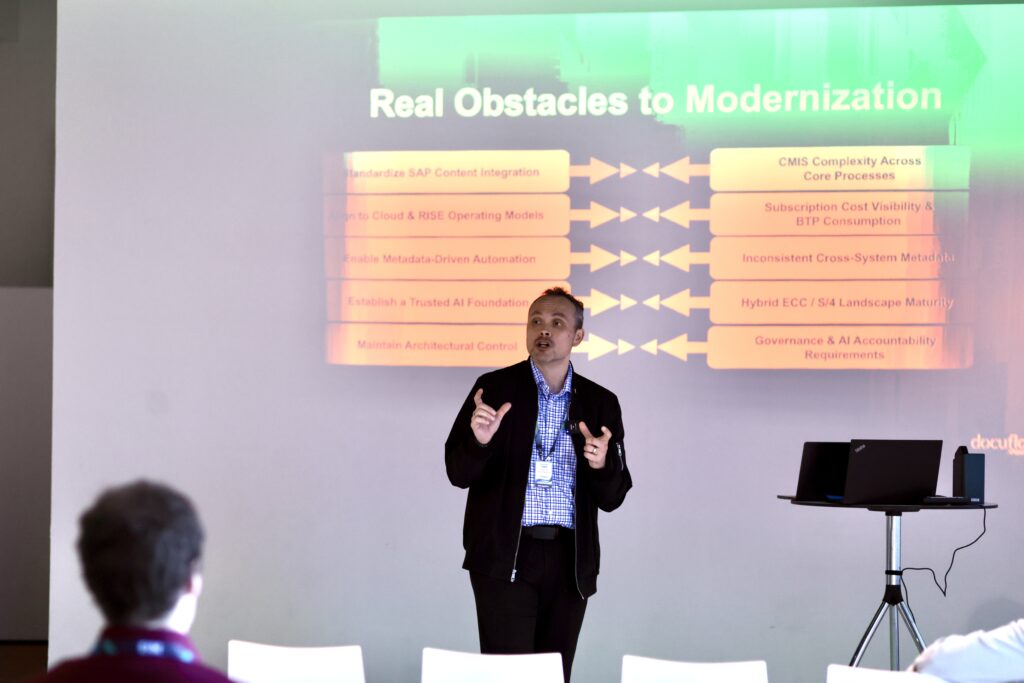
The underlying principle is the same: document logistics will only truly be future-proof if content, processes, and metadata are viewed not as isolated solutions, but as a reusable system.
Summary: What Companies Should Be Doing Right Now
Anyone who wants to build a future-proof information management system today should not start with individual technologies, but rather with the biggest bottlenecks in their own business. The presentations at the EIM Day make it very clear: The greatest leverage lies where unclear data structures, manual document processes, a lack of governance, and media breaks still hinder scalability, speed, and quality today. This is exactly where companies should start—with clearly prioritized use cases, robust KPIs, and solutions that don’t get stuck in the pilot phase but can be rolled out into production.
It also became clear that AI only delivers its full value when data and content are truly made usable—that is, structured, linkable, described in technical terms, and embedded in robust processes. This requires not only good models, but also a robust platform architecture, reusable building blocks in document management, clean metadata, clear rules for security and compliance, and a realistic understanding of where automation is already economically viable today and where human review remains necessary.
It is precisely in these areas of tension that ISR has been supporting companies for many years: from data AI readiness to document logistics and end-to-end orchestration, all the way to governance, security, analytics, and platform architectures. If you’d like to assess which of the approaches outlined here are relevant to your specific situation, please feel free to contact us. Together with you, we’ll apply the insights from the EIM Day to your specific processes, system landscapes, and priorities.
Upon request, we would also be happy to provide you with the original recordings of the presentations.
you'll get a glimpse
Visit our ▶️ YouTube channel at https://lnkd.in/d-xtqjuA for more highlights from EIM Day. In addition to this video, you’ll find summaries of the presentation sessions on artificial intelligence, analytics, and document logistics.
Expand your knowledge



Do you have any questions? Feel free to contact us!

Michael Frihs
Senior Executive Manager
Key Account Sales
michael.frihs@isr.de
+49(0)151 527 45 346