As a customer of solutions from the SAP Business Intelligence ecosystem, you are currently facing the major challenge of having to decide on the right business intelligence strategy. In doing so, you are setting the course for your company's future.
The sheer variety of business intelligence architectures and tools, as well as the possibilities for combining them, make it significantly more difficult to decide on the right business intelligence strategy. This means that, even after making a well-informed decision, there is always a lingering feeling that future requirements may not be adequately met or that important points may not have been sufficiently considered in the decision-making process.
This behavior often leads to important decisions being postponed or not made in a timely manner. However, this is simply counterproductive, especially given the highly dynamic nature of a business. We provide you with an overview of the topic of business intelligence:
Many companies are currently undergoing a process of realignment and restructuring, not least due to the ongoing coronavirus pandemic. As corporate culture changes, so too do the requirements for companies' adaptability and resilience. Not least, the use of new digital technologies is intended to increase the robustness and flexibility of (digital) business processes.
Many of these challenges ultimately result in new reporting, analytics, and planning requirements that must be implemented with the help of a business intelligence strategy.
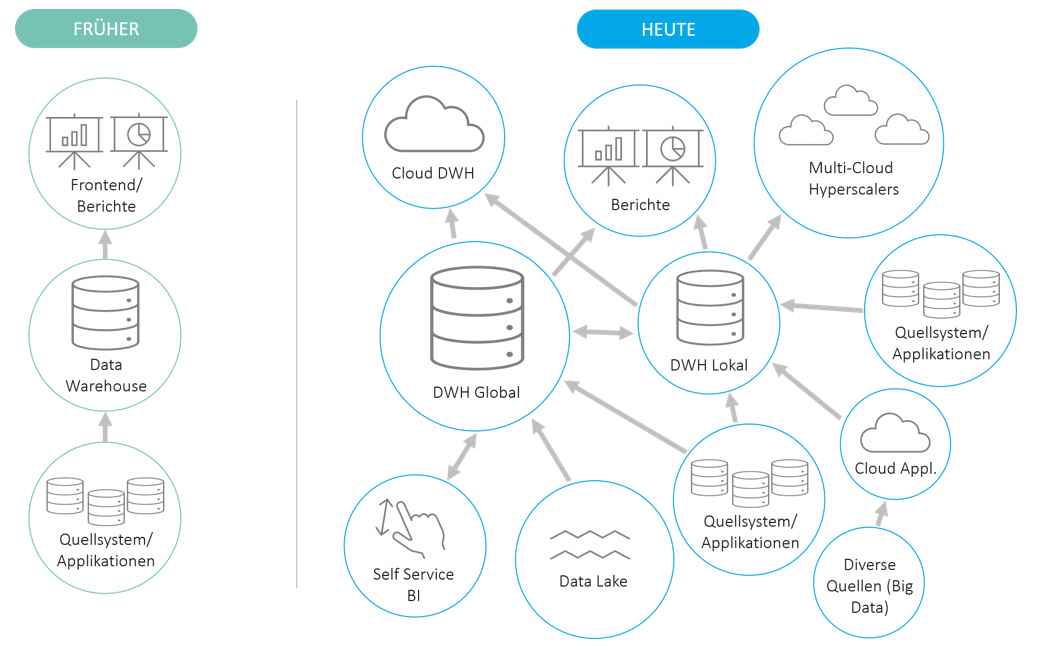
The renewal of value-adding business processes is often accompanied by the rollout of far-reaching, operational IT systems (e.g., ERP systems). These systems are often heterogeneous in nature and must be connected to each other via interfaces. This results in growing amounts of data and the standardization of these data structures in a central data warehouse, which brings new opportunities but also problems.
Fig. 01: Business intelligence yesterday vs. today
Fig. 01: Business intelligence yesterday vs. today
The complexity of the SAP product portfolio is growing
The reasons behind the complexity of this decision are the logical consequence of various developments in the recent past. Starting with SAP's own product strategy, SAP's product portfolio was previously quite straightforward and "one-dimensional" (data source -> data warehouse -> front end).
Today, however, the portfolio is extremely diverse. The far-reaching transformation toward the cloud and the promotion of the completely revamped flagship product "S/4 HANA" are changing the stable pillars of a good basic business intelligence architecture for customers. Whereas in the past, the self-administered "on-premise" server architecture and the stable SAP ECC 6.0, which had been developed over many years, formed the data basis, the further development of the SAP product portfolio is now targeting the very substance of these two cornerstones, which were so stable in the past.
The foundations for a sound business intelligence strategy
First of all, it is important that you, as a customer, are clear about your corporate strategy. The top priority is to establish a central vision and define goals for the business intelligence strategy.
Only once this vision has been formulated and converted into measurable goals can strategic measures for achieving these goals be defined. In a comprehensive analysis of the current situation, the existing processes and reporting applications should then be reviewed and critically evaluated. Taking into account the new requirements and business processes, a BI position is then determined.
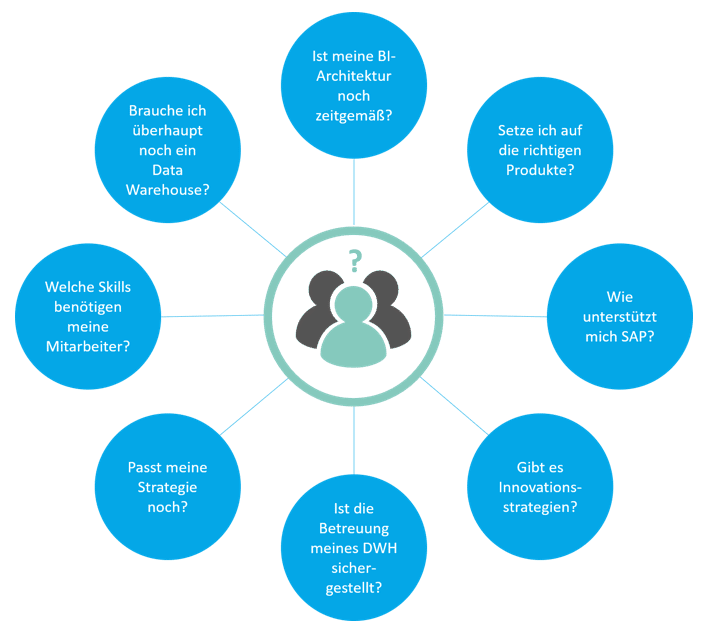
Where are we on the path toward a future-oriented BI strategy?
Which requirements should be weighted and how?
What expertise can we already contribute to the projects, and what expertise do we still need?
These are the key questions you need to answer at this stage. Only once this assessment has been carried out can a new business intelligence target architecture be developed, discussed with the relevant stakeholders, and approved.
Fig. 02: Business Intelligence Questions
Throughout the entire process, from the analysis of the current situation to implementation, we at ISR are at your side with advice and support, drawing on our many years of project and BI experience.
LEARNING AND UNDERSTANDING BUSINESS INTELLIGENCE
Work with an ISR expert in our Business Intelligence Orientation Workshop to develop initial approaches for designing your BI landscape and expand your BI knowledge. You can find more workshop details here.
Further information on comprehensive business intelligence positioning and our ISR process model can also be found in our free downloadable PDF. Here you can learn everything you need to know about creating a comprehensive and customized business intelligence strategy.
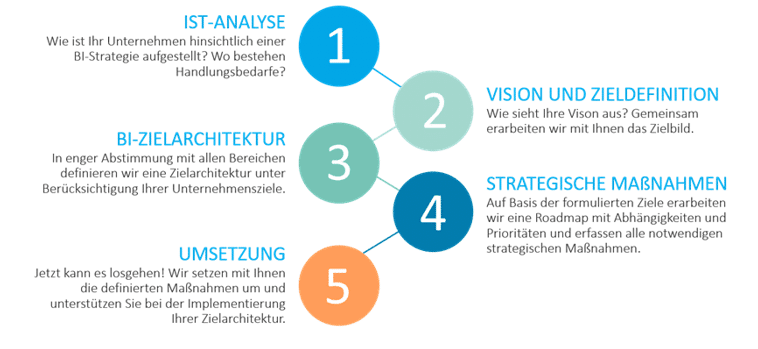
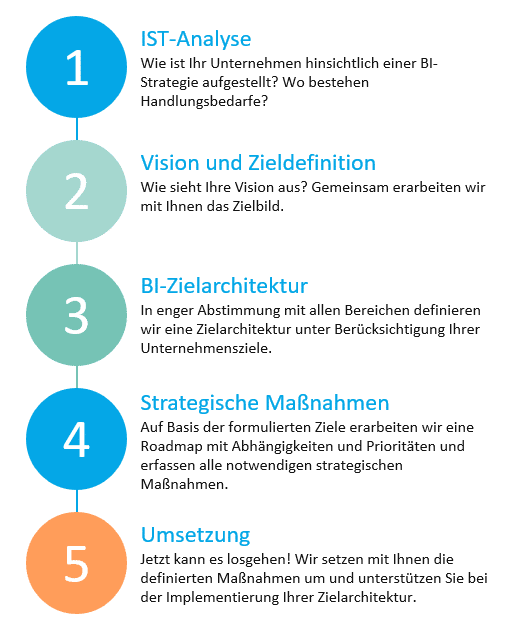
Fig. 03: Business Intelligence Positioning Procedure
Fig. 03: Business Intelligence Positioning Procedure
Since 1993, we have been operating as IT consultants for Data Analytics and Document Logistics, focusing on data management and process automation. We provide comprehensive support, from strategic IT consulting to specific implementations and solutions, all the way to IT operations, within the framework of holistic Enterprise Information Management (EIM). ISR is part of the CENIT EIM Group.