
Data analytics
Basis for data-driven business decisions
Data Analytics
Table of Contents
- What is data analytics? A definition
- Why data analytics?
- Advanced data analytics methods
- Overview of methods
- Data analytics tools at a glance
- Challenges of data analytics
- Data analytics with SAP Analytics Cloud – market readiness and project experience
- Data analytics examples & possible applications
- Practical example: Data analytics
- Why you should choose us!
- We also offer the following consulting services
- Valuable content on the topic of data analytics
What is data analytics? A definition
Data analytics focuses on analyzing and interpreting processed data to gain valuable insights. The goal of data analytics is to identify data-based patterns, trends, and correlations that enable informed decisions.
The use of data analytics enables a wide range of functions in companies, ranging from the analysis of historical data to strategic planning. Descriptive analyses help to understand past events and communicate results in a comprehensible manner through reports, dashboards, or visual representations. Diagnostic analyses go one step further by identifying the causes of certain patterns or events and uncovering causal relationships. Based on these findings, predictive analytics attempts to forecast the results for specific input variables. If the predictions are sufficiently reliable and the causal relationships are understood, prescriptive analytics attempts to determine what needs to be done to achieve a specific result. A key area of application for this stack of analytical methods is customer centricity, where customer data is analyzed to identify behavior patterns and preferences and, based on this, to develop personalized products, services, or marketing measures. At the same time, data analytics supports strategic planning by providing data-driven insights that promote long-term strategies and identify new market opportunities. Last but not least, data analytics plays a key role in performance measurement by monitoring KPIs, evaluating business performance, and highlighting potential for improvement.
The goal of data science is to enable companies to make informed decisions. Instead of relying on intuition or assumptions, executives can draw on data-driven insights to make strategic decisions, optimize processes, develop innovative products and services, and identify new business opportunities.
Goals and Benefits Why Data Analytics?
The goal of data analytics in companies is to provide data-based insights in order to make better decisions, optimize processes, and better meet customer needs.
Advantages at a glance
The benefits range from cost reduction and increased revenue to innovation and risk reduction. In a data-driven world, data analytics is a critical success factor for businesses.
Improved decision-making
Data-driven decisions are more accurate and reduce the likelihood of errors. This strengthens both the strategic and operational orientation of companies and promotes their success.
cost reduction
Process optimization and efficient use of resources significantly reduce operating costs. In addition, downtime and bottlenecks can be specifically avoided.
increase in sales
Targeted marketing and personalized offers increase sales figures. At the same time, companies can tap into new market segments and business areas through data analytics.
competitive advantage
Companies that recognize trends early on and respond flexibly to market changes secure a clear advantage over the competition.
Enhanced customer experience
Analyzing customer data enables companies to create more personalized and relevant experiences. This increases customer satisfaction and promotes long-term loyalty.
risk mitigation
Data analytics helps to identify potential risks such as fraud or security breaches at an early stage and take timely action to prevent damage.
Real-time insights
Thanks to up-to-date data, companies can respond quickly to changes such as shifts in demand or supply chain issues, which enhances agility and flexibility ..
Promotion of innovation
Identifying new trends and needs opens up opportunities for innovative solutions and the development of new products or services.
Long-term efficiency gains
The continuous improvement of processes, strategies, and offerings through data analytics ensures sustainable growth and stability.
Overview
Advanced data analytics methods
In addition to the classic historical data analyticsmethods such as reporting and dashboarding , there are various advanced methods and analysis techniques (advanced analytics) for specific data and applicationsgwith a smooth transition to with a smooth transition to data science. The following table provides an overview of some specific analysis techniques in data analysis, as well as examples and fields of application.
| method | purpose | Examples | Application |
|---|---|---|---|
| time series analysis | Recognition of patterns in temporal sequences and measurement series | Log files, machine logs, web tracking, customer journeys | Identification of process problems, process patterns, early indicators of problems |
| Spatial Analysis | Analysis of geoinformation | Customer distribution, tour data, package tracking | Location optimization, route optimization, map display |
| Process Mining | Tracking the steps in a business process | Automated detection of standard processes and process deviations | Process optimization, process error detection, parameterization of process automation |
| Web analytics / log analytics | Analysis of website visits or log files | Path analysis, vector analysis, fault pattern detection | Website control, analytical CRM, marketing optimization |
| Data exploration | Review any data for the first time and examine it for usability and initial anomalies. | Cluster analysis, distribution determination, outlier detection, root cause analysis, factor analysis | Investment decision for data connection, evaluate potential benefits |
Advanced Data–Analyticsmethods in| ISR | ISR
time series analysis
Purpose: Recognition of patterns in temporal sequences and measurement series
Examples: Log files, machine logs, web tracking, customer journeys
Application: Identification of processproblems, process patterns, early indicators of problems
Geographic analysis (Spatial analysis)
Purpose: Analysis of geoinformation
Examples: Customer distribution, tour data, package tracking
Application: Location optimization, route optimization, map display
Process mining
Purpose: Tracking process steps in a business process
Examples: Automated detection of standard processes and process deviations
Application: Process optimization, process error detection, parameterization of process automation
Web analytics / log analytics
Purpose: Analysis of website visits or log files
Examples: Path analyses, vector analyses, error pattern detection
Application: Website control, analytical CRM, marketing optimization
Data exploration
Purpose: Initially review any data and examine it for usability and initial anomalies.
Examples: Cluster analysis, distribution determination, outliers–detection, rootcauseanalysis, factor analysisApplication:
Application: Investment decision for data connection, evaluate potential benefits
Data Science & Data Analytics
Methods at a glance
When using advanced data analytics and data science , there are various methods and analysis techniques. The following table provides an overview.
| method | purpose | Examples | Application |
|---|---|---|---|
| regression analysis | Investigation of relationships between variables | Linear regression, multiple regression, logistic regression | Forecasting sales, determining the impact of price changes on demand |
| cluster analysis | Grouping of data points based on similarities | K-means, hierarchical cluster analysis, DBSCAN K-means, hierarchical cluster analysis, DBSCAN | Customer segmentation, pattern recognition |
| time series analysis | Analysis of data over time | ARIMA, exponential smoothing | Predicting stock prices, energy consumption, or weather |
| hypothesis testing | Verification of hypotheses through statistical tests | t-test, chi-square test, ANOVA | Comparison of two products or groups |
| text analysis | Processing and analysis of unstructured text data | Sentiment analysis, word clouds, named entity recognition | Analysis of customer feedback or social media |
| association analysis | Finding connections between different variables or events | Apriori algorithm, FP-Growth | Shopping basket analysis in retail |
Data science methods in focus| ISR
regression analysis
Purpose: Examination of relationships between variables
Examples: Linear regression, multiple regression, logistic regression
Application: Forecasting sales, determining the impact of price changes on demand
Cluster analysis
Purpose: Grouping of data points based on similarities
Examples: K-means, hierarchical cluster analysis, DBSCAN
Application:
Method: Time series analysis
Purpose: Analysis of data over a period of time
Examples: ARIMA, exponential smoothing
Application: Customer segmentation, pattern recognition
hypothesis testing
Purpose: Verification of hypotheses through statistical tests
Examples: t-test, chi-square test, ANOVA
Application: Comparison of two products or groups
text analysis
Purpose: Processing and analysis of unstructured text data
Examples: Sentiment analysis, word clouds, named entity recognition
Application: Analysis of customer feedback or social media
association analysis
Purpose: Finding correlations between different variables or events
Examples: Apriori algorithm, FP growth
Application: Shopping basket analysis in retail
Data analytics tools at a glance
In the field of data analytics, there are a number of powerful tools and providers that support companies in data analysis and visualization. The various tools enable companies to effectively analyze and visualize their data and make data-driven decisions. Choosing the right tool depends on specific requirements, existing IT infrastructure, and user skills.
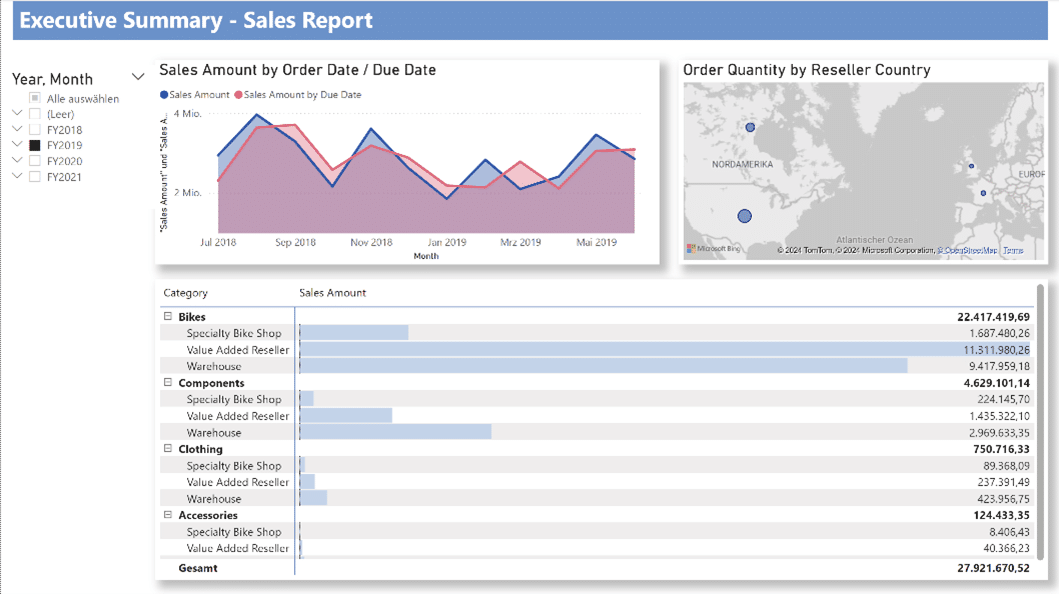
Microsoft Power BI
Microsoft Power BI is a leading business intelligence platform that supports over 120 data sources, including Excel and SharePoint. It offers interactive dashboards, AI-powered insights, and, according to studies, speeds up data analysis by up to 60%. Seamless integration with Microsoft products and mobile apps enables flexible use anywhere.
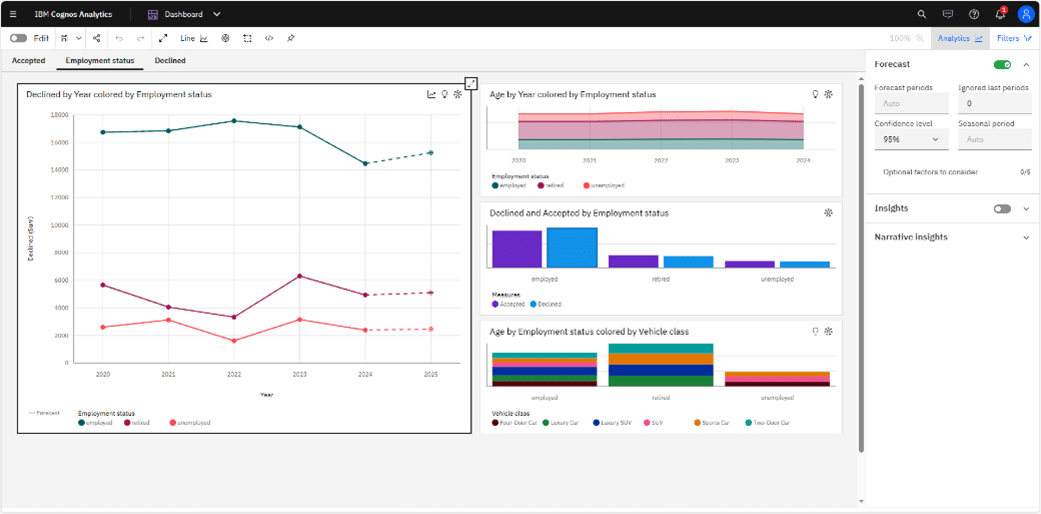
IBM Cognos Analytics
IBM Cognos Analytics combines self-service analytics with AI-powered data processing by IBM Watson. The platform enables automatic pattern and anomaly detection, offers high security through role-based access controls, and supports on-premises and cloud implementations.
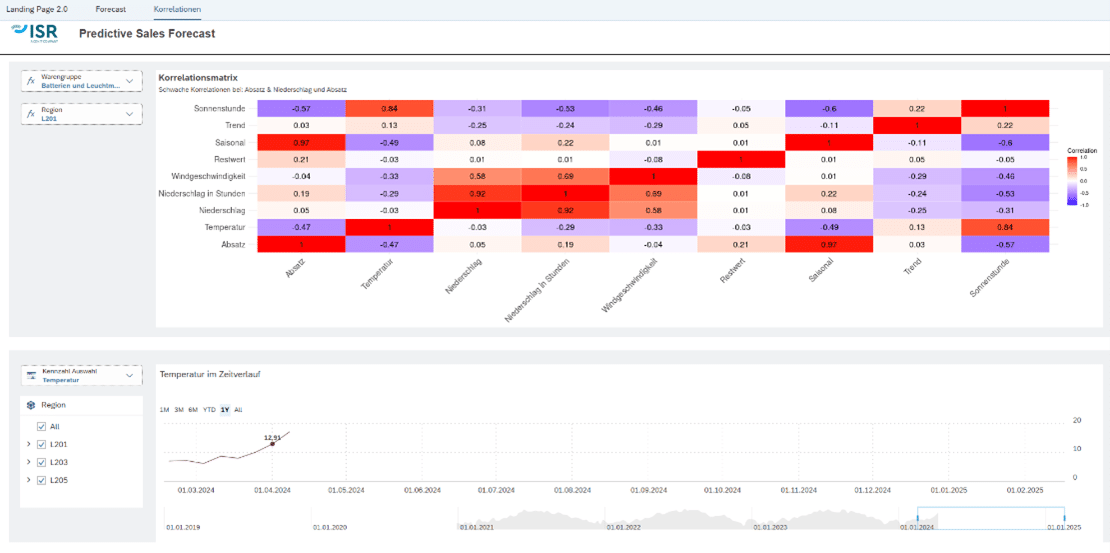
SAP Analytics Cloud (SAC)
SAP Analytics Cloud combines business intelligence, planning, and predictive analytics in a cloud-based solution. Real-time dashboards, AI-powered features, and seamless integration with SAP systems make it a versatile tool for data-driven decision-making.
This list is only an excerpt of the most common tools in the field of data analytics. Every company has individual requirements, and we would be happy to advise you on finding the right provider or an optimal combination of different tools for your specific needs.
Challenges of data analytics
Implementing data analytics is a complex task, but with targeted measures and clear solutions, these challenges can be overcome. Here is an overview of the 10 most common challenges and possible solutions:
- Data quality: Poor data quality can lead to inaccurate analyses and wrong decisions. Common problems include incomplete, inaccurate, or outdated data. These challenges can be solved with a data governance framework, automatic validation, and regular data cleansing.
- Data silos: Data scattered across different departments makes access difficult and leads to inconsistencies. A central data platform such as a data lake or data warehouse, as well as cross-departmental collaboration, can effectively solve these problems.
- Data security and data protection: Processing sensitive data carries risks such as cyberattacks and requires compliance with data protection laws. Solutions include encryption, access controls, regular audits, and employee training.
- Technological complexity: The multitude of technologies makes selection and integration difficult. Lack of interoperability and employee overload can be overcome with scalable technologies and targeted training.
- Skills shortage: The lack of experts such as data scientists and IT specialists is leading to project delays. Internal training programs and partnerships with universities are helping to close the gap.
- High costs and ROI assessment: Implementing data analytics is often expensive, and the benefits are difficult to measure. Projects with clear business value and pilot projects can help demonstrate ROI.
- Resistance to change: Resistance to data-driven approaches hinders progress. Clear communication of the benefits, change management, and targeted training promote acceptance among employees and managers.
- Real-time data processing: The demand for real-time analytics places high demands on systems. Modern technologies such as Apache Kafka or cloud-based infrastructures help to overcome latency and scaling issues.
- Complexity of data analysis: Advanced analysis methods such as machine learning are often difficult to implement. Explainable AI models and close collaboration between technical and business teams create transparency and understanding.
- Scalability and flexibility: As data volumes grow, so do the demands on systems. Scalable cloud infrastructures and modular system architectures enable flexible adaptation to new requirements.
Data quality:
Poor data quality can lead to inaccurate analyses and wrong decisions. Common problems include incomplete, inaccurate, or outdated data. These challenges can be solved with a data governance framework, automatic validation, and regular data cleansing.
Data silos:
Data scattered across different departments makes access difficult and leads to inconsistencies. A central data platform such as a data lake or data warehouse, as well as cross-departmental collaboration, can effectively solve these problems.
Data security and data protection:
The processing of sensitive data carries risks such as cyberattacks and requires compliance with data protection laws. Solutions include encryption, access controls, regular audits, and employee training.
Technological complexity:
The multitude of technologies makes selection and integration difficult. Lack of interoperability and employee overload can be overcome with scalable technologies and targeted training.
Skills shortage:
The shortage of experts such as data scientists and IT specialists is leading to project delays. Internal training programs and partnerships with universities are helping to close the gap.
High costs and ROI assessment:
Implementing data analytics is often costly, and the benefits are difficult to measure. Projects with clear business value and pilot projects can help demonstrate ROI.
Resistance to change:
Resistance to data-driven approaches hinders progress. Clear communication of the benefits, change management, and targeted training promote acceptance among employees and managers.
Real-time data processing:
The need for real-time analytics places high demands on systems. Modern technologies such as Apache Kafka or cloud-based infrastructures help to overcome latency and scaling issues.
Complexity of data analysis:
Advanced analysis methods such as machine learning are often difficult to implement. Explainable AI models and close collaboration between technical and business teams create transparency and understanding.
Scalability and flexibility:
As data volumes grow, so do the demands placed on systems. Scalable cloud infrastructures and modular system architectures enable flexible adaptation to new requirements.
Data analytics with SAP Analytics Cloud – market readiness and project experience
SAP offers a solution for planning processes in line with its cloud strategy, namely the SAP Analytics Cloud (SAC). In this whitepaper, we aim to provide you with a detailed insight into the capabilities of SAC in integrated enterprise planning and share our project experience with you.
Data analytics examples & possible applications
Data analytics is used in almost all industries and business areas to make data-driven decisions and optimize processes.
finance
Reduce financial losses and improve budget planning by forecasting revenues, expenditures, and investment results.
Production and Supply Chain Management
Cost reduction through more efficient processes and reduction of downtime by forecasting production volumes based on historical data.
Research and Development (R&D)
Faster product launch / promotion of innovation through analysis of market and customer data to identify new needs.
Human resources (HR)
More efficient recruitment and higher employee retention through analysis of feedback and survey data to improve the working environment.
customer service
Improve customer satisfaction and resolve issues faster by assessing customer sentiment in real time.
Marketing and Sales
Increase customer loyalty and conversion rates and optimize your marketing budget by identifying different customer groups based on behavior, preferences, and demographics.
Hands-on in the planning scenario "
" Practical example of data analytics
A well-known retailer with several thousand stores faced the challenge of making its planning processes more efficient and data-driven. The previous approach was based on decentralized solutions that did not allow for complete integration between different business areas, such as personnel costs, overhead costs, sales, and cost of goods sold. The goal was to integrate these isolated data sources and sub-plans into a holistic, data-based planning scenario.
Our approach began with a detailed analysis of the existing data landscape and the customer's specific planning requirements. In doing so, we identified key areas that could benefit from a driver-based data analytics solution. Together with the customer, we developed a concept that consolidates data from hundreds of cost centers, online shops, and branches and enables forecasts based on defined planning parameters.
A key aspect was the implementation of data-driven driver logic: instead of planning all branches manually, flexible parameters such as expected sales, energy costs, and personnel costs were used to automatically generate scenarios. These data-driven approaches made it possible to efficiently process large amounts of data—over 120 million data records from a 10-year planning period.
The result was a fully integrated data analytics platform that not only increased data consistency but also significantly streamlined planning processes. Departments now benefit from automated "what-if" analyses that enable informed, data-driven decisions in real time. In addition, the solution was designed to be tailored to individual user requirements via intuitive dashboards and granular authorization concepts.
This data-driven solution demonstrates how data analytics, combined with innovative approaches, helps companies overcome complex challenges and position themselves for the future.
Would you like a detailed insight into how this works in practice?
Feel free to watch our presentation on YouTube:
Data analytics consulting with ISR
Why you should choose us!
Are you looking for a partner on your journey to becoming a Data-Driven Company? We support you with our extensive expertise in Data Analytics Consulting! With a profound understanding of Business Analytics, we guide you from strategy to implementation. Our experienced Data Analytics Consultants enable you to discover potential and base strategic decisions on a solid data foundation. Thanks to our long-standing partnerships with SAP, IBM, and Microsoft, we provide vendor-neutral and cross-technology consulting.


We offer this too.
Further advice pages



Read more on the ISR Blog
Valuable Content on Data Analytics

Bye, BI SAP BO 4.3? Key Considerations!
END OF MAINTENANCE FOR SAP BUSINESS OBJECTS 4.3 IS ANNOUNCED FOR 2025, WHICH MEANS …

Modular Solutions for Your BI Requirements: ISR Data Analytics Solution
Automated decision-making processes, efficient license management, and optimized data analysis – in short: The ISR Data Analytics Solutions. Which...

Implementation of a Reporting Solution as a Multi-System Landscape
A reporting solution, in its basic configuration, consists of at least one database and one reporting tool, each in...
Get in touch with us now
We would be pleased to advise you.
Take advantage of our data analytics consultants' many years of expertise to make your data strategy future-proof. Let's work together to develop customized data analytics solutions that will prepare your company for the future in the long term. Feel free to contact us for a no-obligation initial consultation.

Wilhelm Hardering
Senior Executive Manager
Data & Analytics
wilhelm.hardering@isr.de
+49 (0) 151 422 05 422