
In our view, there are four points in time when measuring digital maturity is appropriate and important for companies. You can find out more about this here.
What to Expect Here – An Overview
1. Digital maturity measurement – a quick refresher
2. The right time for a digital maturity assessment
3. Initial digital maturity assessment
4. Regular digital maturity assessment
5. Digital maturity measurement in the face of technological change
6. Digital maturity assessment before strategic decisions
7. The timing of a digital maturity assessment is therefore very important!
In our last two blog posts on the topic of "digital maturity models," we already discussed what is actually measured in maturity assessments (read here) and what companies should pay attention to (read here).
Today, we would like to conclude our short series by explaining when it makes sense to carry out a comprehensive digital maturity assessment. Conducting a thorough digital maturity assessment involves both costs and a considerable investment of resources (in the form of technical experts) on the part of the company in question. Therefore, such a comprehensive analysis, especially for small and medium-sized enterprises (SMEs), should always be carried out very consciously and not at "inopportune" times. In other words, "hot" project phases, the upcoming annual financial statements, or even ongoing strategic projects should be avoided. But let's take a look at what might be suitable times.
Digital maturity measurement – a brief refresher
The right time for a digital maturity assessment
As mentioned at the outset, sustainable maturity measurement involves costs, time, and resources. The timing of such a measurement therefore needs to be carefully considered and usually depends on various factors, including company-specific ones.
Depending on the degree of digitization, your own (digital) development path, and the goal associated with measuring maturity, an analysis may be useful at the following points in time:
- Initial digital maturity assessment: This involves determining an initial maturity level in the form of an initial assessment.
- Regular digital maturity assessment: Continuous digital maturity assessment is recommended to check what is working, what is not working, and how digital progress is progressing.
- Digital maturity assessment in the event of technological changes: If there have been significant technological changes on the market or within your company, it may be advisable to reassess your maturity level.
- Digital maturity assessment before strategic decisions: If your company is facing major strategic decisions, a digital maturity assessment can also help.
Initial digital maturity assessment
In the blog article "Digital maturity measurement for SMEs: What really matters," we discussed, among other things, typical barriers to digitization for SMEs. So if a company is still facing the challenge of initiating its own necessary digitization, it makes sense to start by conducting a customized analysis in the form of a digital maturity measurement.
The methodologically sound models available on the market provide a good framework and also offer the right tools for SMEs to carry out targeted maturity assessments (focused on the right and relevant areas of investigation). Barriers to digitalization and potential for digital optimization can usually be identified quickly and specifically.
If, during the analysis, you then focus on your own capabilities and evaluate them in a digital context, this initial measurement and assessment will be very helpful in identifying the first appropriate measures and starting your digital journey.
Regular digital maturity assessment
Once a company has embarked on the path of digitalization, it should regularly review whether the chosen path is the right (successful) one. This review also includes checking whether the measures and projects that have been implemented and planned are delivering the desired (digital) success.
It may also be useful to carry out a new maturity assessment if those involved feel that their own digitalization is not really progressing and that the "digital gap" between them and their partners and customers is growing rather than shrinking. This will enable the planned and ongoing measures to be realigned.
An important prerequisite for the repeated and regular performance of maturity assessments is therefore the measurability of the assessment criteria in order to enable the results to be compared. This is why it is so important that the selected maturity model and its evaluation criteria guarantee measurability. Only if the measurement results for a particular dimension (e.g., process, capability, IT services, IT infrastructure) can be compared at different points in time will a company be in a position to digitalization strategyWhat is a digitalization strategy? A digitalization strategy serves to implement long-term goals... More and put the right measures on the digitalization roadmap.
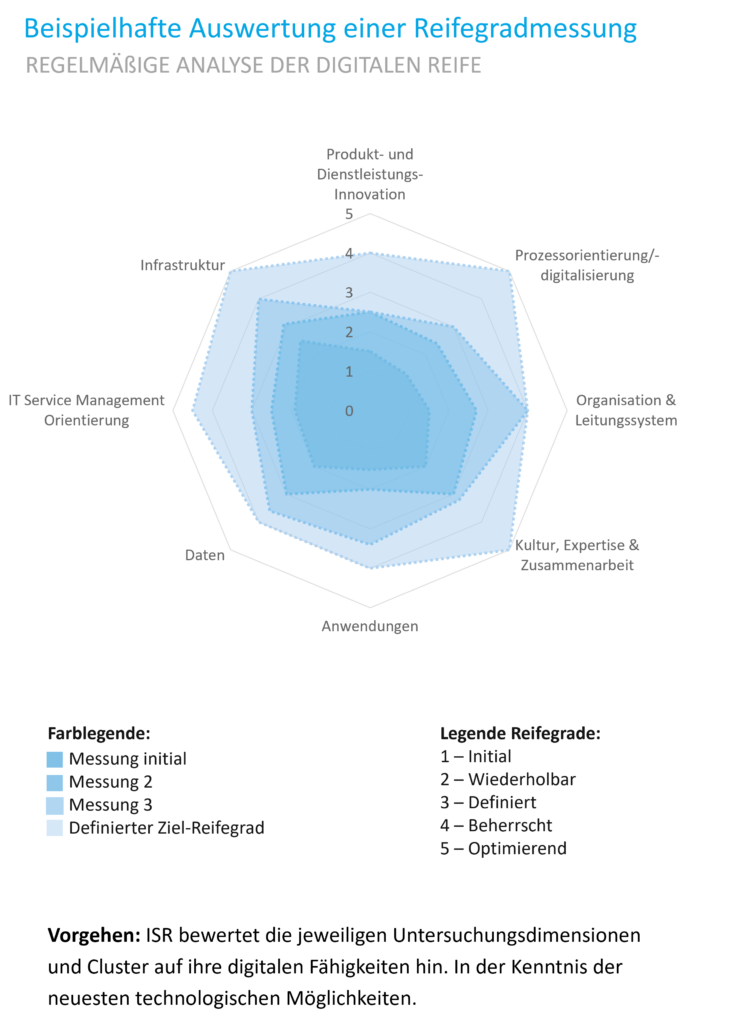
Figure 1:Timing: Regular digital maturity assessment | isr.de
Digital maturity measurement in the context of technological change
Even in the case of significant technological changes, it can be useful to carry out an upstream digital maturity assessment. This may relate to the pure availability of technologies on the market or to the already planned or even necessary adaptation of IT solutions by your company.
Technologies such as blockchain, cloud computing, augmented reality (AR), big data, and, most recently, artificial intelligence (AI) certainly have the potential to change the way companies work and operate. Knowing how well or poorly a company is prepared for the introduction of a new technology and what prerequisites and internal capabilities are necessary for its meaningful and targeted use can significantly improve the success of such an introduction.
With the help of a digital maturity assessment, a company can better evaluate and prepare for the introduction of AI solutions. How? By analyzing which business processes would benefit from the use of AI, which internal skills would need to be developed for this purpose, and which measures and projects would ensure a successful introduction.
However, perhaps it is "only" the long-awaited availability and planned introduction of a new ERP release, which will entail procedural, organizational, and technological adjustments, that is decisive for a preparatory digital maturity analysis.
Digital maturity assessment prior to strategic decisions
The ongoing digitization of business processes, products, and services, as well as the digitization of customer relationships, may necessitate an adjustment or even a realignment of a company's business model, or may even be strategically planned. This inevitably means that the company must focus on developing and expanding new or modified digital competencies and skills.
An impending sale of the company can also be an opportunity to assess its own digital capabilities and digital maturity. This is because a company's digital maturity is increasingly seen as an asset that can have a positive or negative impact on its value.
When such strategic decisions are imminent, it is advisable to know and be able to classify your own digital capabilities. Here, too, conducting a methodologically sound digital maturity assessment can be a suitable means of improving the basis for decision-making.
The timing of a digital maturity assessment is therefore very important!
In conclusion, it can be said that the timing of a digital maturity assessment is crucial and depends on the specific needs of the company.
An initial assessment of the current situation should always be followed by recurring reviews or audits at individually defined intervals. Continuous monitoring shows what is working and, more importantly, what is not working, and how digital progress is developing. If technological changes are on the horizon or fundamental strategic decisions are pending that will affect the business model, maturity analyses can also help to improve decision-making with regard to the company's own digital capabilities.
A company should always take care to conduct such analyses very consciously and with the help of the right internal and external experts. Speaking of experts: if you are currently considering whether a digital maturity assessment would be useful for your company, we have more information about our Digital Maturity Check here and would be happy to answer any questions you may have. Get in touch with us!

Birger van der Spek
Managing Consultant
Business Process Automation
birger.vanderspek@isr.de
+49(0)151 422 05 453