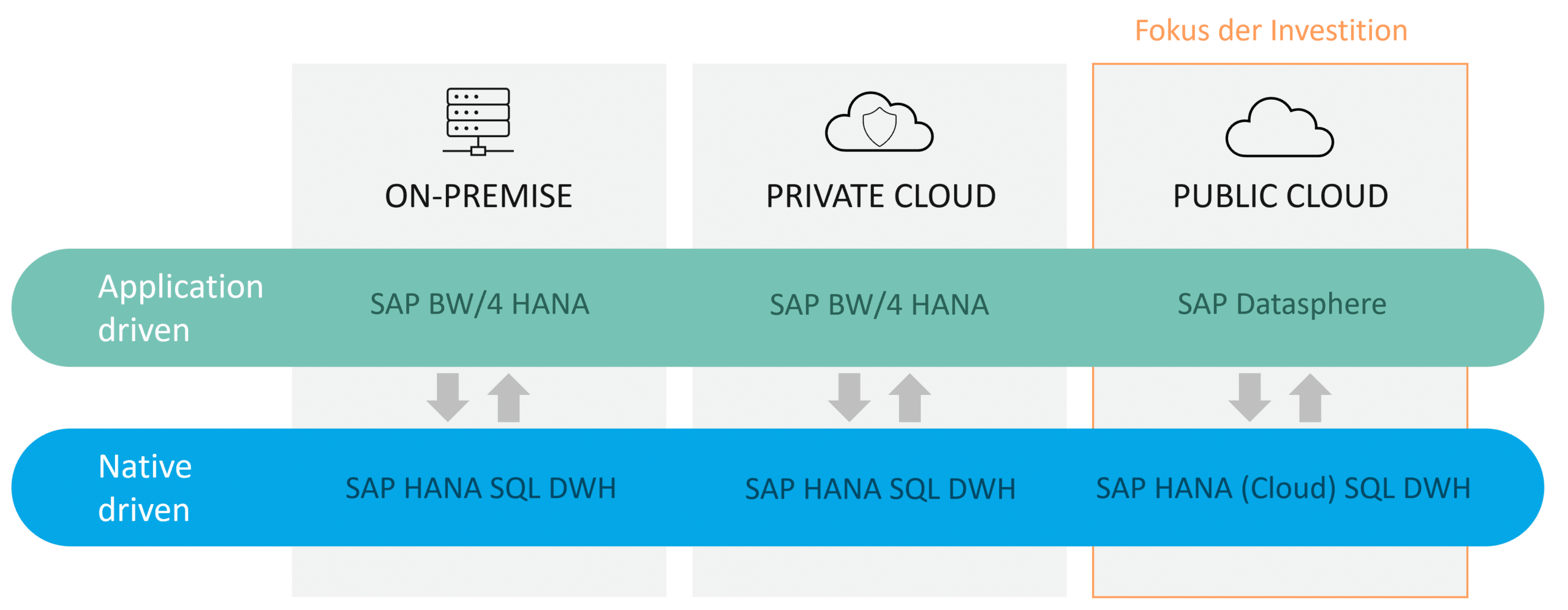
SAP has refined its Data Warehouse strategy. Datasphere is SAP's strategic application-driven Cloud Data Warehouse solution and thus the focus of SAP's future investments and innovations.
In the past, SAP BW was SAP's established application-driven approach. Does Datasphere therefore mark the end of SAP BW and its successor?
Is SAP BW dead?
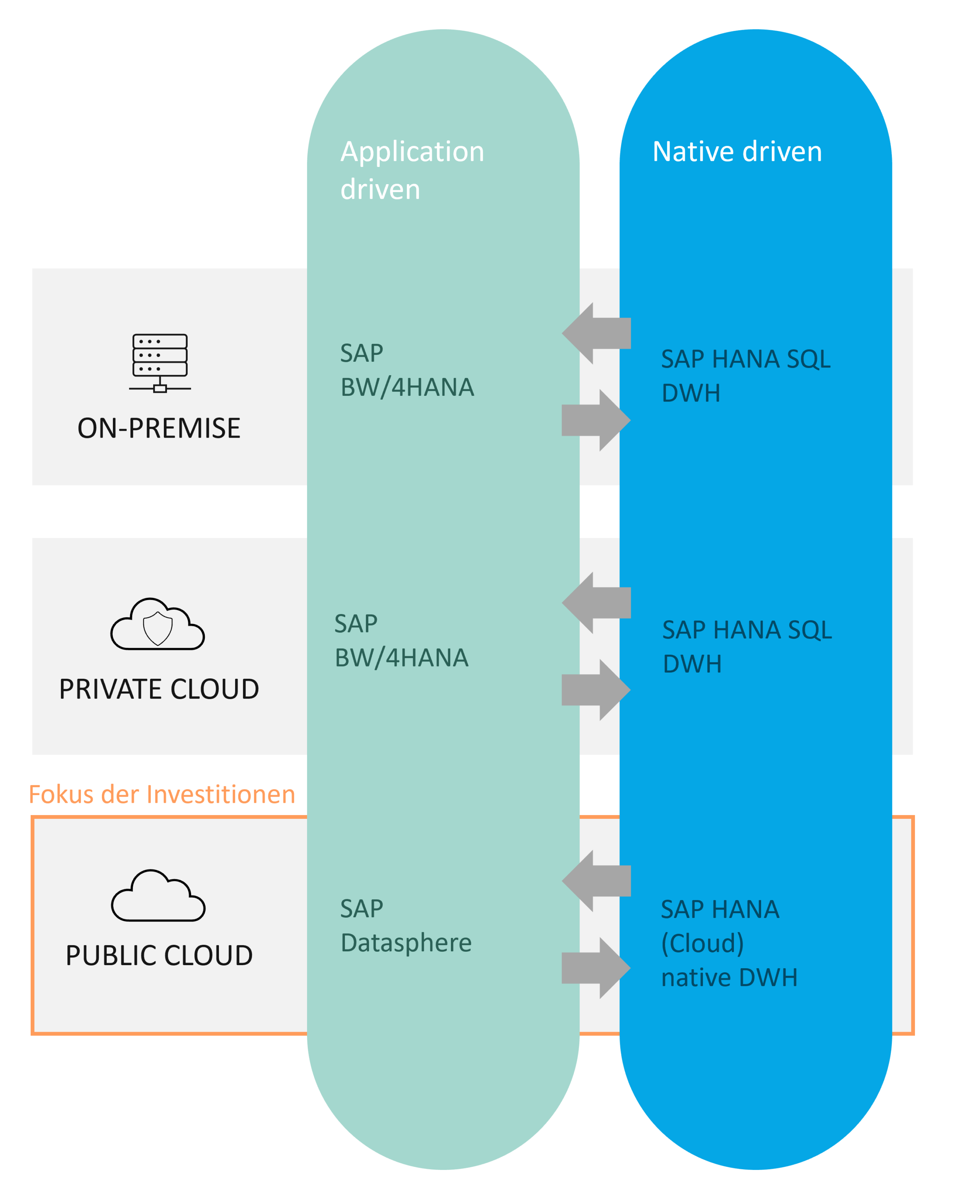
SAP offers three distinct data warehousing solutions: SAP BW/4HANA, SAP HANA SQL Data Warehousing, and SAP Datasphere. SAP's strategic focus is on Public Cloud products based on the Business Technology Platform (BTP). Further developments and future innovations are exclusively anticipated within this domain. Conversely, this implies that all divergent solutions will no longer undergo intensive development. Datasphere is SAP's strategic application-driven cloud data warehouse solution, thus representing the focal point for future SAP investments and innovations.
Fig. 1: On-Premise vs. Private Cloud vs. Public Cloud | isr.de
Fig. 1: On-Premise vs. Private Cloud vs. Public Cloud | isr.de
What does this signify for SAP BW? Does SAP BW still belong to SAP's strategic portfolio? Is SAP BW therefore obsolete?
No, not (yet). BW/4HANA remains an established strategic application-driven solution for on-premise and private cloud data warehousing. Furthermore, with the private cloud option, BW/4 is part of Rise with SAP. SAP has also provided BW/4HANA with a roadmap extending to the year 2040. This ensures a degree of investment security.
Is Datasphere the successor to SAP Business Warehouse?
Due to SAP's strategic focus on its cloud offerings, future investments will primarily target Datasphere. In the long term, Datasphere can be considered the successor to Business Warehouse. This is supported by the availability of migration options for parts of BW systems via the BW Bridge. However, this necessitates that companies are prepared for the Public Cloud. Strategically, BW/4 remains positioned for on-premiseWhat does On-Premise mean? On-Premise refers to infrastructures that are physically... More and private cloud approaches.
Is SAP BW still future-proof? Should I still initiate an SAP BW project?
SAP BW customers considering modernizing their data warehouse by implementing SAP BW/4HANA face the question of whether this is (still) a sensible approach. From our perspective, implementing BW/4HANA remains a valid option. The investment is not a dead end. Key drivers for this assessment include:
SAP BW/4HANA has been successfully deployed for many years and can accommodate virtually any data warehouse use case. It is simply mature and ready-to-use.
Support until 2040. This represents 18(!) years, thereby providing a (very) long-term confirmation of investment security.
Ultimately, the BW Bridge offers the option to migrate parts of SAP BW developments to Datasphere. Thus, a certain cloud perspective exists.
Fig. 2: Is BW still future-proof? | isr.de
We recommend that SAP BW customers closely monitor the evolution of Datasphere. Concurrently, customers should not be deterred, but rather explore the possibilities of hybrid architectures in conjunction with Datasphere.
Opportunities for Hybrid Architectures with Datasphere
We identify numerous opportunities and advantages in combining SAP BW systems with Datasphere. We aim to outline these through the following scenarios.
Are you interested in the opportunities presented by hybrid architectures with Datasphere? Then, we invite you to review our comprehensive blog article on this topic: Overview of Hybrid SAP HANA Data Warehouse Solutions.
Accelerate Analytics
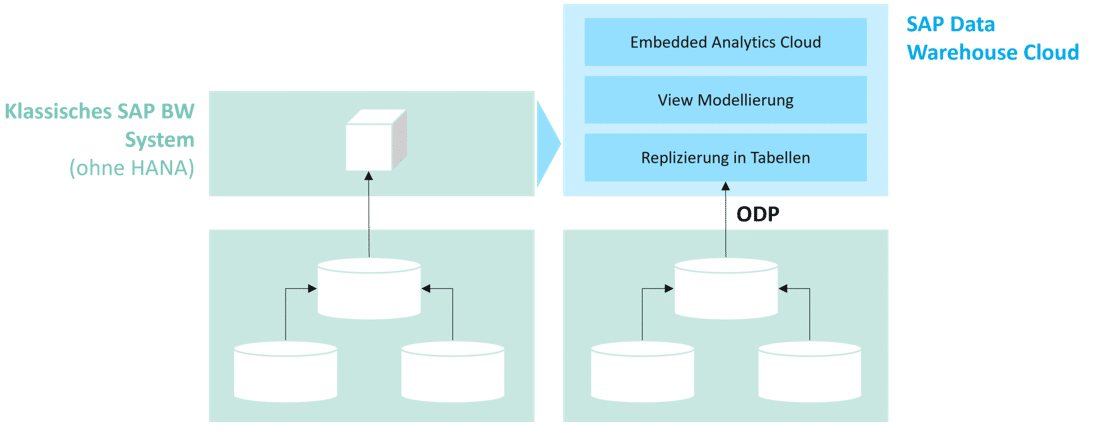
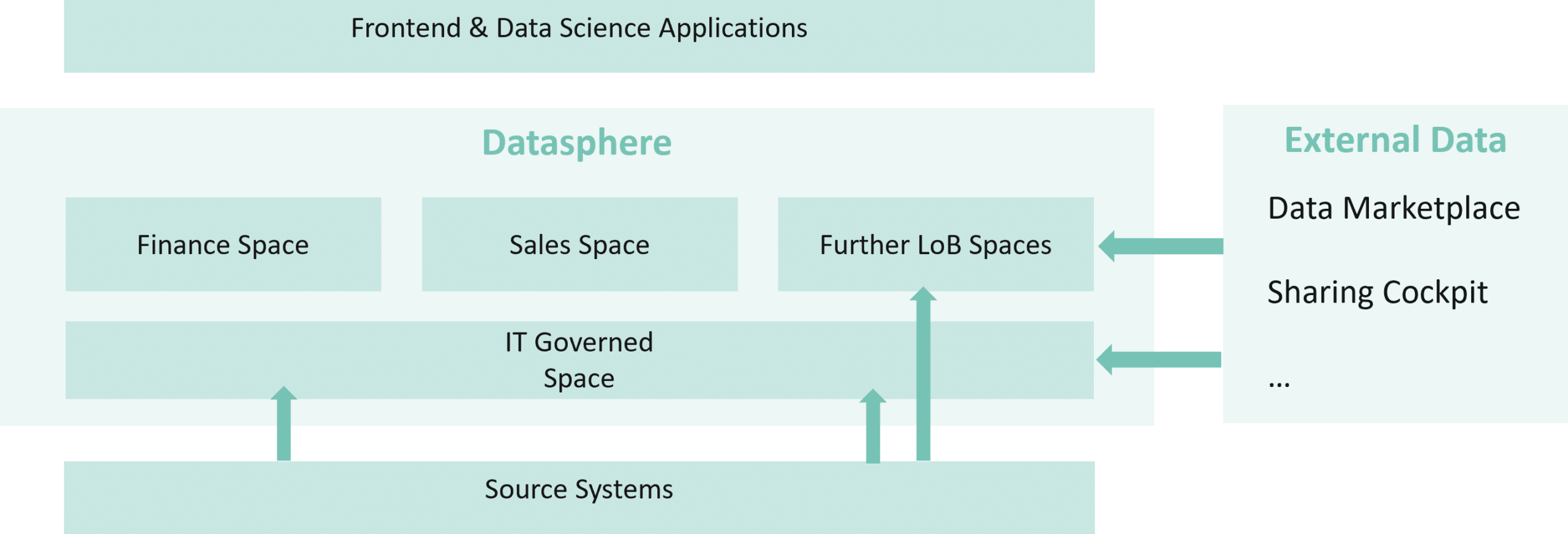
Customers can migrate data marts from classic SAP BW systems to Datasphere. Firstly, reporting is accelerated by replicating SAP BW data due to the transition to the HANA Cloud. Secondly, customers gain a highly modern frontend with the (embedded) Analytics Cloud. The aforementioned added values are realized relatively quickly because the connection of SAP BW systems is fast and straightforward to implement.
This scenario is suitable for clients who possess a historically evolved SAP BW system and are generally satisfied with the data quality but wish to benefit from the aforementioned advantages. Furthermore, within the Datasphere, SAP BW data can be augmented with data from other systems (e.g., S/4, etc.).
Fig. 3: Accelerate Analytics | isr.de
The Datasphere for Self-Service Data Preparation
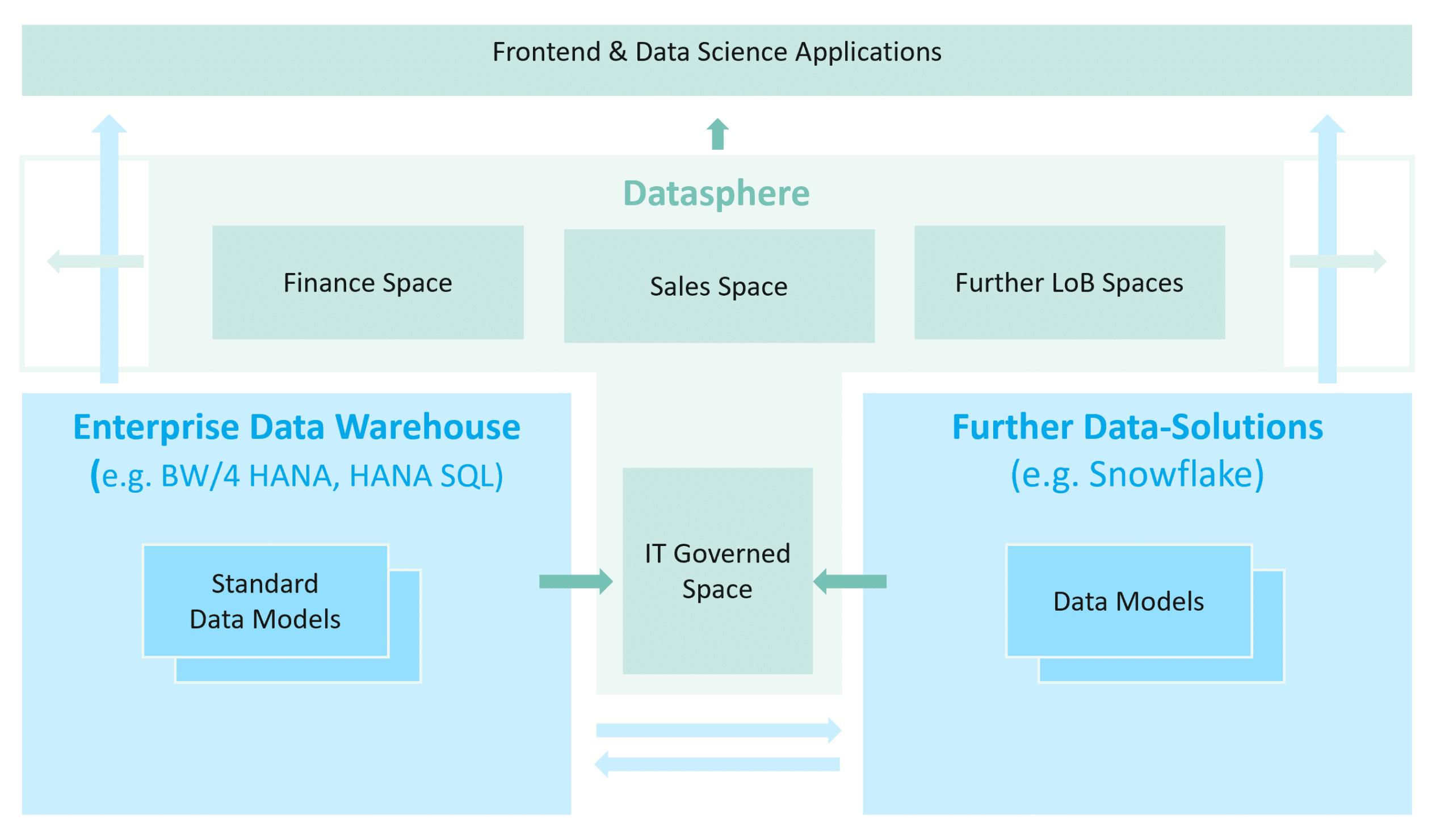
SAP explicitly positions Datasphere within the realm of self-service data preparation. We already observe significant potential through user-centric data modeling. The Analytics Cloud does not provide comprehensive data preparation capabilities, nor does SAP BW/4HANA. We frequently encounter situations where business departments seek alternative solutions that are not integrated into the IT system landscape. Consequently, Datasphere can effectively bridge this gap, offering business departments considerable flexibility while ensuring integration into the IT system architecture. Furthermore, with the capabilities of SQL scripts and Data Intelligence data flows, multiple avenues are available for implementing business logic. The diagram below illustrates how the interplay between an EDWH, other solutions, and Datasphere can function. For instance, IT can provide an IT-governed space with quality-assured data models for standard reports, etc. Building upon this, custom extensions can be created within the Line of Business Spaces. From a long-term perspective, we can also envision Datasphere functioning as a virtual semantic layer across all systems (see Data Virtualization below).
Fig. 4: Self-Service Data Preparation | isr.de
SAP BW/4HANA and Datasphere
BW/4HANA exhibits weaknesses in the area of self-service data preparation. BW Workspaces have never been an optimal option. We identify numerous opportunities in a hybrid architecture combining BW/4HANA with Datasphere. From a technical standpoint, various options exist for integrating these solutions.
Fig. 5: SAP BW/4HANA and Datasphere | isr.de
1. Remote Tables / Database Connection:
BW/4HANA is connected here as a remote source, allowing data to be integrated into the Data Layer. This scenario is quickly implementable. However, Datasphere, in this configuration, lacks any semantic understanding. From Datasphere's perspective, BW objects are merely "tables." If only this hybrid approach is pursued, the semantics must be manually recreated in Datasphere – for instance, defining what a cost center is, and so forth.
2. BW/4HANA Model Transfer:
In contrast to a simple database connection, the Model Transfer Connection links the BW Query. Datasphere not only reads the necessary database connection but also extracts the semantics, creating the required objects in the Business Layer. This type of connection offers the significant advantage of eliminating the need for manual Business Layer modeling. Conversely, the first option provides greater flexibility in modeling if a business entity needs to be defined differently from BW/4HANA, for example, by extending BW data for an entity with external data.
3. BW Bridge:
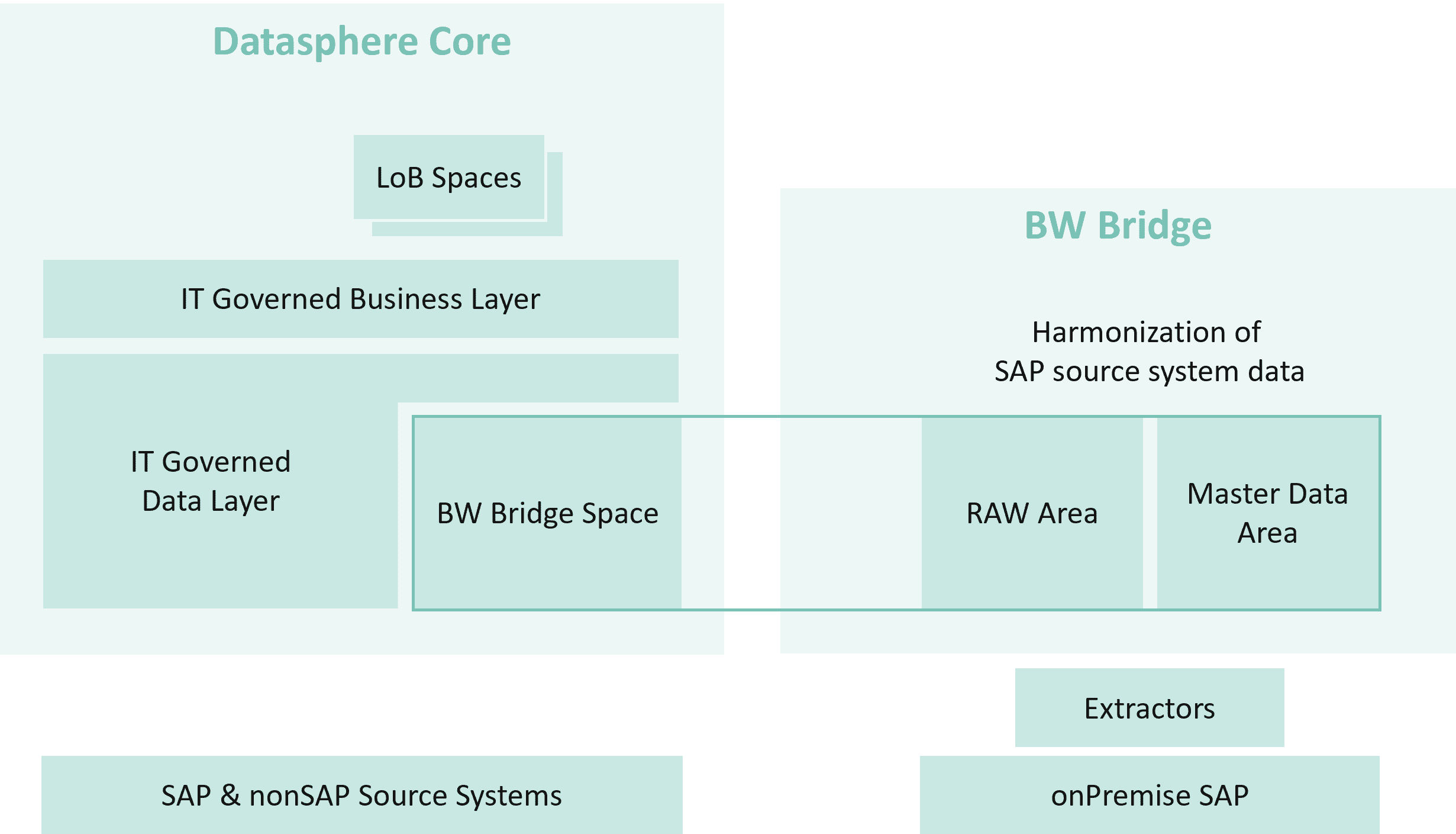
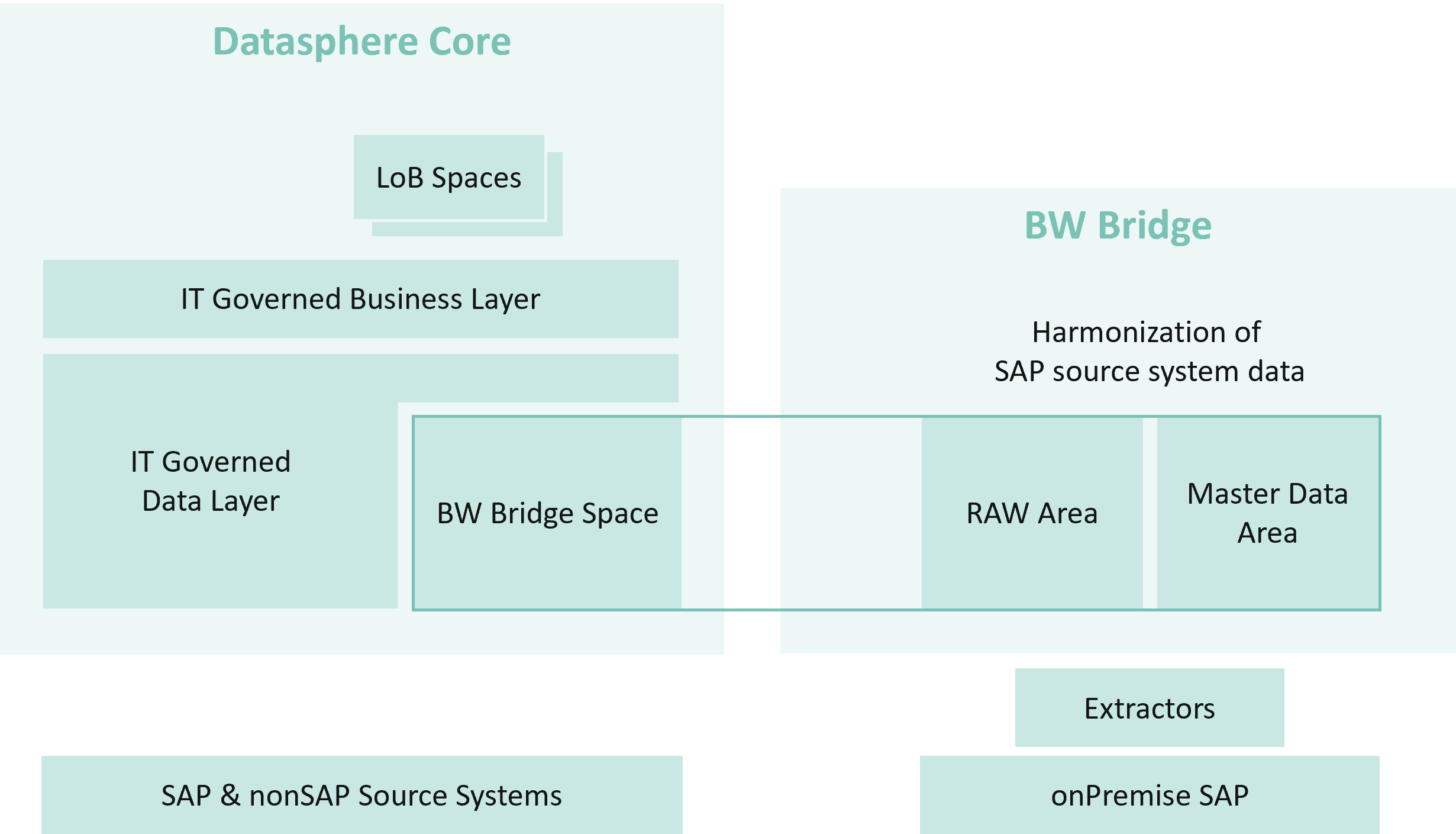
The latest option is the BW Bridge. The BW Bridge does not establish a bridge between an existing on-premise BW/4HANA system and Data Warehouse Cloud. Rather, the BW Bridge itself is a BW/4HANA environment running in the HANA Cloud and functions as a Datasphere feature. BW data models are integrated into Datasphere via a Bridge Space. The Bridge offers the option to migrate or transfer existing BW systems to the cloud. However, it should be noted that, from a BW perspective, the Bridge provides only limited functionality (see Note 3117800). Through the BW Bridge, Datasphere gains access to SAPI extractors from classic SAP ERP systems as well as BI Content. This enables rapid reporting setup. For example, in this "hybrid" architecture (we refer to hybrid as a combination of BW with Datasphere functionalities), the BW Bridge can serve as the ingestion layer for SAP ERP data, including SAP ERP semantics. Further extensions can then be implemented in Datasphere as required.
Fig. 6: Hybrid Scenarios | isr.de
The Datasphere for Data Warehouse Virtualization
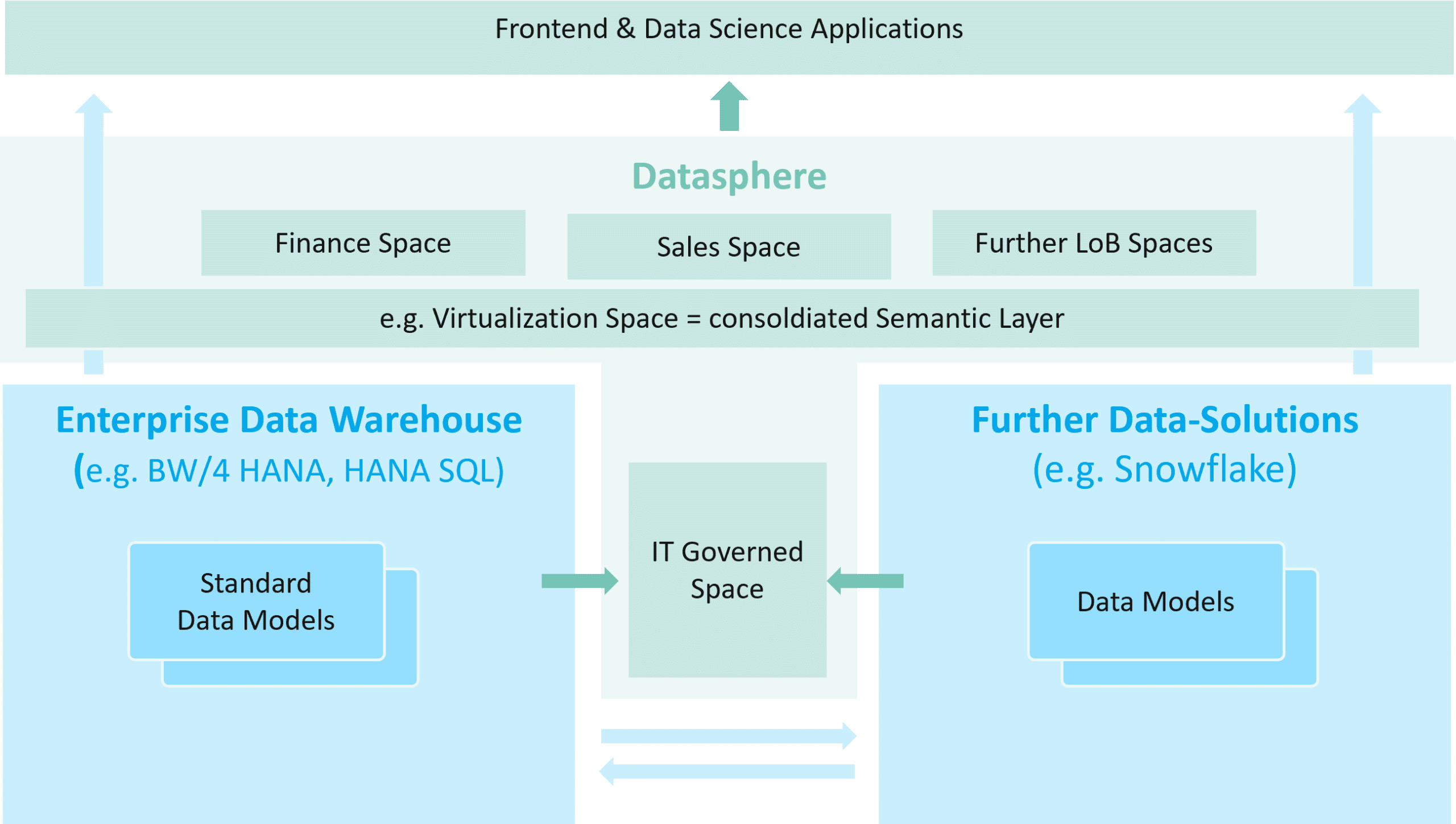
Within Datasphere, semantic entities (e.g., Cost Center Dimension, etc.) can be defined using the Business Builder. The definition of this semantic layer is purely virtual, thus decoupled from the physical Data Layer.
Fig. 7: Data Warehouse Virtualization | isr.de
We therefore envision Datasphere centrally defining and providing enterprise-wide semantics for reporting purposes. From a frontend perspective, the actual data source is irrelevant. Datasphere's virtual layer serves as the central entry point. We also anticipate the integration of existing departmental "shadow" solutions, which can be virtually incorporated into Datasphere.
According to analyses by BARC and Gartner, data virtualization is one of the major topics in which companies intend to increasingly invest in the coming years, driven by the desire for a highly flexible and agile architecture.
Compared to other providers (such as Denodo), Datasphere offers significantly superior, and notably SAP-native, integration capabilities with SAP Cloud and on-premise products. It is therefore particularly well-suited for customers considering how to transition their existing BW/4 or S/4 systems towards data virtualization and hybrid cloud architectures.
What is the current SAP Data Warehouse strategy? Read our new blog article on this topic now.
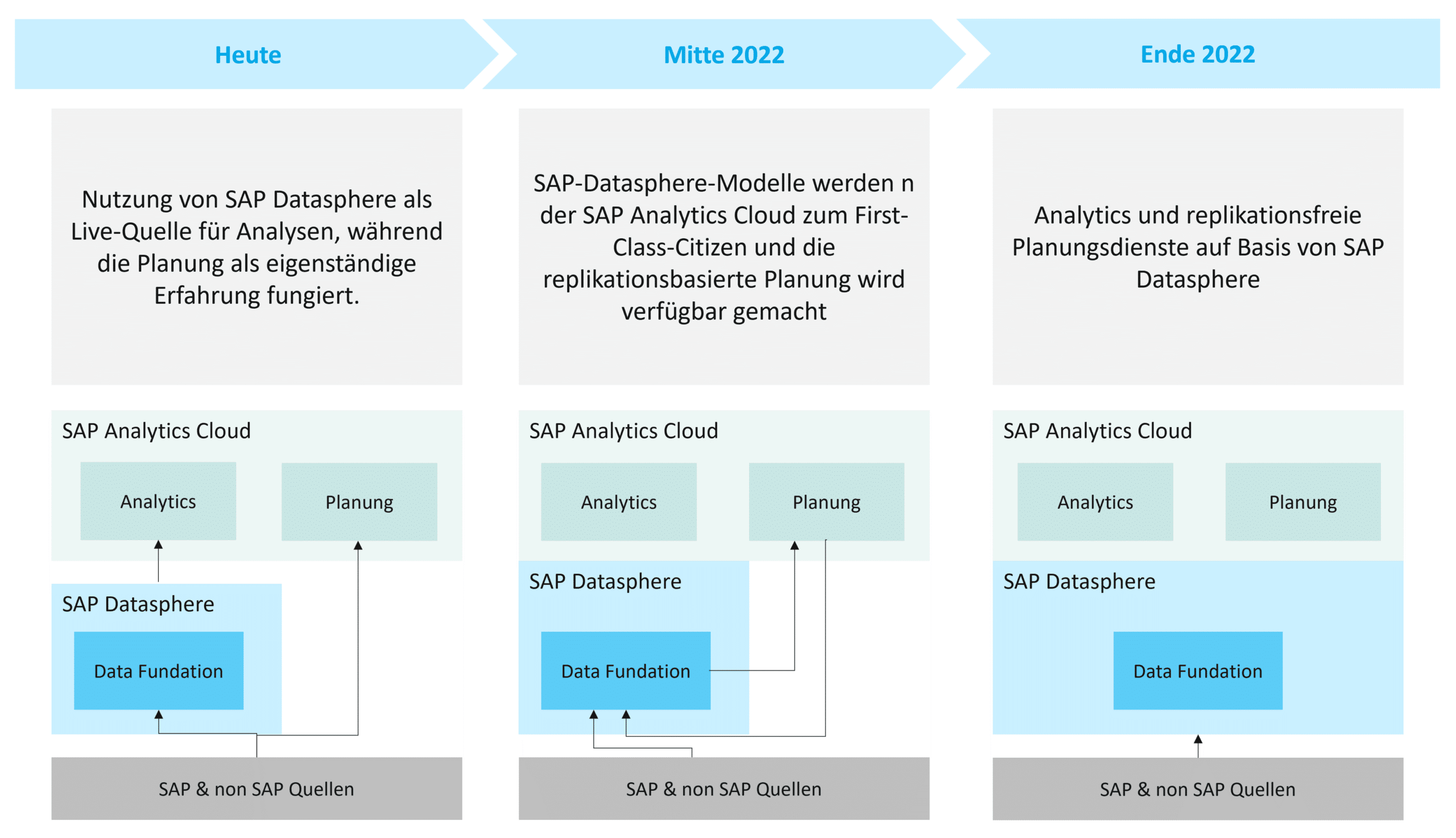
Excursion: How are Analytics Cloud and Datasphere converging?
When strategically evaluating Datasphere, its increasing integration with Analytics Cloud should also be considered. In the long term, Analytics Cloud will converge very closely with Datasphere. While Analytics Cloud is not a successor to the BEx Suite, SAP will (soon) once again offer a comprehensive solution (we cannot assess licensing aspects) comprising Data Warehouse, Analytics, and Planning.
Fig. 8: Analytics Cloud and Datasphere | Source: SAP
Is SAP BW/4HANA dead? Long live BW/4HANA and Datasphere – Together!
SAP BW/4HANA is not obsolete. Many of our clients are implementing BW/4HANA systems anew. Customers receive a highly mature solution, ensuring their projects can be successful. There is a very long-term perspective and SAP roadmap. Furthermore, the BW Bridge provides pathways into Datasphere for certain development aspects.
Concurrently, we recommend including Datasphere in your considerations. Strategically, Datasphere is established and is the focus of SAP's investments. From a strategic standpoint, Datasphere can be regarded as the successor to BW/4HANA.
While Datasphere may not yet be suitable for every use case today, we already observe numerous advantages in hybrid architectures combined with SAP Datasphere.
The pace of Datasphere's development is exceptionally high. Therefore, the assessments in this article must be considered within the context of their creation date. An update to these assessments will be necessary in a few months.
We therefore recommend incorporating Datasphere into your architectural considerations.
Since 1993, we have been operating as IT consultants for Data Analytics and Document Logistics, focusing on data management and process automation. We provide comprehensive support, from strategic IT consulting to specific implementations and solutions, all the way to IT operations, within the framework of holistic Enterprise Information Management (EIM). ISR is part of the CENIT EIM Group.