As of 2025, companies in Germany will be required to receive e-invoices. A challenge? Yes! But impossible? No!
Effective January 1, 2025, German companies will be mandated to receive and process electronic invoices (e-invoices). Flawless and automated incoming invoice processing is paramount for success. But how can this transition to e-invoices be achieved seamlessly?
Our structured guide assists your company in implementing the e-invoicing mandate (step by step) and successfully digitalizing your invoicing processes.
Where and how can you initiate the implementation of e-invoicing? Our concise guide outlines the steps for successfully integrating e-invoices into your enterprise.
Are you seeking detailed background information on Germany's mandatory e-invoicing requirement, transition periods, and further insights? All relevant background information is available in our first blog article.
E-INVOICING WHITEPAPER
Prepare optimally for the e-invoicing mandate in 2025! Our whitepaper provides all essential information, from legal foundations and benefits to a practical implementation checklist.
E-Invoice Implementation: A Guide
How does one transition or configure their invoice processing for e-invoices? The good news is that with the correct steps, compliance with the e-invoicing mandate can be effectively managed. Our five 'Guide A's' illustrate how you can progressively prepare your company for the e-invoicing requirement.
Step 1 – Analyze: What does your current incoming invoice process entail?
Prior to transitioning to the e-invoicing mandate, a comprehensive overview of your current incoming invoice process is essential. This forms the foundation for seamless digitalization of your e-invoice processing.
Key analytical questions for receiving e-invoices:
- How are incoming invoices currently delivered to your company?
- How are manual invoice capture and posting performed? Who holds responsibility?
- Which systems and software currently support your invoice processing?
- Where do delays or sources of error arise within the invoicing process?
- Which invoice information must be transferred to your accounting system?
Document your analysis meticulously, identifying strengths and weaknesses. This establishes a solid foundation for targeted optimizations during e-invoice implementation.
Step 2 – Align: Which invoice formats must I accommodate?
There are various standardized formats for e-invoices, such as ZUGFeRD or XRechnung. These differ in complexity, adoption, and functional scope, and fundamentally comply with the required European e-invoice format (ZUGFeRD from version 2.0.1).
XRechnung is an XML-based format developed by the European Commission. It is an open and free format supported by numerous businesses and governments. ZUGFeRD (Central User Guide Forum for Electronic Invoices in Germany ) is a German format developed based on PDF/A-3. It combines the advantages of PDF and XML, offering simple and secure invoice transmission.
Both formats possess distinct advantages and disadvantages. XRechnung offers greater flexibility and is simpler to implement, whereas ZUGFeRD provides enhanced readability and higher acceptance within Germany.
| XRechnung | ZUGFeRD | |
|---|---|---|
| Format | Structured Data (XML) | Hybrid Format (PDF/A-3 with embedded structured data/XML) |
| Characteristics | Machine-readable | Human- and machine-readable |
| Requirements | Public Administrations | Business, Industry & Commerce |
| Usage | Since November 2020 in the German public sector (B2G) in accordance with ERechV | Across all industries in B2B and B2C sectors |
Good to know: For hybrid formats, such as the ZUGFeRD format, which consists of an image file (PDF document) and a structured data set (XML file), the structured part of the invoice will be authoritative in the future. In the event of a discrepancy, the data from the structured part will take precedence over that from the image file. We already integrated the capability to process XRechnungen and ZUGFeRD invoices in 2022 with version 9.0 of our invoice processing software, Accounts Payable Flow.
Step 3 – Adaptation: Prepare internal processes for receiving e-invoices
Only by timely adapting your internal business processes and structures to the new requirements can you fully leverage all the benefits of e-invoicing.
The following points should be addressed in this step:
- Adjusting Workflows and Responsibilities: Review and optimize your existing invoice processing workflows. Define clear responsibilities and approval processes for handling e-invoices. Furthermore, ensure that all involved employees are aware of their new tasks and can perform them efficiently.
- Integration into Your Accounting System: Seamlessly integrate e-invoice processing into your existing accounting processes. Ensure that incoming e-invoices can be automatically transferred to and further processed within your ERP system.
- Employee Training and Awareness: Thoroughly inform and train your employees regarding the transition to e-invoicing. Explain the new processes and responsibilities to them. Motivate them to actively shape digitalization and leverage the benefits of e-invoicing.
To efficiently process such electronic invoices, a suitable software solution can be beneficial. This solution should be capable of automatically capturing, verifying, and transferring incoming e-invoices into your accounting system. When making your selection, consider criteria such as user-friendliness, integration capabilities, and scalability.
Step 4 – Testing: Test the new process and optimize it
Before transitioning your incoming invoice process to e-invoicing, it is advisable to first test the new workflow in a pilot phase. This allows you to identify potential weaknesses early on and implement improvements before rolling out the solution for the e-invoicing mandate company-wide.
- Conduct a Test Run: Select a manageable period during which you will test the new e-invoice processing workflow under real-world conditions. Ask selected suppliers to send you e-invoices and closely observe how your employees handle them.
- Analyze the Results: Carefully evaluate the test run. Where were there problems or delays? Where did the process run smoothly? Listen to your employees' feedback and note down suggestions for improvement.
- Optimize the Process: Utilize the insights gained to further optimize your e-invoice processing workflow. Adjust workflows, system settings, or training measures until the process meets your requirements.
Step 5 – Engage: Motivate your suppliers to use e-invoices
After you have expanded your internal incoming invoice process to include e-invoice processing, it is time to address the general roll-out. This also means informing other process stakeholders about the innovations. These include, among others:
- Purchasing
- Customer Support
- Internal Audit
- Compliance/Regulatory Team
The success of implementing electronic invoice processing largely depends on whether all stakeholders – including suppliers and your employees – understand how to handle e-invoices and the new processes.
E-Invoicing Benefits at a Glance
This step-by-step guide enables you to swiftly implement e-invoicing and soon benefit from the advantages of e-invoice reception and processing: increased efficiency, transparency, and cost savings in your invoicing processes.
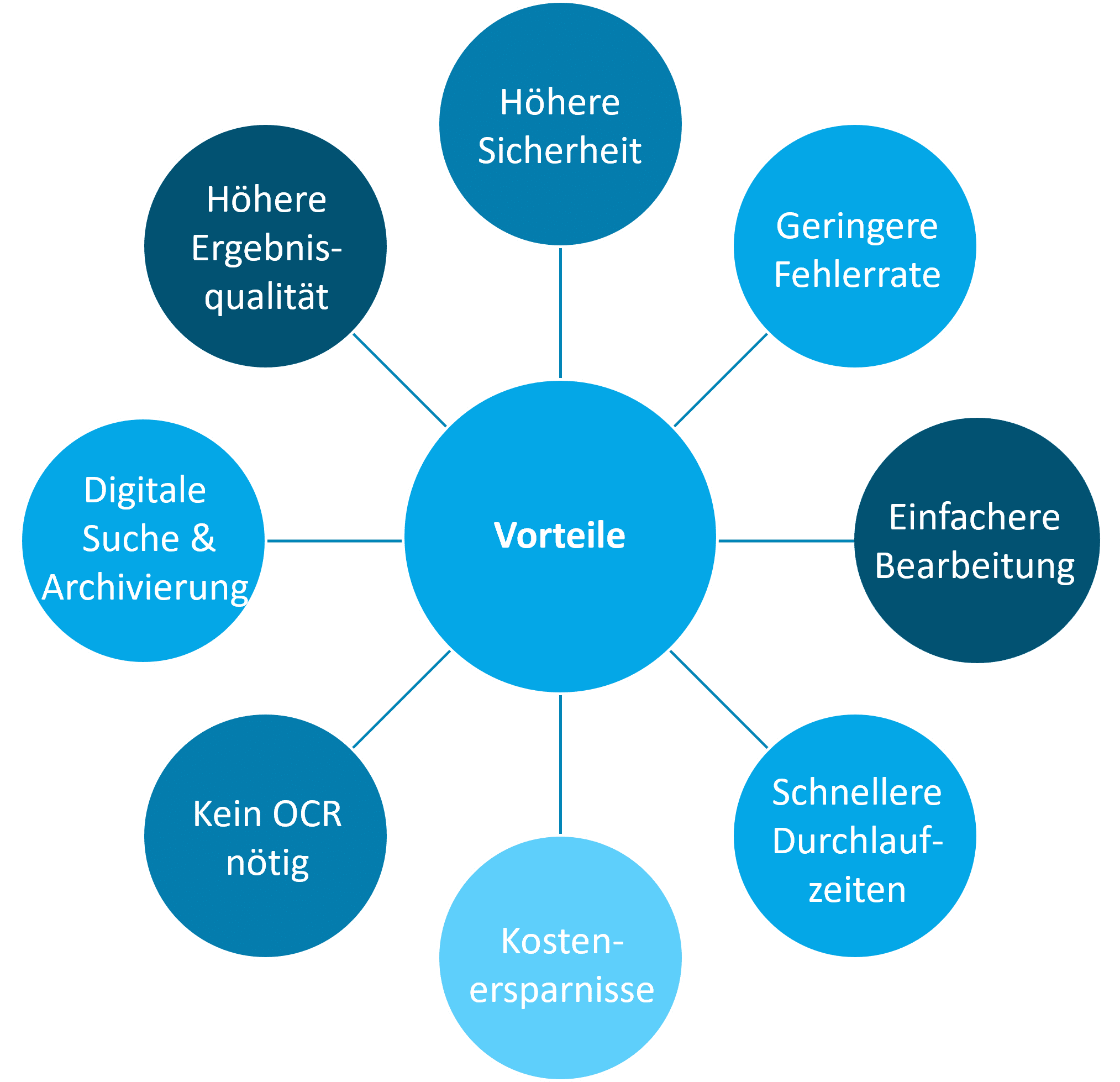
- Extraction of content via OCR is no longer necessary, and the error rate is reduced.
- Increased time efficiency through faster processing times and real-time delivery.
- E-invoices are digitally accessible, eliminating time-consuming searches, and a (physical) archive is no longer required (though a digital one is!).
- Cost savings through reduced expenses for postage and paper.
Seamless E-Invoice Processing with ISR
The upcoming mandatory transition to e-invoicing from 2025 may initially appear as a significant challenge for all companies. However, with the right steps, businesses can effortlessly manage this transition – particularly in the area of incoming invoice processing.
With us and our digital invoice processing software Accounts Payable Flow, you have a comprehensive solution at hand to process e-invoices efficiently and reliably.
The extraction and interpretation of invoices has historically been a complex process, which is simplified by standardized formats such as XRechnung or ZUGFeRD. These structured data, which can be processed digitally immediately, are thus already available through e-invoicing and merely need to be utilized. And this is precisely where Accounts Payable Flow comes into play:
Accounts Payable Flow streamlines and enhances the transparency of the entire incoming invoice process. In addition to e-invoices, various other invoice formats can still be processed, including PDF invoices, paper invoices, XRechnung, ZUGFeRD, etc.
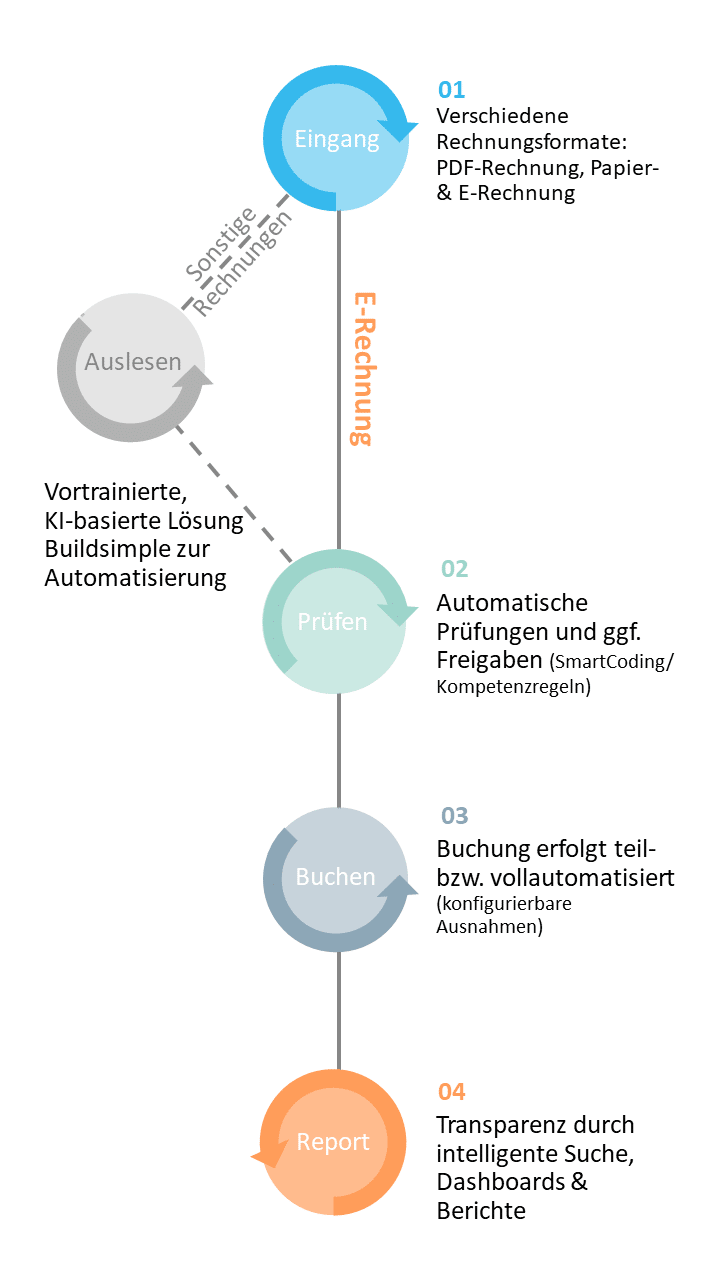
Automatic checks and approvals via SmartCoding and competency rules ensure that only correct and authorized invoices are processed. Posting is semi- or fully automated, allowing for configurable exceptions. Furthermore, intelligent search functions, dashboards, and reports ensure comprehensive transparency in the invoicing process, allowing all relevant information to be accessed quickly and easily. If we have piqued your interest, please feel free to contact us and schedule an appointment for a live demo.
Would you like to consider Step 5 (Spread the word) now and know someone who is asking the same questions as you? Simply share this guide.
Have we piqued your interest, and would you like to learn more immediately? Then please feel free to contact us and schedule an appointment for a live demo.

Jens Brettschneider
Head of Business Unit
Application Management
jens.brettschneider@isr.de
+49(0)151 422 05 425